Above the Line and On the Ground: A Field Manual for Leaders Who Want Ideas to Multiply, Not Rot.
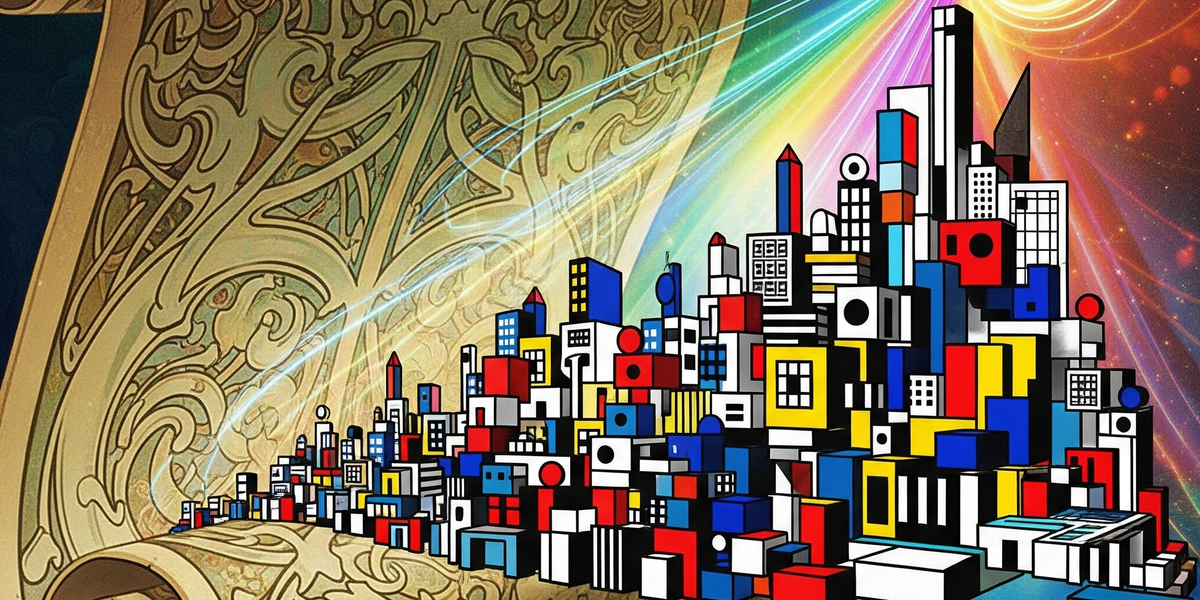
Innovation dies when leaders mistake tidy reports for reality and treat ideas like private property. This is a call to trade the map for the field and turn shared resources into multiplying engines of progress.
Are you leading from a map, or from the actual battlefield?
What if the very fences you've built to protect your ideas are the chains slowly strangling innovation itself?
What will you protect: a fragile advantage you hoard, or the thing that gets stronger when everyone helps build it?
Mistaking maps for reality
We’ve become incredibly comfortable in the command tent. The reports are clean, the data is organised, and the maps are neatly drawn. From here, we engage in endless, circular debates about tactical sub-points, getting so lost in the intricate details that we forget the war. We have mistaken the representation of reality for reality itself.
This disconnect is more than just an operational flaw; it's a creeping rot. It has led us to treat our greatest collective assets (our shared ideas and platforms) as if they were finite pastures. We follow an old, flawed logic that if we don’t fence in our piece and graze it to dust, someone else will.
Most of us live inside systems that look tidy: patents, closed products, rigid hierarchies, polished roadmaps. They promise control and exclusivity, and they deliver predictability.
What they secretly harvest, though, is participation. When people are shut out, the work calcifies; when contributions are discouraged, systems stop learning. We convince ourselves that fencing ideas is defense, not theft.
In our rush to claim ownership, we've turned vibrant fields of shared knowledge into barren, locked plots. Think of the software powering your daily tools thriving because it's open, inspectable, and endlessly refined by many hands.
A relentless drive for quick profits pushes us to enclose it all, tempting creators to grab without giving back, especially under investor pressure chasing dominance over durability.
This isn't just about code; it's the cultural soil where ideas should multiply freely, not diminish like overgrazed pastures. Conversations get tangled in petty details, losing sight of the big picture, while leaders rely on distorted reports instead of witnessing the chaos firsthand, breeding confusion and missed opportunities that erode our collective progress.
Fear-based enclosure and the cost to the commons
This fear-based mindset is strangling our potential. The relentless, profit-driven push to privatise and exploit what should be a thriving commons is a quiet catastrophe. We take from the shared well of knowledge without replenishing it, all under the guise of "market share."
We are incentivised to fence, to hoard, to take. The result is the very engines of our progress, the open, inspectable, and resilient systems built by and for everyone, are being starved. We are systematically dismantling the infrastructure of our own future for the sake of a quarterly report, and we will all miss it desperately when it's gone.
This choice costs more than market share. It erodes trust. It quiets the curious contributors who would have improved things. It turns potential collaborators into competitors who game the rules. The result is slower fixes, brittle infrastructure, and a loneliness at the center of organisations that should be humming communities.
Frustration builds and developers burn out chasing proprietary mirages that rarely reward the effort, investors fume over unfulfilled patents, and users suffer from stagnant tools that demand endless fees without true improvement.
Emotionally, it feels like working harder for less meaning: sleepless nights polishing the perimeter while the core rots. The longer we let fear of sharing decide policy, the harder it becomes to reverse, projects stall, users churn, and talent walks toward places that treat openness as strength, not a liability.
The quiet rage of knowing your contributions could ripple widely but instead gather dust behind walls, the anxiety of falling behind in a world where hoarding trumps harmony. Ignore it, and we risk a future where creativity withers entirely, replaced by a monopoly of mediocrity that devours potential and leaves generations inheriting a depleted intellectual landscape.
As this spreads, the toll mounts invisibly at first, then brutally. Innovation stalls as isolated silos replace collaborative explosions, leaving us with brittle systems that break under pressure rather than evolve.
Going to the front and inviting participation
The solution point doesn’t come from a new strategy, but from a simple, profound act: personally seeing the front. It's the deliberate choice to leave the sterile comfort of the command tent and witness the ground truth.
This single act of courageously facing reality changes everything. It forces conversations back "above the line" to the core principles and the main objective, using details only to illuminate the path forward, not to obscure it.
You discover that ideas are not like sheep; they don't get used up. They get better, stronger, and more resilient the more people engage with them. The true work isn't about having the best idea, but about creating the conditions for others to participate and improve it.
There’s a better anthropology of shared resources: rules tailored to the people who use them, participation baked in, clear boundaries that invite stewardship rather than exclusion. When communities design governance that’s local, accountable, and graduated in response, resilience follows.
Pair that with a culture that keeps conversations “above the line” always tying details back to the main purpose and you stop bleeding attention on pointless side arguments.
Finally, leaders who go see the frontlines themselves, not just dashboards or filtered reports, gain the kind of honest, immediate intelligence that lets them act before problems calcify. Combine these ideas and you get a simple protocol for building things that get stronger the more people touch them: define who cares, make the rules fair and editable, monitor with accountability, resolve conflict cheaply, and reward contribution over enclosure.
Imagine leading with eyes wide open, stepping to the edge yourself to grasp the raw truth beyond biased summaries or maps. Anchor discussions at the core truths first (tackle the essence before diving into tangles) ensuring every voice shapes rules that fit real needs, with fair checks, swift resolutions, and layers of oversight that build resilience.
This isn't naive sharing; it's a disciplined path where boundaries are clear, participation invited, and violations met with measured response, turning potential exploitation into solutions. In this light, ideas don't deplete they amplify, fostering environments where true contributors thrive without the lure of selfish grabs.
A world rebuilt by open collaboration
Picture a world reborn: software and knowledge ecosystems buzzing with energy, where every addition strengthens the whole, sparking breakthroughs that lift everyone from lone innovators to global networks.
Visualise a world where your work is no longer "work." Where the lines between a hobby, a vacation, and your professional life dissolve because you are wholly engaged in a mission you can see and feel. This is the liberation that comes from operating in the real world, not from a biased map.
When you lead from the front, you become a natural defender of the commons, because you witness its power and understand its fragility. You champion the open spaces where collaboration thrives, not because it’s convenient, but because you know it is the only way forward.
Imagine software, teams, and products that improve in public: faster bug fixes, richer features, and a sense of mutual ownership that keeps people coming back. Work where you’ve found the freedom to do what you love and make it sustainable. The kind of liberation where “work” and “life” stop fighting for your attention because your work feeds you, not drains you.
If you lead a team, pick one shared artifact (a repo, a spec, a process) and open the rules for who can contribute. Insist on above-the-line conversations in your next meeting. Go see the front, spend one day a month where you watch users or builders in the wild.
If you’re an individual, choose to contribute where your effort compounds, not where it is hoarded. Champion open contributions, even when it's tough. Do those things and you don’t just preserve something valuable, you make it generative. Resilience reigns, connections deepen, and progress accelerates, unlocking aspirations long buried under fences.
The Essential Concepts
Mistaking Maps for Reality: Leaders often operate from a "command tent," mistaking tidy reports and data for reality. This disconnect leads to a flawed logic where shared assets like ideas and knowledge are treated as finite resources to be fenced in and hoarded. This enclosure secretly harvests participation, causing work to calcify and systems to stop learning, ultimately turning vibrant fields of shared knowledge into barren, locked plots.
Fear-Based Enclosure and the Cost to the Commons: This fear-based mindset of privatising and exploiting what should be a thriving commons is a "quiet catastrophe." The relentless, profit-driven push to fence, hoard, and take from the shared well of knowledge starves the very systems—open, inspectable, and resilient—that are the engines of our progress. The cost is slower fixes, brittle infrastructure, and a loneliness at the center of organisations, leading to burnout, frustration, and a future where creativity withers.
Going to the Front and Inviting Participation: The solution is a profound act of leadership: personally seeing the front. This involves leaving the sterile comfort of the command tent and witnessing the ground truth firsthand. This act forces conversations back "above the line" to core principles and main objectives. It also reveals that ideas are not finite; they get better the more people engage with them. The true work is creating the conditions for others to participate and improve ideas, not just having the best idea yourself.
A World Rebuilt by Open Collaboration: The ultimate vision is a world rebuilt by open collaboration, where shared knowledge ecosystems buzz with energy and every addition strengthens the whole. This is a future where you become a natural defender of the commons because you've witnessed its power. By championing open contributions and leading from the front, you don't just preserve something valuable; you make it generative, leading to deeper connections, accelerated progress, and a work-life that is wholly engaged in a mission you can see and feel.
I am a Knowledge Worker...
What does it mean for me?
This post reveals that your professional growth may be stalled by a leader who is mistaking maps for reality, operating from a "command tent" and treating shared resources as private property to be hoarded.
This fear-based enclosure creates a "quiet catastrophe" where innovation dies, knowledge calcifies, and a subtle sense of loneliness and frustration begins to set in.
You may feel like your contributions aren't being valued or that you're stuck in an over-structured system that discourages participation.
The solution isn't to wait for a top-down change, but to start going to the front and inviting participation yourself.
By actively seeking out ground truth and championing shared resources, you can begin to make your ideas multiply and contribute to a world rebuilt by open collaboration that is more resilient, durable, and fulfilling for everyone involved.
How do I action this?
- Go to the "Front" by Shadowing a Teammate: Find a colleague on your team whose work is upstream or downstream from yours (e.g., if you're a designer, shadow a developer; if you're a developer, shadow a customer support rep). Spend 30 minutes simply watching them work without interruption. This practice of going to the front gives you a firsthand look at the "ground truth" and helps you identify opportunities for collaboration and improvement.
- Insist on an "Above the Line" Conversation: In your next team meeting, when a discussion gets bogged down in petty details, ask a clarifying question to bring the focus back to the main objective. For example, say, "Can we step back and talk about the core principle we're trying to solve here? What's our main objective?" This helps you facilitate an "above the line" conversation and moves your team from a stale debate to a productive discussion.
- Open the Rules for One Shared Artifact: Identify one shared resource on your team—a document, a code repository, a template, or a process. Propose a small change to its "governance" by asking, "Can we make a new rule that allows anyone on the team to contribute to this, even with a small edit?" This is a tangible step toward inviting participation and turning a private resource into a shared commons.
- Champion a "Commons-First" Contribution: When you discover a bug, an inefficiency, or a small improvement that would benefit everyone, dedicate some time to fixing it in a shared artifact, even if it's not "your job." This practice of championing open contributions helps you to become a natural defender of the commons and a key contributor to a world rebuilt by open collaboration.
I am a Freelancer, Solopreneur, Entrepreneur, Independent Worker...
What does it mean for me?
This post offers a critical strategic reset for your independent business, challenging the notion that you must protect and hoard your ideas to succeed.
You may be mistaking maps for reality, operating from the "command tent" of your own tidy reports and data while the real work happens on the ground.
This fear-based enclosure of your ideas and processes is a "quiet catastrophe" that starves the very systems—open, inspectable, and resilient—that are the engines of your progress.
The result is a lack of collaboration, a brittle infrastructure, and a creeping frustration that you are missing out on the joy of a world rebuilt by open collaboration.
The solution is to begin going to the front and inviting participation by leaving your sterile "command tent" and witnessing the ground truth of your audience and users.
This will not only make your ideas better but will also build a loyal community that feels a sense of ownership in your work.
How do I action this?
- Go to the "Front" by Shadowing a User: Find one customer or user of your product/service and offer them a small incentive to spend 15 minutes on a video call with you while they use your tool. Don't talk; just watch. This practice of going to the front gives you a firsthand look at the "ground truth" and helps you see what's actually working (and what's not) without the filter of a survey or an analytics report.
- Insist on an "Above the Line" Conversation with Yourself: The next time you're stuck on a tactical detail (e.g., "What color should this button be?"), stop yourself and ask: "Can I step back and talk about the core principle I'm trying to solve here? What's the main objective of this button?" This practice of having an "above the line" conversation with yourself helps you avoid getting lost in the details and focuses your efforts on what truly matters.
- Open the Rules for One Shared Artifact: Identify a core artifact of your work—a piece of code, a template you use, a marketing process, or a document. Post it on a public platform (e.g., GitHub, a public document) and invite feedback or contributions from others. This is a tangible step toward inviting participation and turning a private resource into a shared commons.
- Champion an "Open Contribution" in Your Community: Find a public forum or community related to your business (e.g., a Reddit group, a Slack channel). Instead of only posting about your own product, actively contribute to the conversation by sharing a template, a piece of code, or a process that benefits everyone, even if it's not directly related to your work. This helps you to become a natural defender of the commons and builds trust within your niche.