Badge Economy: How Public Honours Became a Tax on Doing the Work.
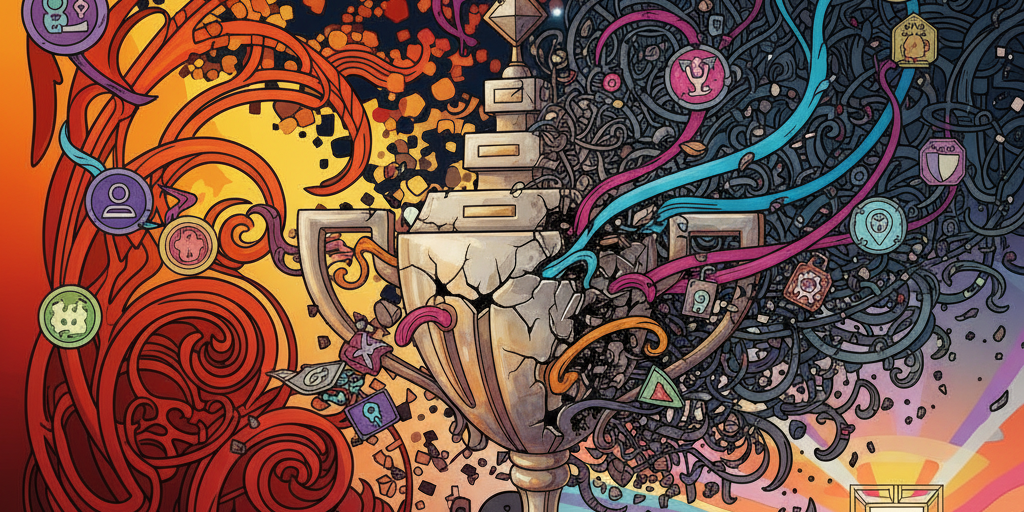
Stop mistaking applause for craft. The real asset isn’t what you collect — it’s what you consistently deliver. A practical blueprint for turning public credentials into private discipline, building teams that challenge, and shipping the work that actually matters.
What if the trophies on your shelf are actually the bars of your cage?
What if the badges you've spent years collecting (degrees, followers, likes) are just shiny distractions keeping you from the real work that could change everything?
What promise are you still pretending to keep and what will it cost you if you stop pretending today?
The Badge Economy: Polished Identity, Hollow Core
We are masters of a game we were taught to play from birth: the accumulation of badges. The prestigious degree, the impressive job title, the follower count that proves our relevance. We build a careful identity based on these external markers, a life polished to a high shine.
We celebrate diplomas, badges, follower counts and neat résumés as if they’re guarantees. They make comfortable dinner conversation and tidy investor slides. There’s a certain comfort in this tidy world, where we are rewarded for being good at getting credentials.
You're navigating a landscape where success looks like a polished resume or a viral feed, chasing approvals from institutions and crowds that promise validation. It's comfortable, this game of accumulating stamps of approval, but beneath it lurks a hollow core: true mastery isn't handed out in ceremonies or measured in retweets.
But a quiet, menacing threat looms within this reality: the gnawing realisation that the certificate and the charlatan often get the same applause, while true ability, the profound skill of actually keeping a promise, is often overlooked. People confuse applause with reliability. Real credibility is not a logo on your profile; it’s the small set of promises you actually keep.
Teams, Echoes, and the Death of Curiosity
Meanwhile, teams split into two bad habits: groups that mirror each other until nothing new happens, and groups that clash so destructively nothing ships. Curiosity, that restless itch that once led us to experiment, to ask dumb questions and learn, gets boxed into quarterly metrics.
Instead, it's proven in the quiet delivery of what you pledge, the results that stick, insights that shift realities. We surround ourselves with echoes, teams that nod along without friction, stifling the spark that drives us to probe deeper, to reinvent. This mismatch breeds a subtle rot: innovation stalls, buried under safe harmonies, while the fear of standing out silences your rawest ideas.
The Slow Cost: Time, Reputation, and Regret
The longer we play this game, the heavier the cost becomes. We start sanding down our own authentic edges to fit into neat, acceptable boxes. That primal human instinct to wonder, to explore, to innovate simply for the sake of discovery, gets buried under the suffocating weight of what we should be doing.
The fear of being disliked becomes a silent poison. And for what? It absolutely sucks to not be yourself. In the desperate, draining chase to be liked by everyone, we risk becoming someone we don't even recognise. We forget that no matter how big we become, our time is finite. Everyone will move on. You haven't thought about the Queen of England's passing until just now, have you?
This isn’t abstract. A product delayed by pride or perfectionism misses its market window. A leader who prioritises being liked dilutes decisions until nothing inspires the team.
Time compounds the damage. Months become years of incremental death-by-consensus. The irony is brutal: you build a reputation of competence by chasing approval, then lose the one thing that actually creates it: the habit of delivering.
Ignore this disconnect, and watch it erode your edge. Opportunities slip away as charlatans with flashy titles outpace the quiet doers, leaving you questioning your worth in a sea of superficial wins.
The toll mounts: burnout from performative alliances, where compatibility without challenge breeds complacency, turning bold visions into muted routines. Emotionally, it's a grind. The sting of rejection amplified, the dread of not fitting in twisting into self-betrayal, all while time ticks on.
Remember, even empires crumble; rulers amass fortunes and fade into footnotes, their legacies forgotten in weeks. Cling to this facade, and you'll vanish too, your potential devoured by the very approvals you crave, leaving a life of regrets sharper than any dislike.
The Realisation: Expertise as Demonstration, Not Decoration
The escape doesn't come from earning one more certificate. The breakthrough is a radical shift in perspective: realising the entire game is rigged against your potential.
It’s the profound understanding that expertise isn't a credential awarded to you; it's a result you demonstrate. It’s a promise you point to and say, with unshakable integrity, "I made that happen." This journey isn't meant to be solitary.
The real magic happens when you stop looking for impressive resumes and start looking for a shared rhythm. You find your people. The ones who play your kind of jazz, but who will also challenge your solo, pushing the entire performance into a territory of brilliance none of you could have reached alone.
Practice: Flip the Contract, Keep Tiny Public Promises
Flip the contract. Start from one tiny, public promise you can keep this quarter, then do it. Treat expertise as a track record of kept promises, not a list of certificates. Assemble collaborators who share your taste and standards. People who harmonise with you but are brave enough to call you out when you’re settling.
Let curiosity rule the calendar: run fast, cheap experiments, learn loud and early, then let the lessons shape the next move. Lastly, choose authenticity over universal likability: it will sting at first, but authenticity draws the people and problems that fit your work.
Mastery emerges not from accolades, but from consistent proof as in delivering on bold commitments that others can't fake.
Fuel this with that innate human drive to question and explore, the same itch that pulled us from ancient plains to map stars and build worlds. And crucially, embrace the discomfort of authenticity; it's far worse to mute your voice for fleeting acceptance than to risk the backlash, knowing oblivion awaits us all anyway.
This blend of results over ribbons, challenging harmony, relentless probing, unapologetic self unlocks the force to shatter the illusions holding you back.
Impact over Logos: Audit, Promise, Experiment
Imagine a future where your value is defined by the impact you make, not the logos on your CV. A reality where your work is fueled by an insatiable curiosity, not a desperate need for external approval.
Picture yourself in a creative ensemble, a team that moves like a single organism composed of individuals who are both deeply in sync and brave enough to push each other to greatness.
It begins the moment you decide to stop collecting trophies and start keeping promises. It starts when you finally give yourself permission to do what you truly want.
Imagine shipping predictably again. Your word becomes the metric investors, customers, and teammates actually watch. Meetings are shorter because critique is honest and generous. Experiments return real data, not excuses. You feel less like a performer and more like a craftsman. People who belong on your team self-select in; everyone else moves on. And that’s how focus gets its wings.
See yourself stepping into a realm where your impact echoes through real transformations: teams that innovate wildly, curiosity birthing breakthroughs that redefine industries, and a life lived boldly, unburdened by the weight of others' opinions.
You'll forge connections that endure, wealth in wisdom and alliances that amplify your strengths, leaving a mark that outlives the noise. No more fading into the background. This is freedom, vitality, the thrill of creation without chains.
Audit your circle for those who challenge without clashing, pick one promise you can deliver in 30 days and announce it publicly; design one micro-experiment you’ll run for 48 hours and record what you learn.
Finally, do one thing this week purely because it’s what you want, not because someone else will like it. Keep the promise. Watch what follows.
The Essential Concepts
The Trap of the "Badge Economy": We have been trained to accumulate "badges" like prestigious degrees, job titles, and follower counts, mistaking these external markers for true ability and credibility. The article argues that this system creates a "hollow core" where the certificate and the charlatan get the same applause. This focus on polish and approval distracts from the real work that matters and leads to a quiet, menacing realisation that true mastery—the ability to keep a promise—is often overlooked.
The Cost of Public Honours: The longer we play this game of collecting badges, the heavier the cost becomes. We lose our curiosity, dull our critical faculties, and sand down our authentic edges to fit into neat, acceptable boxes. The article notes that the fear of being disliked becomes a "silent poison" that leads us to make decisions that are not our own, ultimately leading to a life of quiet regret. This results in a "slow bleed" of trust, reputation, and opportunities, as people lose the habit of delivering on their promises.
The Realisation - Expertise as Demonstration, Not Decoration: The escape from this trap is not to earn one more certificate but to have a radical shift in perspective. The breakthrough is to realise that expertise isn't a credential awarded to you; it's a result you demonstrate. The article argues that true credibility is the "small set of promises you actually keep." The real magic happens when you stop looking for impressive résumés and start looking for a shared rhythm with collaborators who will challenge you to achieve brilliance.
Actionable Steps for Building Real Credibility: The article provides three concrete actions to shift from collecting badges to demonstrating true expertise:
- Keep a public promise: Make one tiny, public promise that you can keep and then do it.
- Audit your circle: Find collaborators who share your taste and standards but are brave enough to challenge you when you are settling for "good enough."
- Prioritise authenticity: Choose authenticity over being universally liked, as this will attract the people and problems that fit your work.
- Run experiments: Let curiosity rule by running fast, cheap experiments, learning loud and early, and letting the lessons shape the next move.
I am a Knowledge Worker...
What does it mean for me?
The post warns that your focus on professional credentials and external validation may be a trap of the "Badge Economy."
You might be spending too much time accumulating prestigious titles and certifications, mistaking them for true competence. This fixation on polished identity creates a "hollow core" where your professional reputation becomes a performance rather than a reflection of your actual skill and work ethic.
The article argues that this leads to a "slow bleed" of trust and opportunity because you're losing the habit of delivering on promises.
The key insight is a radical shift in perspective: expertise is demonstration, not decoration.
Your real credibility is not what's on your resume; it's the "small set of promises you actually keep" and the tangible results you deliver consistently.
How do I action this?
- Make and Keep One Public Promise: Choose one small professional goal you can achieve in the next 30 days—for example, "I will publish a short summary of our team's project findings on our internal blog by the end of the month." Announce this goal in a team meeting or a company chat channel. This is a deliberate act of building real credibility through a kept promise, not a collected badge.
- Audit Your Inner Professional Circle: Over the next week, observe your interactions with colleagues. Identify one person who both shares your professional standards but is also brave enough to challenge your ideas. Intentionally seek out their opinion on a project or an idea you're working on, specifically asking for their candid, critical feedback. This act of auditing your circle helps you move from consensus to challenge.
- Run a "Curiosity" Micro-Experiment: Identify one skill or idea outside your immediate job description that you're curious about. Over the next 48 hours, spend just 30 minutes learning about it through a "fast, cheap experiment"—like watching a short tutorial, reading a single article, or trying out a new tool. Record what you learned and how it might apply to your work.
- Prioritise Authenticity Over Likability: This week, choose one professional decision or action purely because it aligns with your authentic values or work style, even if it might not be universally liked. For example, instead of offering a vague "yes" to a project request, propose a different, more effective approach. This small act of prioritising authenticity helps you move away from the "silent poison" of the fear of being disliked.
I am a Freelancer, Solopreneur, Entrepreneur, Independent Worker...
What does it mean for me?
The post warns that your focus on professional credentials and external validation may be a trap of the "Badge Economy."
You might be spending too much time accumulating certifications, testimonials, and high follower counts, mistaking them for true competence.
This fixation on a polished online identity creates a "hollow core" where your professional brand becomes a performance rather than a reflection of your actual skill and work ethic.
The article argues that this leads to a "slow bleed" of trust and opportunity because you're losing the habit of delivering on promises.
The key insight is a radical shift in perspective: expertise is demonstration, not decoration.
Your real credibility is not your portfolio; it's the "small set of promises you actually keep" and the tangible results you deliver consistently for clients and customers.
How do I action this?
- Make and Keep One Public Promise: Choose one small business goal you can achieve in the next 30 days—for example, "I will launch a new micro-product by the end of the month." Announce this goal publicly on your preferred platform (e.g., social media, email list). This is a deliberate act of building real credibility through a kept promise, not a collected badge.
- Audit Your Inner Professional Circle: Over the next week, observe your interactions with fellow solopreneurs or freelancers. Identify one person who both shares your professional standards but is also brave enough to challenge your business ideas. Intentionally seek out their opinion on a project or an idea you're working on, specifically asking for their candid, critical feedback. This act of auditing your circle helps you move from consensus to challenge.
- Run a "Curiosity" Micro-Experiment: Identify one business skill or idea outside your immediate area of expertise that you're curious about. Over the next 48 hours, spend just 30 minutes learning about it through a "fast, cheap experiment"—like watching a short tutorial on a new tool, reading a single article on a new business model, or trying out a new marketing tactic. Record what you learned and how it might apply to your business.
- Prioritise Authenticity Over Likability: This week, choose one professional decision or action purely because it aligns with your authentic values or business style, even if it might not be universally liked by your audience. For example, instead of catering to a broad market, create a product for a specific niche you care about. This small act of prioritising authenticity helps you move away from the "silent poison" of the fear of being disliked.