Close-up on the Canvas: How Proximity to Noise Converts Potential into Perpetual Waiting.
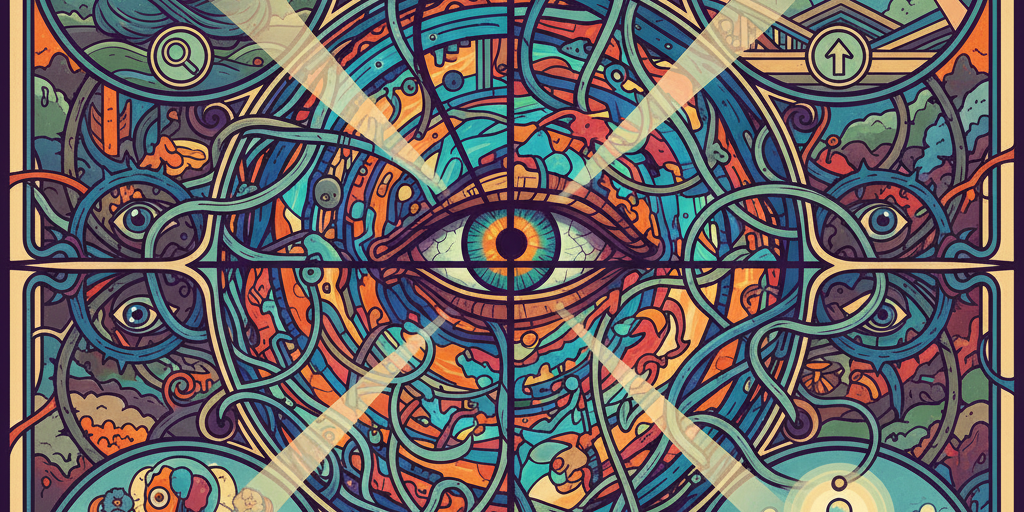
Slow is not complacent. Replace reactive motion with deliberate study and contrarian perspectives so short-term speed buys long-term traction.
A practical manifesto for turning attention into advantage: stop sprinting after distractions and begin cultivating precision through stillness, scrutiny and cognitive diversity.
When did we convince ourselves that moving faster was the same thing as going somewhere?
Are you trading durable advantage for the illusion of momentum?
What if the very certainty you cling to is silently stealing the breakthroughs you deserve?
Too Close to the Glass: Attention, Echoes and Missed Opportunity
We are living with our noses pressed against the glass. As Pico Iyer suggests, we feel like we are standing two inches away from a massive, chaotic canvas. It is noisy, crowded, and changes every microsecond.
In this frenetic state, we waste hours agonising over the opportunities we don’t have, an anxiety that comes directly at the expense of maximizing the tangible opportunities sitting right in front of us.
We force ourselves to digest information and pursue paths because we feel we "ought" to, or because it is part of a current movement. We pick up books, projects, and habits that bore us or don't fit our season of life, ignoring the wisdom of Doris Lessing: if it drags, drop it.
Continuing to push against the grain of your own intuition isn't discipline; it's a misunderstanding of timing. A challenge that feels impossible at twenty might open doors at forty, but only if you stop forcing it out of its right time.
Most of us operate inside a loop that rewards speed, noise and endless options. We surround ourselves with echoes (people who confirm what we already believe) so the blind spots never surface. We habitually chase the newest opportunity, convinced the next thing will fix what the current thing lacks.
Meanwhile our attention fragments across a crowded canvas of tasks, trends and urgencies, and what should be deep work becomes a string of shallow moves. As Paul Smith warns, “What we see in people is determined, in large part, by what we expect to find.” That expectation blinds us to what actually matters.
We reward constant motion, yet beneath the surface lies a quiet flaw: we surround ourselves with echoes of our own thinking. The comfort of familiar voices blinds us to blind spots, and the relentless chase for “the next big opportunity” drains the energy needed to nurture the chances already in our grasp. This invisible threat isn’t a lack of ideas; it’s a scarcity of perspective, a tunnel vision that turns potential into perpetual waiting.
The Cost of Cheap Speed: Biases, Waste and the Emotional Tax
The obsession with pace is a trap. Anyone can move fast; speed is cheap. But the ability to be fast without being reckless? That is expensive.
When we prioritise velocity over understanding, we fall victim to our own biases. Author Paul Smith warned that what we see in people (and problems) is determined largely by what we expect to find. If you are running too hot, you simply project your own expectations onto reality rather than seeing the truth.
You skip the details because you think they slow you down, unaware that this negligence is exactly what will cause the eventual crash. You are driving blind, convinced that pressing the accelerator harder will fix the fact that you’re lost.
Worrying about the opportunities you don’t have steals time from the ones you do. Anxiety about hypothetical wins creates a permanent state of distraction: decisions are rushed, learning is episodic, and mistakes compound.
Speed without context breeds waste: rapid experiments that never reach maturity, relationships that never deepen, strategies that scratch the surface but miss the root.
The emotional tax is real: exhaustion, regret and the creeping sense that effort is abundant but results remain thin. The paradox is brutal: speed looks like progress while it quietly consumes long-term potential.
Every hour spent fretting over missed chances compounds the loss of depth in the moments we actually have. Speed becomes a siren son. Anyone can sprint, but reckless haste erodes judgment.
The cost isn’t just missed deals; it’s the erosion of strategic insight, the fatigue of chasing shadows, and the creeping anxiety that tomorrow’s canvas will be forever smeared with today’s unfinished strokes.
As the pressure mounts, the very details that could accelerate progress become perceived obstacles, and the emotional toll tightens its grip.
True Velocity: Stillness, Scrutiny and Cognitive Diversity
True velocity is born from stillness and scrutiny. The chess master’s lightning-fast move doesn’t happen by chance; it comes from decades of slow, deliberate study. The most effective leaders aren't hovering in the clouds; they are the people willing to get into the weeds, because they know that is where the problems lurk.
Contrary to the modern narrative, details don’t slow you down, they speed you up. They prevent the rework and the wreckage.
To break the cycle of frantic rushing, you must disrupt your own echo chamber. Surround yourself with people who are thoughtful in ways you are not. You need them because they can see the blind spots you are physically incapable of seeing. You need to step back from that noisy canvas and stand still long enough to see what the picture actually means.
The counterintuitive move is deliberate deceleration. Investing slow effort so you can move fast when it counts. Cultivate a small circle of people who think differently than you; they will reveal blind spots you cannot see alone.
Step back and let the noise settle. Pico Iyer reminds us that standing farther back and standing still lets the wider picture emerge.
Read and choose what nourishes your judgment: follow Doris Lessing’s practice of browsing, picking what attracts, and abandoning what bores, reading not out of duty but when it serves the moment.
Imagine stepping back from the frantic brushstrokes and viewing the whole canvas from a distance, as Pico Iyer suggests. In that pause, you notice patterns you never saw while racing forward.
The key is to curate a circle of thinkers whose lenses differ from yours. People who spot the gaps you miss. Their diverse viewpoints act as a slow‑burning chess master’s study, turning lightning moves into calculated strikes. By valuing depth over sheer velocity, you transform details from distractions into accelerators, allowing you to move swiftly yet deliberately.
The Future Built Slowly: Vision, Gains and Immediate Steps
Picture a landscape where each decision is informed by a chorus of fresh insights, where the time once wasted on imagined opportunities fuels the mastery of the ones you hold. Projects launch with confidence, not haste; collaborations spark innovation rather than friction; and the daily grind feels less like a race and more like a purposeful march toward a horizon you can truly see.
Imagine a way of working where you no longer feel the need to chase every trend. You read and explore only what attracts you, trusting your instincts to guide your growth. You stop worrying about the abstract "more" and start dominating the "now."
By slowing down to master the details, you essentially purchase future speed. You move with the confidence of the chess master: decisive, accurate, and untroubled by the noise. Stop running. Step back. Look at the opportunities currently in your hands, not the ones in your head.
Imagine decisions that land because they were shaped, not rushed. Imagine speed that scales. Quick when precision is earned, decisive because groundwork was laid.
Stop sprinting after every bright object. Focus on growing what’s within reach, deepen your attention, and let real momentum follow. Take those three steps now and watch the noise clear and momentum won’t feel frantic; it will feel inevitable.
To start: replace one hour of reactive scrolling per week with quiet study; invite one thoughtful contrarian into your decision circle this month; for every new opportunity you consider, ask how it amplifies what you already own.
Seek out a colleague whose expertise challenges your own, schedule a weekly “perspective swap,” and commit to pausing before the next sprint. Let the quiet power of thoughtful diversity replace the noise of endless urgency, and watch your reality reshape itself into the future you’ve been waiting to build.
The Essential Concepts
Proximity, Cheap Speed, and Echoes
The obsession with constant, rapid motion blinds us to present opportunities and consumes long-term potential.
- Too Close to the Glass (Attention): Standing too close to the "massive, chaotic canvas" of information leads to wasting hours agonizing over missed opportunities at the expense of maximizing tangible opportunities right in front of us.
- The Cost of Cheap Speed: Speed is cheap; speed without recklessness is expensive. Prioritizing velocity over understanding makes us project our own expectations onto reality (Paul Smith's warning) rather than seeing the truth. This causes us to skip the details that prevent rework and eventual crashes.
- The Echo Chamber: We surround ourselves with voices that confirm our beliefs, ensuring our blind spots never surface. This constant motion and scarcity of perspective turns potential into perpetual waiting.
- Wasted Effort: Continuing to push against intuition ("if it drags, drop it" - Doris Lessing) is not discipline; it is a misunderstanding of timing, leading to exhaustion and a creeping sense that effort is abundant but results remain thin.
Stillness, Scrutiny, and Cognitive Diversity
True velocity is achieved through deliberate deceleration and the disciplined cultivation of perspective.
- True Velocity through Scrutiny: The paradox is that details don't slow you down, they speed you up by preventing wreckage and rework. Like a chess master, lightning-fast moves come from decades of slow, deliberate study and a willingness to "get into the weeds."
- Deliberate Deceleration (Stillness): Step back from the noisy canvas to let the wider picture emerge. This is the counterintuitive move that allows one to notice patterns previously missed while rushing.
- Disrupt the Echo Chamber (Cognitive Diversity): Cultivate a small circle of people who think differently than you (thoughtful contrarians). They provide the perspective and scrutiny needed to see blind spots you are incapable of seeing alone.
- Information as Nourishment: Read and explore not out of duty but out of attraction and when it serves the moment, trusting your instincts to guide your growth.
Immediate Steps for Long-Term Traction
To stop trading durable advantage for the illusion of momentum and to purchase future speed through present stillness, commit to these three actions:
- Cultivate Stillness: Replace one hour of reactive scrolling per week with quiet study (reading, reflecting, or focused deep work).
- Invite Contrarian Perspective: Invite one thoughtful contrarian into your decision circle this month (a colleague or peer whose expertise challenges your own) and schedule a weekly “perspective swap.”
- Amplify What You Own: For every new opportunity you consider, ask how it amplifies what you already own or what is already in your hands, rather than chasing distractions.
I am a Knowledge Worker...
What does it mean for me?
You are experiencing the cost of Too Close to the Glass attention, where constant activity in The Echo Chamber ensures your professional blind spots never surface.
This reactive motion prioritizes Cheap Speed over true understanding, causing you to project your expectations onto problems (Paul Smith's warning) and skip the details that prevent rework—turning potential into perpetual waiting for a breakthrough.
This Wasted Effort is a misunderstanding of timing ("if it drags, drop it") that drains your long-term potential.
Your path to career velocity requires Deliberate Deceleration (Stillness) to see the wider picture.
By cultivating Cognitive Diversity through thoughtful contrarians, you gain the Scrutiny needed to transform details from obstacles into accelerators, ensuring your lightning-fast moves are calculated, not reckless.
How do I action this?
- Cultivate Stillness (Deliberate Deceleration): Replace one hour of reactive motion (e.g., checking email/Slack outside of defined blocks, endless scheduling tweaks) per week with quiet study—focused reading, reflection, or deep work on your most complex, non-urgent task.
- Invite a Contrarian Perspective (Disrupt the Echo Chamber): Identify one thoughtful contrarian colleague (whose expertise or thinking style fundamentally challenges your own). Invite them for a 30-minute "perspective swap" this month, specifically asking them to critique your current project's underlying assumptions.
- Amplify What You Own (Maximizing Tangible Opportunities): Before accepting the next new opportunity or project (even internal ones), ask: "How does this directly amplify the skill, relationship, or asset I already own?" If the answer is "It doesn't," delegate or decline, focusing energy on opportunities right in front of you.
- Prevent Rework via Scrutiny (True Velocity): Before declaring a major task or deliverable "done" (e.g., a report, a set of requirements), force yourself to spend 15 minutes doing a detailed scrutiny review to catch the small details that prevent later rework—acting as your own "chess master" to purchase future speed.
I am a Freelancer, Solopreneur, Entrepreneur, Independent Worker...
What does it mean for me?
Your greatest vulnerability is Too Close to the Glass attention, where you waste energy agonizing over abstract market opportunities instead of maximizing the tangible ones in your hands.
This addiction to Cheap Speed in launching and pivoting means you skip the details that prevent business wreckage, often projecting your own expectations onto your customers or niche.
Operating in The Echo Chamber of peers and influencers ensures you never see the blind spots in your model. The strategic remedy is Deliberate Deceleration (Stillness).
By cultivating Cognitive Diversity in your advisory circle and using True Velocity through Scrutiny, you stop pushing against intuition ("if it drags, drop it") and start building a durable business advantage with calculated, non-reckless speed.
How do I action this?
- Cultivate Stillness (Deliberate Deceleration): Replace one hour of reactive scrolling (checking competitor news, social media trends) per week with quiet study—focused reading, reflecting on a core business assumption, or deep work on refining your value proposition.
- Invite a Contrarian Perspective (Disrupt the Echo Chamber): Identify one thoughtful contrarian (a peer, mentor, or expert) whose business philosophy challenges your own. Invite them for a 30-minute "perspective swap" this month, specifically asking them to challenge your primary revenue stream's sustainability.
- Amplify What You Own (Maximizing Tangible Opportunities): For every new service, product idea, or marketing channel you consider this month, ask: "How does this amplify what I already own (existing client base, mastered skill, proprietary data)?" If it requires building from scratch, mark it for later, prioritizing opportunities right in front of you.
- Read for Nourishment (Information as Nourishment): Adopt Doris Lessing's practice of reading only when it serves the moment: actively browse and select one book or long-form article that directly addresses a current business problem (e.g., pricing, conversion), and abandon it immediately if it starts to drag or feel like "duty."