Decision Ownership and Siege Engineering: Tactical Constraints to Protect Deep Work.
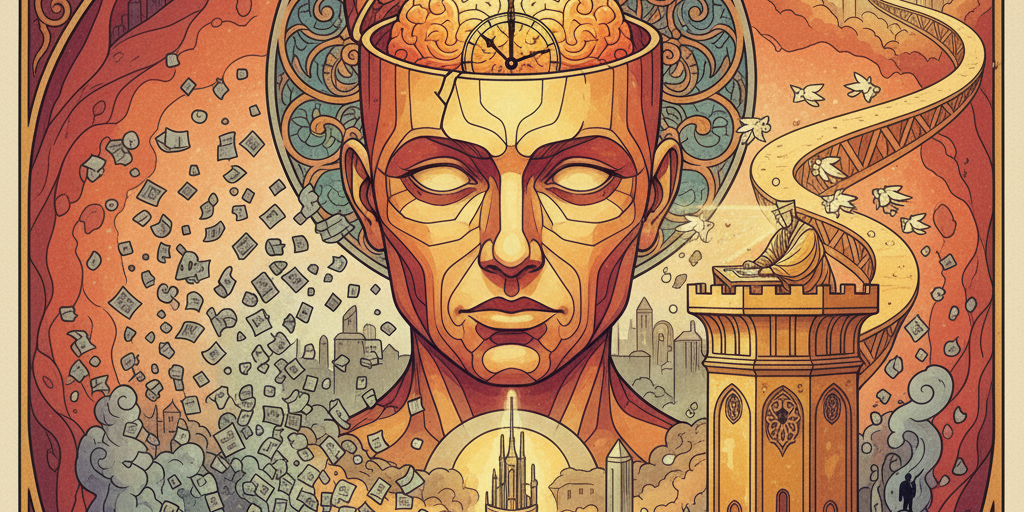
Why routine collaboration often functions as a leakage mechanism for strategic momentum and what structural choices stop the bleed. Practical tactics: choose decision owners, narrow participation, build rapid falsification probes, and manufacture constraint to force progress.
Is your calendar a graveyard for deep work?
If trying to please everyone is your safe strategy, what would you rather be, consumed by endless tweaks, or remembered for one unmistakable thing?
What if the endless distractions stealing your focus aren't just annoyances but chains keeping you from creating something timeless?
The Performance-of-Work Trap
We're drowning in the performance of work. Our days are consumed by "collaboration". A relentless parade of meetings, check-ins, and requests for input. It feels productive, even inclusive. But it’s a trap. We've all been in that meeting: the one convened to approve a multi-billion-dollar nuclear power plant, where the entire hour is devoured by a debate over the colour of the employee bike shed.
This isn't a metaphor; it's our daily schedule. We've mistaken endless discussion for progress. The truly complex, high-stakes work, the one that could change everything, is too hard to tackle in a 30-minute slot, so it gets pushed to next week, indefinitely. Meanwhile, the bike shed gets a new committee.
Most teams default to a brittle moderation: they bend to the loudest complaint, dilute the offer to comfort the skeptics, and call a thousand-people meeting “alignment.” That posture rewards opposition while punishing clarity, for example: customers and colleagues who ask for slightly different versions of the same thing.
Think of those sessions where everyone debates minor tweaks while the core strategy gathers dust. Or chasing clients who nitpick every offering, demanding endless revisions that drain your spirit without satisfaction. It's a world where untested theories sit idle, gathering doubt, and procrastination masquerades as preparation, leaving manuscripts unfinished and potentials untapped.
Outcomes: Momentum Leak & Scattered Energy
The result is a portfolio of watered-down products, meetings that produce notes instead of decisions, and a workforce exhausted by constant, trivial input. Underneath this politeness sits a deeper hazard: momentum leaks. You think you’re iterating; you’re actually eroding decisive advantage.
You're knee-deep in daily routines, juggling meetings, emails, and side tasks that feel productive but scatter your energy like confetti in the wind. Comfort comes from ticking off small wins, yet lurking beneath is a sly thief: the habit of fixating on trivial details while big ideas languish.
Emotional and Strategic Cost
This isn't just inefficient; it's a spiritual rot. The real cost isn't the wasted hour; it's the slow, agonising death of momentum. It’s the brilliant minds in the room, the ones with actual expertise, who are forced to sit silently while the conversation is dominated by those with nothing meaningful to contribute.
We’ve become obsessed with placating the picky, the oppositional voices who want something slightly different just to be heard. In the process, we've failed the particular: the people who know exactly what they need and are just waiting for us to finally deliver it. The most informed opinions are buried under the weight of triviality, and your most important projects are left to starve.
Every month spent debating minutiae is a month of opportunity stolen from focus. Revenue stalls when offerings are vague; teams burn out on low-value work; strategic bets never get stress-tested, so promising ideas stay theories on a slide deck.
Worse, indecision compounds: long meetings become rehearsals for inertia, and the “right” contributor is lost in a crowd. Emotionally, it breeds guilt and resentment, pride at what could have been, shame for what was avoided. Practically, it costs talent, time, and the rare chance to shape a category.
As this drags on, the toll mounts, missed deadlines erode your confidence, turning bold visions into faded regrets. Relationships strain under the weight of unfulfilled promises; opportunities slip away as competitors charge ahead, unburdened.
Emotionally, it's a slow burn: frustration boils into resentment, self-doubt creeps in like fog, and the fear of failure paralyses, trapping you in a cycle where even simple decisions stretch into marathons. Worse, it siphons your finite time, leaving you exhausted, questioning if your best work will ever see daylight before life's urgencies consume it all.
Discipline and Tactics
The solution isn't a new productivity app. It's a new discipline. The breakthrough is ruthless specificity. A gathering without a focused, particular purpose isn't a meeting; it's a social event. That purpose must become your bouncer, filtering every decision, especially who gets to be in the room.
If the goal is to make a decision, you don't need a crowd; you need the few "cooks" who matter and a designated individual in charge of the final judgment. This doesn't mean silencing new ideas. If someone, even without a long track record, has a logical theory, you stress-test it. You play the probabilities. But you must learn to separate the high-value stress-test from the low-value bike-shed discussion.
And when the time for discussion is over? You must become Victor Hugo. When facing a catastrophic deadline for The Hunchback of Notre-Dame, he locked away all his clothes, keeping only a single, massive shawl. Too embarrassed to go outside, he forced himself into a prison of his own making. He had no other option but to write.
Change starts by choosing who you deliberately serve, then forcing your thinking to meet them. Be surgical about the audience you design for, those who tell you exactly what will delight them, not those who simply oppose.
Treat hypotheses like currency: build quick, cheap tests to falsify or refine them; you’re trading certainty for data, probabilities for clarity. Make gatherings useful by giving them a single, explicit purpose, inviting only those with direct knowledge, and naming one person to decide.
Finally, manufacture constraint: carve a forcing function, an accountability ritual that narrows escape routes and amplifies focus, so work moves from polite debate to fierce execution.
Strip away the non-essentials, lock in on what truly matters by surrounding yourself only with those who align with your vision. Folks who articulate their needs clearly, making delight straightforward.
Test those logical hunches rigorously, weighing odds without waiting for perfection. Craft gatherings with razor-sharp intent, inviting just the voices that count, sidelining the noise of irrelevant input.
And when delay threatens, engineer your own siege, remove temptations, confine your space to the essentials, forcing output through sheer, unyielding commitment, much like wrapping yourself in isolation to birth a masterpiece.
Vision
Imagine a week where your calendar is defined by vast, open blocks of silence. Imagine a creative "cell" where your focus is absolute. This is what happens when you design your own constraints and lock away the distractions.
You will be astonished at what you can accomplish when you finally have no other option. When you stop "aligning" and start executing. When you trade the comfort of the committee for the cold, brilliant isolation of the desk. This week, find your "shawl." Identify the one piece of work that truly matters. Decline every meeting that lacks a specific, vital purpose. Lock the door. It's time to finish your masterpiece.
Imagine a calendar where meetings end with a named owner and a next step, where products are intentionally aimed at a defined few who become evangelists, where experiments either fail fast or scale quickly. Teams breathe again because effort lines up with impact; strategies stop accumulating dust and start producing results.
Picture emerging into a realm where your energy fuels breakthroughs, not battles; where ideas flow freely, yielding works that resonate deeply and endure. You'll reclaim your edge, sharper decisions, deeper fulfillment, and a legacy built on substance over superficiality. Frustrations fade, replaced by the thrill of momentum, connections that energise, and the quiet pride of having conquered inertia.
If you want that reality, begin now: pick one customer profile to serve exclusively for 90 days; design a two-week probe to stress-test your central assumption; schedule one tightly-purposed meeting this week with no more than five relevant people and a single decision-owner; and set one self-imposed constraint (a short, severe focus window) to force progress. Do these four things and you will stop arguing about trivialities and start building what matters.
The Essential Concepts
The Performance-of-Work Trap
The fundamental challenge is the Performance-of-Work Trap, where routine "collaboration" and a relentless parade of meetings and check-ins function as a leakage mechanism for strategic momentum.
- Momentum Leak (Definition): The process where energy is scattered and decisive advantage is eroded by constant, trivial input (the "bike shed" problem) while the truly complex, high-stakes work (the "nuclear power plant") is indefinitely deferred.
- Brittle Moderation: The default posture of teams bending to the loudest complaint and diluting the offering to comfort skeptics. This posture rewards opposition and punishes clarity, leading to watered-down products and meetings that produce notes instead of decisions.
- Spiritual Rot: The slow, agonising death of momentum and the moral erosion that occurs when informed opinions are buried under the weight of triviality, causing the most important projects to starve.
Siege Engineering and Constraint
The breakthrough is a new discipline of ruthless specificity and Siege Engineering, which involves manufacturing constraint to force progress and protect deep work.
- The Bouncer Principle (Meeting Discipline): A gathering without a focused, particular purpose is a social event, not a meeting. That purpose must become the "bouncer," filtering every decision, especially who gets to be in the room (you need the few "cooks" who matter, not a crowd).
- Decision Ownership (Framework): For decisions, you need a designated individual in charge of the final judgment. This Decision Owner prevents indecision from compounding into inertia.
- Siege Engineering (Principle): Manufacturing constraint (like Victor Hugo locking away his clothes) to create a "prison of your own making." This narrows escape routes, amplifies focus, and forces work to move from polite debate to fierce execution.
- The Particular over the Picky: The discipline of choosing who you deliberately serve—the people who know exactly what they need—rather than placating the picky, oppositional voices who ask for different versions just to be heard.
Practical Tactics: Recovering Optionality
To stop "aligning" and start executing, the article prescribes four tactical moves:
- Narrow Customer Focus: Pick one customer profile to serve exclusively for 90 days to force specific thinking.
- Rapid Falsification Probes: Design a two-week probe to stress-test your central assumption, trading certainty for data.
- Tightly-Purposed Meetings: Schedule one tightly-purposed meeting this week with no more than five relevant people and a single decision-owner.
- Manufacture Constraint: Set one self-imposed constraint (a short, severe focus window) to force progress on your single most important piece of work (your "shawl").
I am a Knowledge Worker...
What does it mean for me?
Your career momentum is likely suffering from the Performance-of-Work Trap, where mandatory "collaboration" acts as a Momentum Leak mechanism.
This is the Spiritual Rot where informed opinions are buried under Brittle Moderation—the default where your team bends to the loudest, pickiest complaint, sacrificing clarity for consensus.
Your calendar is becoming a graveyard for the "nuclear power plant" projects, while trivial "bike shed" issues consume all the air.
The breakthrough is Siege Engineering and Decision Ownership.
By applying the Bouncer Principle to your time and meetings, and creating your own "prison of your own making" (self-imposed constraint), you can stop arguing about trivialities and finally move from polite debate to fierce execution, protecting the deep work that defines your professional value.
How do I action this?
- Manufacture Constraint (Siege Engineering): Identify your single most important piece of work this week (your "shawl"). Set a self-imposed constraint (a short, severe focus window, e.g., "I will work on this for 90 minutes with Wi-Fi and all notifications off, and nothing else") to force progress and create a "creative cell" for deep work.
- Tightly-Purposed Meetings (The Bouncer Principle): For the next meeting you schedule or organise, limit the attendance to no more than five relevant people who have direct knowledge. State the single, explicit purpose of the meeting in the title (e.g., "DECIDE: Q3 Project Go/No-Go Criteria") to enforce the Bouncer Principle.
- Decision Ownership (Clarity over Crowd): In your next multi-contributor project, explicitly name a single Decision Owner responsible for the final judgment, even if consensus isn't reached. Document this role upfront to prevent indecision from compounding into inertia (the Momentum Leak).
- Rapid Falsification Probes (Test Hypotheses): Identify a core, unproven assumption in your current project (e.g., "This feature will save 5 hours per month"). Design a two-week, low-cost probe (e.g., a simple user survey, a small-sample internal test) to stress-test and falsify the assumption, trading certainty for data.
I am a Freelancer, Solopreneur, Entrepreneur, Independent Worker...
What does it mean for me?
You are suffering from the Performance-of-Work Trap, where every request for input or small tweak creates a constant Momentum Leak, draining your solo energy.
This often manifests as Brittle Moderation in your client selection—you chase the picky, oppositional voices with endless revisions instead of serving the particular clients who know exactly what they need.
The resulting Spiritual Rot means your most innovative offerings starve. The solution is Siege Engineering and The Bouncer Principle.
By manufacturing constraint (like Victor Hugo) and focusing exclusively on a narrow target, you trade the chaos of constant input for the quiet, ruthless specificity required to build a masterful, durable business.
How do I action this?
- Manufacture Constraint (Siege Engineering): Identify the one piece of high-leverage work that will define your next 90 days (e.g., a new service launch, a flagship piece of content). Set a self-imposed constraint (e.g., "I will not check email or social media until this task is 80% complete") to force progress and execution.
- Narrow Customer Focus (The Particular): Pick one customer profile (e.g., "Founders of B2B SaaS in X niche") to serve exclusively for the next 90 days. Decline any opportunity that falls outside this specific profile, enforcing the discipline of The Particular over the Picky to stop diluting your offering.
- Rapid Falsification Probes (Test Hypotheses): Identify a central business assumption (e.g., "Clients will pay $10k for this"). Design a two-week probe (e.g., five targeted sales calls with that number, a soft launch to a test group) to stress-test and rapidly falsify the assumption, prioritizing data over comfortable preparation.
- Tightly-Purposed Client Meetings (The Bouncer Principle): For your next client check-in or collaboration session, set a single, specific decision point as the only agenda item (e.g., "Approve the final creative direction"). Use this explicit purpose as the Bouncer Principle to shut down any bike-shedding about minor, trivial details.