False Certainty and the Feedback Tax: Diagnosing Why More Checks, Data, and Minutes Don't Produce Better Outcomes.
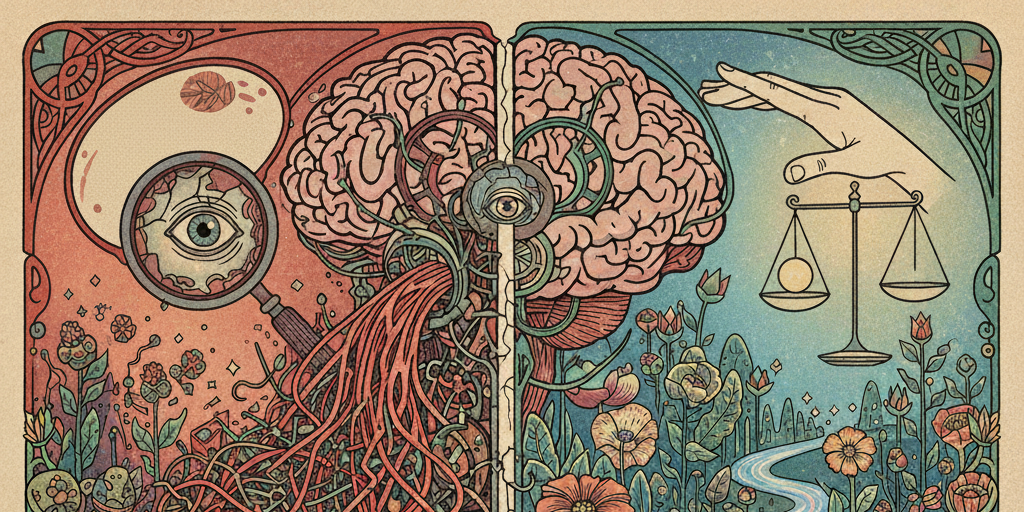
Why activity metrics and relentless feedback amplify mistakes and how open inquiry, diagnostic rituals, and restraint compound real gains. A practical case for replacing frenetic correction with structured diagnosis. Three small, surgical changes that reduce error and free scarce attention.
Is your "best effort" actually the very thing holding you back?
What if your next burst of effort doesn’t move you forward but it buries you?
What if the very habits you trust to keep you safe are silently stealing your growth?
Flawed cognition, false confidence
The standard prescription for any struggle is almost always the same: Try harder. Pay more attention. Force the result. We wear our intelligence like armour, convinced that if we are just smart enough and intense enough, we can control the outcome.
But being smart is pointless if you aren’t at peace. As Morgan Housel observes, raw intelligence is constantly overridden by ego, insecurity, impatience, and bad incentives.
We trust our perceptions implicitly, yet our minds are unreliable narrators. Consider the case of Donald Thomson in 1970s Australia. A victim identified him as her attacker with absolute certainty. She had the visual memory, the trauma, and the conviction. But she was wrong. She had been watching Thomson on TV discuss the fallibility of memory at the exact moment she was attacked, and her mind stitched his face onto the crime.
If our most "certain" memories can be hallucinations, what else is our confident, busy mind getting wrong?
Volume ≠ value: noise, metrics, and overload
We celebrate relentless output: daily posts, more meetings, denser dashboards. That applause hides a blunt fact. Volume is not the same as value. Consider a writer who, over 25 years, repeatedly shipped work until the count reached the tens of thousands or millions of words and still claimed he would have written even if no one read it. That devotion is noble; it reveals what matters: work done for its purpose, not only for applause. Yet most systems reward noise.
Leaders measure activity, not diagnosis. Teams fixate on immediate signals and punish uncertainty. Memory and perception, our supposed guides, are fragile: people can be certain and wrong, mixing what they saw on a screen with what they lived. Decisions made on that shaky ground look decisive but are porous.
Most of us glide through days wrapped in familiar routines believing that consistency equals progress. Yet beneath that comfort lies a subtle erosion: we’re drowning in noise, chasing endless metrics, and letting false certainty dictate our choices.
Take the relentless push to “work harder.” We pile on feedback, micromanage every detail, and flood ourselves with data, convinced that more information will unlock better results. In truth, this overload blinds us to the simple truths that actually move the needle. As Shane Parrish notes, the loudest coaching often stalls learning; the quiet, unobstructed mind is where true mastery lives.
Micromanagement and systemic consequences
When we refuse to acknowledge the limits of our control, we suffocate potential. We become like the insecure tennis coach who justifies his fee by pointing out every single error a student makes. We think we are teaching; actually, we are paralysing.
This obsession with "doing more" bleeds into everything. It looks like the manager who micromanages a team into total passivity because they aren't allowed autonomy. It looks like the parent who structures every minute of a child’s life to ensure good grades, only to raise a student who cannot learn without someone breathing down their neck.
By gripping the wheel too tightly, by trying too hard, we produce the exact opposite of what we want. We trade intuition for anxiety and flow for friction.
The consequence is slow rot. Confident but wrong choices erode trust. Micromanagement and relentless correction drain initiative and curiosity; talented people stop searching for better solutions because they learn to wait for permission. Trying harder becomes the default remedy for stagnation. More instructions, more checks, more metrics and yet performance flattens.
Intelligence and skill mean little when ego, insecurity, perverse incentives, or impatience steer the ship. The human cost is real: exhaustion, brittle relationships, wasted careers. The organisational cost is worse: automation and scale amplify these errors. A mistaken identification, a misread metric, a coerced “improvement” multiplies across teams and months. The clock keeps running while opportunity leaks away.
The price of this over‑engineered approach is steep. Energy drains faster, creativity stalls, and anxiety spikes as we chase an ever‑moving finish line. Relationships fray because we mistake constant correction for care, missing the deeper connection that Ray Dalio warns is built on honest, open dialogue.
Even our memories betray us. The infamous case of Donald Thomson shows how a confident eyewitness can be misled by a fleeting TV image, leading to wrongful conviction. Our brains, wired for shortcuts, can conflate signals and fabricate certainty, leaving us vulnerable to costly mistakes both personally and professionally.
Diagnosis and disciplined restraint (principles)
The breakthrough comes when we stop judging our actions and start diagnosing them. As Ray Dalio notes, diagnosis is foundational; you must be open-minded enough to assess reality without the ego getting in the way.
We have to relearn that images are better than words, and showing is better than telling. True improvement often happens when we step back and give less feedback, not more. It requires trusting the quiet depths of the unconscious. It’s not about the manic sprint; it’s about the "sands of time" consistency.
Seth Godin didn't write 3,000,000 words by trying to do it all at once or by obsessing over perfection. He did it by showing up, typos and all, for 10,000 posts over 25 years. He realised that the work isn't about the creator's ego; it’s about providing fuel for others.
Change begins with a different first move: rigorous diagnosis, calm minds, and less frantic control. Diagnosis is not accusation; it’s fidelity to reality, an invitation to test assumptions and to trade certainty for clarity.
When groups adopt open-minded, structured inquiry (exchange that privileges evidence over ego) solutions improve and relationships deepen. Complement that with the discipline of restraint: remove the excess feedback, let practitioners practice, and trust the system to self-correct.
Peak performance often arrives when effort relaxes into flow: fewer instructions, more space for the skilled mind to do what it knows. Finally, choose purpose over applause. Produce work because it matters; use audience and outcomes as mirrors, not narcotics.
Imagine stepping back from the barrage and allowing space for the subconscious to surface. By trimming excess feedback and embracing “effortless flow,” we tap into the still lake of intuition that fuels genuine breakthroughs. Seth Godin’s marathon of 10,000 blog posts reminds us that persistence, not perfection, fuels impact; the real fuel is the community that engages with our work, not the endless polishing of each line.
Vision and concrete moves
The shift begins with three simple moves:
- Pause the hyper‑feedback loop: give yourself and others room to self‑correct.
- Cultivate open‑minded dialogue: treat conversations as diagnostic tools, not verdicts.
- Trust the quiet zones: allow moments of stillness where ideas emerge without forced effort.
Picture a world where projects evolve organically, teams thrive on mutual growth, and your own learning feels like swimming rather than treading water. Creativity resurfaces, decisions become clearer, and the anxiety of “always doing more” fades into confidence.
When you stop trying to force the river, the mind becomes "as still as a glass lake." This is the state of flow, where great art, sports, and leadership emerge. In this transformed reality, action becomes effortless. You act without overthinking. You build quality relationships because you are focused on the back-and-forth of growth rather than the need to be right.
Your work achieves its ultimate purpose not when you perfect it in isolation, but when someone else uses it to build something better. Stop strangling your potential with "effort." Diagnose the blockage, trust the process, and let the work flow.
Imagine teams that surface assumptions before action, that treat confident testimony as provisional, and that build small experiments instead of launching grand edicts.
Picture leaders who ask diagnostic questions first, then coach instead of controlling; people who find peace in their practice and let competence emerge. The result: fewer catastrophic errors, higher-quality relationships, decisions rooted in evidence, and automation tuned to amplify wisdom rather than inertia.
Three concrete moves this week:
- Run an assumption audit on one decision you’re about to make. List what you believe, why, and what would disprove it.
- Replace one instance of exhaustive feedback with a single constraint and space for execution. Observe what corrects itself.
- Create a simple diagnostic ritual: before hiring, firing, or automating, require one counter-evidence check and one quiet-reflection moment.
If you will do something meaningful with your work regardless of applause, and if your organisation learns to diagnose before prescribing, you stop amplifying error and start compounding wisdom. Take those three steps now. They are small, surgical, and immediate.
Take the first step now. Your future self will thank you.
The Essential Concepts
The Cognitive Trap: Intelligence as Armour
We often mistake intensity for control, yet the more we "try," the more we risk overriding our natural competence with ego and anxiety.
- Flawed Cognition: Raw intelligence is frequently sabotaged by impatience and bad incentives. We trust our perceptions, yet the mind is an "unreliable narrator."
- The Donald Thomson Lesson: Confidence does not equal accuracy. Memory can be a hallucination where the brain conflates signals (like a face on a TV screen with a face at a crime scene), leading to "certain but wrong" decisions.
- Volume vs. Value: High output (denser dashboards, more meetings) is often just noise masquerading as progress. When systems reward activity over diagnosis, they amplify mistakes rather than solving them.
The Feedback Tax: Why Micromanagement Paralyses
When we refuse to acknowledge the limits of our control, we create a "tax" that drains initiative and autonomy.
- The Insecure Coach Syndrome: Constant correction justifies a "fee" but produces passivity. Like a student who can’t learn without someone breathing down their neck, teams lose the ability to function without permission.
- Flow vs. Friction: Gripping the wheel too tightly replaces intuition with anxiety. High-stakes problems require pattern recognition, which is choked off by "hyper-feedback loops."
- Systemic Rot: Automation and scale amplify these errors. A misread metric or a coerced "improvement" doesn’t just affect one person; it multiplies across the entire organisation, leaking opportunity at every turn.
The Diagnostic Remedy: Disciplined Restraint
True improvement is not a manic sprint; it is the "sands of time" consistency of showing up and diagnosing reality without ego.
- Diagnosis Before Judgment: As Ray Dalio suggests, you must assess reality with an open mind. Diagnosis is not an accusation; it is fidelity to the truth.
- The Power of Less: Peak performance often arrives when effort relaxes into flow. By removing excess feedback, you allow the skilled mind—and the system—to self-correct.
- Persistence Over Perfection: Following Seth Godin’s example (10,000 posts over 25 years), the goal is to provide fuel for others, not to polish each line for the sake of your own ego.
The Surgical Action Plan: Three Immediate Moves
To free up scarce attention and stop the "leakage" of wisdom, execute these three changes this week:
- The Assumption Audit: On one upcoming decision, list exactly what you believe, why you believe it, and what specific evidence would disprove it.
- The Single Constraint: Replace exhaustive feedback with a single, clear constraint. Provide the space for execution and observe what corrects itself without your intervention.
- The Diagnostic Ritual: Before any major "hiring, firing, or automating" event, mandate a counter-evidence check and five minutes of quiet reflection to separate evidence from ego.
I am a Knowledge Worker...
What does it mean for me?
In the corporate world, you are likely trapped in a cycle where Volume vs. Value is the dominant metric, leading you to use Intelligence as Armour.
You might believe that denser dashboards, more frequent status updates, and "trying harder" are the keys to promotion, but this intensity often creates a Feedback Tax that paralyses your actual output.
By over-correcting every minor detail, you trigger the Insecure Coach Syndrome, where you or your team lose the ability to act without permission.
This "gripping of the wheel" replaces professional Flow with Friction, turning your workday into a manic sprint that actually amplifies mistakes rather than solving them.
The personal risk is a "slow rot" of your professional judgment. Because the mind is an Unreliable Narrator, you may feel "certain but wrong" about a strategic direction or a colleague’s performance—much like the Donald Thomson Lesson where memory conflated signals.
Without a shift toward Disciplined Restraint, you risk automating and scaling your own biases.
To advance, you must move away from frantic activity and toward Diagnosis Before Judgment, realising that true career growth comes from Persistence Over Perfection and the ability to let a system self-correct rather than micromanaging it into passivity.
How do I action this?
- Conduct an Assumption Audit on a Key Project: Identify one major decision you are about to finalise. List your core beliefs about why this is the "right" move, then force yourself to write down three specific pieces of evidence that would disprove your theory. This breaks the "certain but wrong" cycle by treating your confidence as a hypothesis rather than a fact.
- Apply the "Single Constraint" to Your Next Delegated Task: Instead of giving exhaustive, multi-point feedback to a colleague or direct report, provide one single, clear constraint (e.g., "The solution must be under $500" or "The presentation must be only three slides"). Step back and allow the "space for execution" to see what errors the other person corrects naturally without your intervention.
- Implement a Diagnostic Ritual for High-Stakes Events: Before any major organisational "event" (like a performance review, a hiring recommendation, or a new software rollout), mandate five minutes of quiet reflection and a counter-evidence check. Ask: "What am I ignoring because it conflicts with my current ego or incentives?"
- Shift from Volume to Value in Communications: Audit your weekly output (emails, meetings, reports). Identify one recurring "noise" item that is rewarded by the organisation but adds no diagnostic value. Replace that activity with a diagnostic question directed at a peer, shifting the focus from "how much we did" to "what the reality of the situation is."
I am a Freelancer, Solopreneur, Entrepreneur, Independent Worker...
What does it mean for me?
As an independent, you are your own "Insecure Coach." Without a boss, you likely tax yourself with a Hyper-feedback Loop, constantly checking analytics and tweaking your product in a state of False Confidence.
This is the Cognitive Trap: you mistake the intensity of your hustle for actual control over market outcomes.
When you try too hard to "force" business growth, you choke off the pattern recognition required for high-stakes problem solving.
You end up chasing Volume vs. Value, shipping "noise" because you are terrified that silence or restraint equals stagnation.
Your sustainability depends on Persistence Over Perfection.
Like Seth Godin’s 10,000 posts, your goal is to provide fuel for your audience, not to let your ego polish every line until the opportunity has passed.
You must adopt a Diagnostic Remedy, assessing your business reality with the cold open-mindedness of a scientist.
If you don't, you will suffer from Systemic Rot, where you scale your own flawed cognition and "unreliable narration" into an automated business model that leaks revenue and opportunity while you wonder why "working harder" isn't working.
How do I action this?
- Audit Your Business Assumptions: Take your most confident belief about your market (e.g., "Clients only want lower prices") and perform a Surgical Audit. List exactly what data you have to support this and identify one piece of counter-evidence you have been ignoring. This separates your business strategy from your "unreliable narrator."
- Practice Disciplined Restraint in Your "Shipping" Process: Select one project or piece of content you are currently "over-polishing." Set a Single Constraint (e.g., "Must be published by 4:00 PM today regardless of typos") and hit send. Observe the results to realise that Persistence Over Perfection is what builds a durable brand.
- Create a "Quiet Zone" Diagnostic Ritual: Before making a major business pivot (hiring a freelancer, firing a client, or investing in new tech), schedule a 10-minute block of total silence. During this time, perform a "counter-evidence check" to see if your decision is driven by ego and insecurity rather than a diagnosis of actual business needs.
- Reduce the "Feedback Tax" on Your Routine: Identify one metric you check daily that causes you anxiety (e.g., daily follower count or hourly sales). Constraint: Check this metric only once per week. Use the freed-up attention to engage in open-minded dialogue with a past client, seeking a "diagnosis" of their experience rather than a "verdict" on your worth.