How Quiet Fragmentation Kills Professional Relevance: A Practical Reframe From Fixing to Connecting in the Age of Machine Scale.
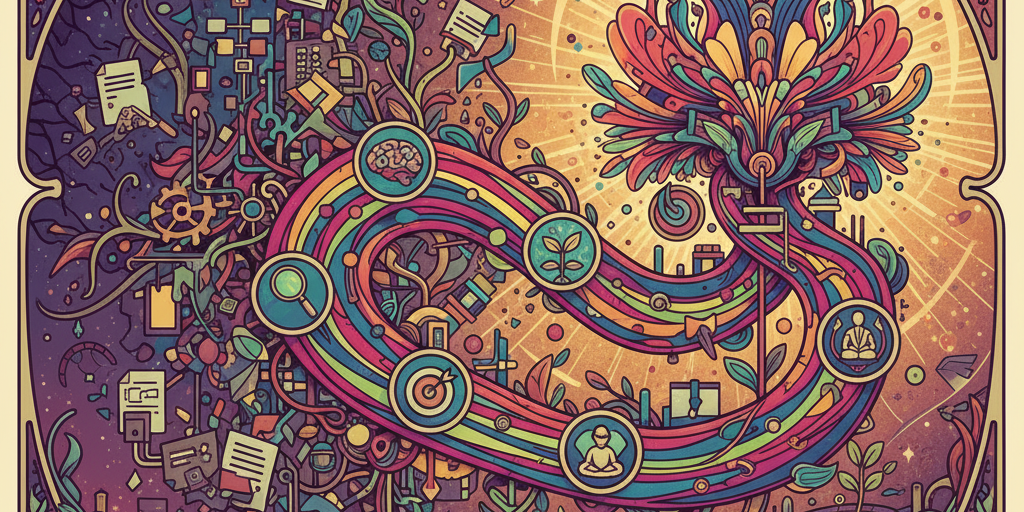
A diagnosis of modern professional decay and an operational alternative that pairs human judgement with machine scale. Stop patching processes. Start mapping conversations, designing instructive automation, and using deliberate failure to build real edge.
If ten future clients can get the same or better result from a prompt, what makes them choose you?
What if your hard-won skills are quietly slipping away, replaced by something faster and cheaper, leaving you scrambling just to keep up?
The race and the trap (context: pressure, options, and autopilot)
We’re all running. We’re told to adapt, to change, to "level up." New tools and new threats appear daily. We're facing a brutal choice: either become so good at our craft by hand that no machine can touch us (a bar that gets higher every day), or become so masterful at wielding those machines that we're the obvious, indispensable choice.
We know this. But most of us are trapped in the horrible middle, slower, more expensive, and less effective than both options. We buy the courses and download the apps, but our work feels chaotic. We're trying to change, but we're just spinning our wheels, haunted by the gnawing dread of becoming irrelevant.
Most professionals run on reputation and habit: steady routines, familiar tools, and meetings that end with more to-do than done. At the same time, automation and generative systems are becoming faster, cheaper, and in many cases good enough. Two weak responses dominate: insist you won't use the new tools and stay slower and costlier, or let machines assign you repetitive tasks and lose agency.
Meanwhile conversations wander, projects drift from one half-finished topic to another, so progress looks busy but is shallow. The result is an illusion of productivity that masks diminishing relevance.
You're grinding through freelance gigs, juggling client demands and endless revisions, all while AI tools churn out code, designs, and content at lightning speed. It feels secure enough but beneath it, a relentless drift sets in: conversations with clients veer off track, ideas scatter without closure, and you chase perfection without daring to stumble.
This invisible menace? A creeping reliance on autopilot, where you either resist the tech tide and fall behind, or let it dictate your moves, turning you into a mere executor of machine-assigned tasks. It's eroding your edge, muting your unique voice in a sea of automated efficiency.
Fragmentation as slow poison (diagnosis and emotional cost)
This fragmentation is a silent poison. In our meetings and projects, we drift from one idea to the next without ever reaching completion, a relentless "topic slip" that leaves a trail of half-finished initiatives and broken momentum. We know we need to grow, but we're terrified of looking bad. We passively wait for failure to happen to us, instead of using it as a tool.
So we stay safe. We avoid the hard new skills. We do what we’ve always done. The cost isn't just lost time or money. It's the slow, agonising erosion of our potential, the feeling of being a cog in a machine we don't control, all while the real, high-stakes failures are building up, ready to crash down when we can least afford it.
This is not hypothetical. The slow refusal to adapt erodes pricing power, reduces choice, and turns skilled work into a commodity. Fragmented attention makes teams deliver less insight, not more. Fear of making mistakes keeps people from experimenting; perfectionism becomes paralysis.
Emotionally, that shows up as low-grade anxiety, guilty evenings, and a shrinking margin for meaningful creativity. Over time the safe path becomes the fastest route to obsolescence. Ignore it, and the toll mounts, missed opportunities stack up as clients flock to quicker, flawless alternatives, leaving you exhausted from constant catch-up.
Frustration boils over in stalled projects, where unchecked wandering from one idea to the next wastes hours, breeding resentment and self-doubt. Worse, without testing your limits through intentional slips, you barrel toward high-stakes blunders that shatter confidence and careers. The emotional drain is brutal: that nagging fear of obsolescence, the isolation of unconnected efforts, hollowing out your passion until you're just surviving, not thriving.
Paradox: Connection as entry (conceptual pivot to solution)
Here is the paradox: Real transformation never starts with fixing. It starts with Connection. This is the engine we've ignored. We’re so busy trying to fix our careers, our bodies, and our minds that we never stop to simply understand them.
Change isn't a problem to be solved; it's a reality to be met. It is the simple, radical practice of meeting what is actually here, not what we frantically wish was here. You can try to "fix" your workflow forever and still feel stuck. But what if your goal wasn't to fix, but simply to connect?
There is a simple, disciplined alternative: become the person who both understands the work and designs the machine that does the heavy lifting. Treat AI as an extension of your judgement rather than a replacement. Keep the room honest: externalise progress with visible boards, mapped conversations, clear checkpoints, so topic drift dies and completion lives.
Treat failure as a training ground: design small, deliberate experiments that are meant to fail fast and teach faster. Finally, make connection the organising principle of change: cultivate practices that ground attention (short reflective rituals, movement, or focused review) so you act from clarity, not reaction.
These four moves: human judgement + tooling, visible focus, deliberate failure, and connection combine into a practical operating system for durable advantage.
Embrace deliberate missteps as your secret training ground, mapping discussions on a simple board to lock in focus and halt the slide. Pair this with weaving AI as your ally, not a boss, amplifying your instincts while you dive deep into true linkage: tuning into your body's signals like a runner sensing the pavement, or an artist feeling the brush's pull.
It's not about patching flaws in haste; it's meeting yourself exactly where you are, in meditation's quiet or therapy's raw unpack, letting that bond fuel smarter risks and sharper outputs.
Shift, outcomes, and action (what changes and the practical steps)
When you shift your focus from fixing to connecting, the results follow automatically. You stop just avoiding failure and start connecting with it, making deliberate, low-stakes mistakes in practice so you can learn precisely what not to do when it truly matters.
You stop the chaotic drift; you connect with your team's goals, tracking your conversation so everyone can see where you are and where you're going. You stop fearing new tools; you connect with AI, "hiring" it to work for you, turning you into the master strategist, not the replaceable subordinate.
This is the essence of mastery. It’s the artist understanding the connection of their brush to the canvas. It’s the runner feeling their feet meet the ground. It is the only way to get "unstuck." Stop trying to fix yourself. Start practicing connection.
What is the one thing in your work, your body, or emotion that you will stop trying to fix, and simply try to understand, starting today?
Imagine winning work because you produce outcomes faster, with clearer insight and lower friction; imagine your calendar showing fewer shallow meetings and more decisive deliveries. That future requires trade-offs you can make this week.
Over time you will stop competing on speed alone and start competing on orchestration, how well you combine human insight with machine scale.
Imagine emerging unbreakable: commanding AI to elevate your creations, turning scattered talks into decisive wins, and converting planned failures into unbreakable wisdom that shields against real pitfalls. You'll reclaim your fire, delivering work that's irreplaceably human, vibrant, intuitive, and ahead of the curve, free from the drag of disconnection.
Take the first step now:
(1) pick one recurring task to automate with an instructive prompt;
(2) map the conversation and deliverables on a single visible board;
(3) run three small experiments designed to fail and log what each teaches you;
(4) set a daily five-minute reflection to notice what actually changed;
(5) commit to one habit that deepens connection (meditation, deliberate walk, or reflective notes). Do this once, honestly. Repeat.
The Essential Concepts
The Trap of the Horrible Middle: Professionals are trapped in the "horrible middle," attempting to adapt but remaining slower, more expensive, and less effective than both mastery-by-hand and mastery-by-machine. The two weak responses are either resisting new tools (becoming slower) or letting machines assign repetitive tasks (losing agency).
- Fragmentation as Slow Poison: The core issue is fragmentation, specifically "topic slip" in meetings and projects, which creates a trail of half-finished initiatives and broken momentum. This is a silent poison that ensures progress looks busy but is shallow, masking diminishing relevance.
- Emotional and Economic Cost: The emotional cost is low-grade anxiety, guilt, and the feeling of being a cog in a machine you don't control. Economically, the refusal to adapt erodes pricing power, turns skilled work into a commodity, and makes the safe path the fastest route to obsolescence.
Paradox - Connection as the Entry Point: Real transformation does not start with fixing but with Connection. The goal is not to fix one's workflow, but to simply understand and meet what is actually here—to practice the simple, radical practice of connection.
The Operating System for Durable Advantage: The disciplined alternative is to become the person who understands the work and designs the machine that does the heavy lifting. This strategy converts fear-driven work into targeted, resilient growth:
- Human Judgment + Tooling: Treat AI as an extension of your judgment rather than a replacement. "Hire" it to work for you, turning you into the master strategist, not the replaceable subordinate.
- Visible Focus: Keep the room honest and stop chaotic drift by mapping conversations and deliverables on a single visible board with clear checkpoints, ensuring that topic slip dies and completion lives.
- Deliberate Failure: Stop passively waiting for failure to happen and instead use it as a tool. Design small, deliberate experiments that are meant to fail fast and teach faster to build real edge and prevent high-stakes blunders.
- Practice Connection: Cultivate daily practices that ground attention (short reflective rituals, movement, or focused review) so you act from clarity, not reaction. This connects you to your body, mind, and the work, making change an unfolding, not a struggle.
Immediate Action to Build Edge:
- Automate with Instruction: Pick one recurring task and automate it with an instructive prompt, defining the goal and guardrails for the AI.
- Map for Clarity: Take one current project and map the conversation and deliverables on a single visible board (even a simple diagram) to track progress and stop topic drift.
- Design for Learning: Run three small experiments designed to fail (low-stakes, high-insight) and log what each teaches you to learn precisely what not to do when it truly matters.
- Connect with Intent: Set a daily five-minute reflection to notice what actually changed in your work/emotion, and commit to one habit (meditation, deliberate walk, or reflective notes) that deepens connection.
I am a Knowledge Worker...
What does it mean for me?
You are likely in the Trap of the Horrible Middle, feeling the Emotional and Economic Cost of Fragmentation as Slow Poison.
This means you're not fully leveraging automation but also not achieving mastery-by-hand, leaving you slower and more expensive.
The core issue is the "topic slip" in your meetings and projects, which ensures progress looks busy but is shallow, masking diminishing relevance and fostering low-grade anxiety.
The Paradox: Connection as the Entry Point demands a radical shift: stop trying to fix fragmented workflows and instead practice Connection to meet the reality of your situation.
The Operating System for Durable Advantage provides the solution: combine your Human Judgment + Tooling with Visible Focus and Deliberate Failure to become the essential strategist who designs the machine's labor, securing your agency and accelerating your career growth.
How do I action this?
- Automate with Instruction (Human Judgment + Tooling): Pick one recurring, repetitive task you do weekly (e.g., summarising meeting notes, drafting initial email responses). Automate it with an instructive prompt for an AI tool, defining the precise goal and setting clear quality guardrails (e.g., "Summarise the 5 key decisions, but reject any emotionally charged language").
- Map for Clarity (Visible Focus): Take one current team project that suffers from "topic slip." Map the conversation and deliverables on a single visible board (a shared online document or simple physical diagram) with clear checkpoints for completion, making it impossible for the project to drift and ensuring that topic slip dies and completion lives.
- Design for Learning (Deliberate Failure): Identify a high-stakes skill you need (e.g., negotiating with a difficult stakeholder). Run three small, deliberate experiments designed to fail (e.g., role-play a short, specific argument with a trusted colleague where you intentionally deploy a flawed tactic). Log what each teaches you about the scenario to prevent high-stakes blunders later.
- Practice Connection (Daily Clarity Ritual): Set a daily five-minute reflection at the end of your workday. Do not review your to-do list; instead, commit to noticing what actually changed in your work or emotional state, or take a deliberate walk around the office floor, ensuring you act from clarity, not reaction.
I am a Freelancer, Solopreneur, Entrepreneur, Independent Worker...
What does it mean for me?
You are in the Trap of the Horrible Middle, feeling the Emotional and Economic Cost of Fragmentation as Slow Poison.
This means you're slower and more expensive than AI-only solutions but not achieving mastery-by-hand, leaving your pricing power eroded and your skilled work commoditised.
The core issue is "topic slip" across your service offerings and client communications, creating a trail of half-finished initiatives and broken momentum.
The Paradox: Connection as the Entry Point demands a radical shift: stop trying to fix every aspect of your business and instead practice Connection with the reality of your market.
The Operating System for Durable Advantage provides the solution: combine your Human Judgment + Tooling with Visible Focus and Deliberate Failure to become the master strategist who commands machine scale, securing your unique value and accelerating business growth.
How do I action this?
- Automate with Instruction (Human Judgment + Tooling): Pick one recurring, low-value business task (e.g., generating first drafts of client-facing reports, structuring marketing copy). Automate it with an instructive prompt for an AI tool, "hiring" it to work for you by defining the desired outcome and guardrails for tone and factual accuracy.
- Map for Clarity (Visible Focus): Take one current client engagement or product roadmap that is prone to scope creep (topic slip). Map the conversation and deliverables (agreed-upon next steps, key milestones) on a single visible board (e.g., a simple kanban or Trello board) that is shared with the client, ensuring transparency and halting chaotic drift.
- Design for Learning (Deliberate Failure): Identify a risky business assumption (e.g., "Clients will pay for this new feature"). Run three small, deliberate experiments designed to fail fast (e.g., send out a fake-door test or a short survey with a clearly undesirable option). Log what each teaches you about market appetite to build a real edge and avoid a high-stakes launch failure.
- Practice Connection (Daily Clarity Ritual): Set a daily five-minute reflection immediately before starting your most focused work session. Commit to reflective notes on what is truly motivating you that day, or take a deliberate walk (no phone) to ground attention and ensure you act from clarity and not just market reaction.