Information Pollution and the Invisible Meritocracy: Why Volume Wins and How to Make Proof Audible.
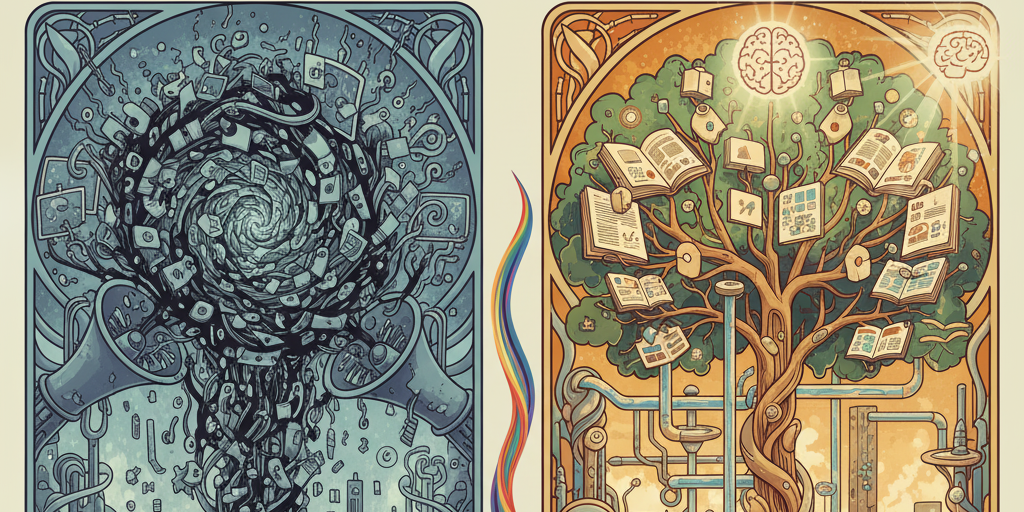
Modern organisations reward volume; this brief argues for a disciplined counter-strategy that privileges verifiable signal. Practical steps: publish repeatable micro-cases, add a five-minute verification pause to reviews, and make recognition traceable.
What if the difference between being heard and being ignored isn’t louder shouting, it’s the courage to make less noise?
What if the quiet hum of your daily grind is actually a siren, luring you deeper into a maze you never signed up for?
What the Machine Is Doing to Good Work
We’re all here, heads down, doing the work. We know we're good at what we do. But we're also drowning. We are navigating a landscape so choked with "information pollution" that it's nearly impossible to tell signal from noise.
This isn't just about sensational headlines; it's the half-truths, the misleading statistics, the hastily shared content, the relentless drip-drip-drip of unverified claims. We are constantly consuming content on topics far outside our circle of competence, yet we're expected to have an opinion or make a decision.
The very "machine" we operate in (our organisations, our industries) is supposed to be built on a mix of culture and people. But that machine is getting jammed by this sludge, making it harder and harder for good people and good ideas to move forward.
Organisations (people and culture), continuously shape one another: hire for the short-term win and culture bends to fit it; tolerate performative answers and people learn to perform. We live inside systems that reward volume over value. Teams chase visibility metrics and polished appearances while the underlying work, the rigour, process, honest evidence goes unadvertised.
At the same time, our information environment is clogged. Repetition masquerades as truth. Half-truths, misattributed facts and sloppy summaries spread because no one has the time to verify everything.
That steady drip of distorted signals biases our judgments, quiets genuine skill, and makes genuine expertise harder to recognise. Many capable people feel stuck, competent but invisible, because the rules that award recognition are opaque and gamed by those who know how to play them.
You wake up, scroll through feeds, and feel a fleeting sense of control. Your inbox is tidy, your calendar filled, your projects ticking along. Yet beneath that veneer lies a subtle erosion: the relentless tide of half‑truths, echo chambers, and invisible expectations that shape every decision.
Culture and people in any organisation are two gears meshing together; when the culture leans toward complacency, the people become cogs that never question the rhythm. The real threat isn’t a single scandal or a broken process. It’s the slow, cumulative “information pollution” that clouds judgment, fuels misplaced confidence, and keeps brilliant ideas shackled in the shadows.
The Costs: Strategic, Emotional, Institutional
This isn't harmless. Like air pollution, this constant exposure builds up. It makes us question solid knowledge. We see a false narrative repeated often enough and, thanks to the "illusory truth effect," it starts to feel true. As Carl Sagan warned, if we've been "bamboozled long enough, we tend to reject any evidence of the bamboozle." The bamboozle captures us.
The real cost is our potential. We stay "scrappy," stuck taking any work that comes, like the consultant trading services with a chiropractor just to get by. We see the wrong ideas win, simply because they were louder, and we begin to accept a world where we can't break through to the next level. We risk believing we were never good enough in the first place.
This is not abstract. Bad signals create bad choices. Teams invest in the wrong projects. Promising careers stall while loudness wins promotion. Institutional trust frays. Individually, the result is exhaustion and a corrosive self-doubt: did I miss a real insight, or did I simply lose the contest of attention?
There are concrete examples: when repeated exposure makes a false story feel familiar, people begin to accept it as fact. Entire publics can misjudge trends believing problems are worsening when data shows the opposite because dramatic repetition crowds out careful reporting.
The cost is strategic: wasted budgets, misallocated talent, poor policy, and the slow erosion of judgment capacity across organisations. Emotionally, it’s the humiliation of watching merit go unrewarded and the anger at a system that prizes spectacle over substance.
Each unchecked headline, each recycled meme, each hurried tweet adds a layer of noise. Over time, the signal‑to‑noise ratio plummets, and you start believing the world is more chaotic than it truly is. Studies show that repeated exposure to false narratives convinces even the most skeptical minds, turning ordinary anxiety into a chronic distrust of reality.
The cost? Missed opportunities, wasted energy chasing phantom crises, and a talent pool that never gets seen because the spotlight is forever dimmed by the static. It feels like walking through a fog that thickens with every step, stealing the clarity needed to innovate or lead.
A Different Lever: Leggerio and Disciplined Minimalism
What if the answer isn't to add to the commotion? What if the way to break through the static isn't to become the loudest voice, but the clearest one? There's a musical term for this: leggerio. It means a light touch. A way to make a sound that is delicate, graceful, and precise. It's about showing up with profound care and "just enough," but not an ounce more than needed.
This is the realisation: the process of getting your ideas heard isn't a mystical secret. It can be understood. It can be made transparent, breaking the cycle where only those who cling to the "secrets" get ahead.
The remedy is not louder advocacy or polishing the surface harder. It is a disciplined, paradoxical combination of restraint and design: show up with a light touch and a heavy standard.
Start by shifting incentives inside the machine: reward people for verification, for admitting uncertainty, for documenting process, not just for headlines. Use deliberate minimalism in communication: make fewer, clearer claims and back each with traceable evidence.
Counter the illusory-truth effect by intentionally repeating quality signals, concise case studies, reproducible steps, and small, verifiable wins so that truth, not noise, becomes familiar. And don’t treat recognition as a mystery.
There is a replicable craft to being noticed: choose a narrow lane, produce proof regularly, and expose method as well as result. Be scrappy in execution but strategic in signal. That combination, cultural alignment toward truth, habitual verification, and disciplined visibility, reorients attention toward real competence.
Imagine applying a leggero touch: a light, deliberate brushstroke that cuts through the clamour without creating a new roar. By embracing a disciplined, minimalist flow of information, curating sources, questioning repetitions, and fostering a culture that prizes careful listening over rapid reacting, you create a mental space where truth can breathe.
This isn’t about silencing dissent; it’s about building a feedback loop where people and culture reinforce curiosity, humility, and rigour. The weapon is simple: a habit of “slow consumption” paired with transparent, data‑driven storytelling that rewards depth over volume.
The Vision: Quiet Strategies that Win
Imagine a world where the best ideas actually win. Imagine your work, your expertise, finally being recognised, not because you yelled, but because you applied that leggerio touch with intention. This is how we build organisations where the culture and the people truly align around excellence, not just volume.
This is how you go from feeling "scrappy" to working with the clients and partners you've always dreamed of. The path is there; it’s just been deliberately obscured by the noise.Stop trying to out-shout the static. It’s time to learn the strategy. Are you ready to stop scrambling and finally make the process of recognition transparent for yourself?
Picture a workplace where ideas surface because they’re nurtured, not shouted; where every team member feels seen, and expertise shines through clear, trusted channels. Imagine a personal feed stripped of the endless noise, leaving only insights that spark genuine progress.
Imagine an organisation where decisions are judged on documented outcomes, where people are promoted for curiosity and clarity rather than theater. Imagine a professional reputation earned by a steady string of small, public proofs that every curious stranger can audit. The air clears.
Cognitive load falls. Teams make better bets. Individuals get the recognition that matches their work. This is not about more noise. It’s about making truth audible with a lighter touch and a stricter standard. Do that consistently, the incentives and the rewards will follow.
Concrete Habits: Micro-cases and Verification Pauses
In that world, the hidden costs evaporate, replaced by momentum, confidence, and a collective sense of purpose.
Publish a 300–500 word micro-case that does three things: state the problem, show the process you used, and share one measurable outcome. Make it verifiable (data, links, screenshots). Repeat that act once a month. If you lead a team, add a five-minute “verification pause” to every review meeting: two pieces of evidence, one doubt, one next experiment.
Take the first step today: audit the sources you consume, set a daily “quiet hour” for deep reading, and champion a culture of thoughtful dialogue in your circles. The path to a clearer, more empowered tomorrow begins with a single, intentional pause.
The Essential Concepts
The Machine Rewards Volume
The organisation (the "machine") and its information environment are clogged with unverified claims, creating a hostile environment for genuine signal.
- Information Pollution (Diagnosis): The constant flood of unverified claims, half-truths, and misleading statistics that makes it nearly impossible to tell signal from noise. This biases judgment and quietens genuine skill.
- The Bamboozle Effect (Sagan's Warning): Chronic exposure to false narratives and repetition (the Illusory Truth Effect) causes us to mistake familiarity for truth. If we've been "bamboozled long enough, we tend to reject any evidence of the bamboozle," leading to a corrosive self-doubt and questioning of solid knowledge.
- Invisible Meritocracy: The rules that award recognition are opaque and gamed by those who know how to play the system, making capable people feel competent but invisible.
- Costs: This leads to strategic losses (bad signals create bad choices, wasting budgets), institutional trust fraying, and emotional exhaustion at the spectacle over substance.
Counter-Strategy: Leggerio and Disciplined Minimalism
The solution is not to out-shout the static, but to adopt a disciplined, paradoxical combination of restraint and design to make proof audible.
- Leggerio (The Light Touch): A disciplined, minimalist approach that focuses on profound care and "just enough" without adding an ounce more than needed. This makes the signal delicate, graceful, and precise to cut through the noise.
- Truth as Familiarity: Counter the illusory-truth effect by intentionally repeating quality signals (concise case studies, reproducible steps, verifiable wins) so that truth, not noise, becomes familiar.
- Transparent Recognition (The Craft): Make the process of getting ideas heard transparent and replicable. This involves rewarding people for verification, admitting uncertainty, and documenting process, not just for headlines.
- Heavy Standard: Combine the light touch of leggerio with a heavy standard for evidence. The strategy is to be scrappy in execution but strategic in signal.
Concrete Habits: Making Proof Audible
To make recognition transparent and reorient attention toward real competence, implement these two habits immediately:
- Publish Verifiable Micro-Cases: Write a 300–500 word micro-case once a month that does three things:
- State the problem.
- Show the process you used.
- Share one measurable, verifiable outcome (with data, links, or screenshots).
- Add a Verification Pause: If you lead a team, add a five-minute “verification pause” to every review meeting. The team must present:
- Two pieces of evidence for the claim being reviewed.
- One doubt about the claim's validity.
- One next experiment to resolve that doubt.
I am a Knowledge Worker...
What does it mean for me?
You are operating within an Invisible Meritocracy where the internal "machine" rewards volume over value, making it difficult for your quiet, rigorous work to be recognised.
The sheer volume of internal Information Pollution (unverified claims, half-truths) creates a Bamboozle Effect, causing senior leaders and colleagues to mistake familiarity for truth and leading to strategic losses like misallocated budgets.
This results in corrosive self-doubt and the humiliation of watching loudness win promotion while your merit goes unrewarded. The counter-strategy is Leggerio combined with a Heavy Standard.
By applying this disciplined minimalism—making fewer, clearer claims backed by verifiable proof—you can make your signal audible and use Truth as Familiarity to your advantage, shifting attention toward your real competence and making the process of recognition Transparent.
How do I action this?
- Publish Verifiable Micro-Cases (Transparent Recognition): Once a month, draft a 300–500 word "Micro-Case" detailing a past project win. The case must explicitly state the problem, clearly show the process you used, and share one measurable, verifiable outcome (with a screenshot of the data or a link to the report). Share this internally to make your proof audible.
- Champion the Verification Pause (Heavy Standard): If you lead a review or decision meeting (or can influence the agenda), propose adding a five-minute "Verification Pause" before the final decision. Require the presenter to explicitly state Two pieces of evidence for their claim and One doubt about its validity, raising the Heavy Standard for rigour.
- Adopt the Leggerio Touch (Disciplined Minimalism): In your next communication (email, slide deck, update), consciously reduce the volume of your claims by 50%. Focus only on the "just enough" information needed for the decision, using precise, unadorned language to apply the Leggerio principle and cut through the noise.
- Audit Consumption (Counter the Bamboozle Effect): Set a daily "Quiet Hour" (30-60 minutes) for deep, focused reading or work. During this time, audit and filter your information sources, prioritising content that requires verification or is within your circle of competence, actively resisting the pervasive Information Pollution.
I am a Freelancer, Solopreneur, Entrepreneur, Independent Worker...
What does it mean for me?
As an independent, you are competing directly with the market's Information Pollution, where the loudest voices attract attention while your genuine skill goes unadvertised.
This results in an Invisible Meritocracy where you risk being "scrappy"—stuck taking any work that comes—and suffering the corrosive self-doubt of the Bamboozle Effect.
The solution is Leggerio and the Heavy Standard. You must adopt a disciplined minimalism to make proof audible externally.
By using Truth as Familiarity (repeating quality signals) and making the process of recognition Transparent through micro-cases, you shift the incentives in the "machine" (the marketplace) from rewarding volume to rewarding verifiable signal, allowing you to attract premium clients who value competence.
How do I action this?
- Publish Verifiable Micro-Cases (Transparent Recognition): Once a month, publish a 300–500 word "Micro-Case" on your platform (e.g., website, newsletter) about a client project. The case must clearly articulate the problem, describe the process you used, and share one measurable outcome (e.g., a specific conversion lift, a time saved, with a verifiable data point or screenshot).
- Adopt the Leggerio Touch in Marketing (Disciplined Minimalism): For your next three marketing messages (social post, headline, sales copy), consciously use the Leggerio approach: reduce the claim volume and eliminate any hyperbolic language. Focus on precision and restraint, making your signal "delicate, graceful, and precise" rather than loud.
- Implement a Personal Verification Pause (Heavy Standard): Before committing to a major business decision (e.g., a new service offering, a large expenditure), take a five-minute "Verification Pause." Explicitly list Two pieces of verifiable evidence supporting the decision and One doubt you have about it. Then, define One next experiment to resolve that doubt.
- Narrow Niche to Repeat Quality (Truth as Familiarity): To intentionally repeat quality signals (Truth as Familiarity), commit to serving a narrower niche for the next 90 days. This focus will allow you to generate three highly-specific, verifiable micro-cases that speak directly to a small, valuable audience.