The Bike-Shed Paradox: How Organisational Rituals Allocate Attention to Trivialities and Starve High-Leverage Decisions.
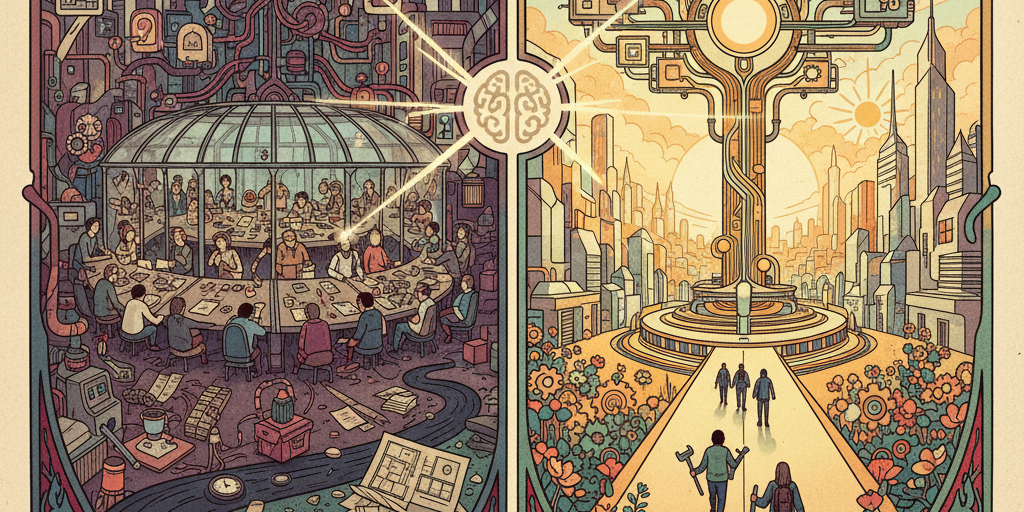
Most time in work is spent on safe, visible activity; value comes from reallocating attention to fewer, harder bets. A diagnostic and short practical framework for identifying the “bike shed” and redesigning decisions as machines.
How much of your "work" is just an elaborate, exhausting ritual to avoid the real work?
Why do we obsess over coffee budgets while ignoring the nuclear reactors in our lives?
Diagnosis: the machine of triviality
We are drowning in the comfortable and the concrete. We’re experts in the trivial. Our calendars are packed with discussions about things we understand. In those meetings, everyone has a strong opinion. Everyone "adds value." Everyone walks away feeling satisfied and productive.
But the monumental, £10 million challenge? The one that could actually change everything? It’s met with uncomfortable silence. It’s too big. Too complex. Too abstract. So, it’s rubber-stamped in five minutes, unresolved, just to get it off the agenda.
This is our comfortable prison: we have built a "machine" that is perfectly designed to produce trivial outcomes. We've become masters of the bike shed.
We spend our days in rehearsals: opening remarks, signaling, rituals that feel necessary but add no value. Meetings devolve into debates about coffee budgets and paint for the bike rack while the strategic decisions, those complex, high-leverage bets, go unexamined because they’re too costly to explain.
The consequence is simple and steady: organisations become excellent at looking busy and terrible at producing meaningful outcomes. That pattern is not accidental; it is the machine you accept as normal, inputs, processes, and predictable outputs, and it systematically produces weak results.
You're in a meeting, debating the perfect roof for a bike shed, materials, costs, tiny savings, while a massive power plant proposal sails by untouched. It's not just committees; it's how we live, fixating on the easy, the familiar, like endless rituals before speaking up, tuning instruments that don't need it.
We tinker with our "machines" without stepping back to see the flaws producing mediocre outcomes. And lurking beneath? That constant pull of others' judgments, turning us into followers, sheepish about bold moves because haters' tweets sting more than they should.
Consequences: erosion of potential and morale
The real cost isn't just the wasted hours. It’s the slow, crushing erosion of our potential. We are so addicted to the instant validation of solving the coffee-budget problem that we’ve become sheep, desperate for the approval of the meeting.
We are terrified of being misunderstood today. We optimise for short-term, low-status agreement, and in doing so, we guarantee the most important problems, and opportunities, remain untouched, year after year. The nuclear-level problems are left to fester while we win applause for our passionate opinions on roofing materials.
This is not just inefficiency. It erodes courage, blunts learning, and trains people to seek safety in opinion-rich trivialities. Talent burns out on noise; real ideas die of inattention. Short-term approval becomes the currency, and long-term value is deferred until someone else seizes it.
Over time, the small misallocations compound: missed market windows, failed non-consensus bets, reputational drift. Emotionally, it feels like watching your future shrink while everyone smiles about the color of the bike shed roof.
This fixation drains us deeper than we admit. Hours vanish on trivial debates, leaving real challenges festering, unexamined. Imagine the frustration building: opportunities slip away as we chase short-term approval, screenshotting critics' barbs that erode our confidence, trapping us in hesitation.
The emotional weight piles on. Regret from unspoken ideas, resentment toward rituals that comfort but confine, all while our potential withers, consumed by noise that masks the true threats. Ignore it long enough, and you're not just stuck; you're buried under a mountain of missed breakthroughs, your life a series of safe, small wins that feel hollow.
Prescriptions: inspect the machine, reweight judgement
The shift happens when you simply stop participating in the ritual. It’s time to skip the throat-clearing. The performance doesn't need the endless, self-soothing tune-up. Just say the thing. The breakthrough is realising you must step back and look down on this "machine" of yours, your habits, your team, your company and ask: "What is this system actually producing?"
The moment you do, you see the bike shed for what it is. This isn't about not caring what others think. It’s about consciously choosing the timescale you care about. It's about being willing to trade being short-term low-status for being long-term high-status. It’s about having the courage to let the daily "newspapers" get it wrong, so the "history books" can get it right.
Treat problems as machines that generate outcomes. Step up one level, inspect the parts, and change what feeds in. Start sessions without the ceremonial throat-clearing, say the point, show the evidence, get to the mechanism.
Allocate time in proportion to impact so trivialities stop cannibalising attention. And choose whose opinions you care about deliberately, and on a timescale that favours being right in years, not liked this afternoon. These are not platitudes. They are actionable shifts: redesign inputs, constrain process, and reweight the horizon of judgment.
View your hurdles as outputs from a tweakable machine: rise above, diagnose, redesign for superior results. Skip the warm-ups; dive straight in, saying what matters without the fluff.
And on opinions? Curate whose matter. Ignore the daily noise, bet on long horizons where being right redeems the misunderstandings. Embrace that rebel space: a small band solving what others overlook, turning dismissal into your edge.
Vision: trading applause for impact
Imagine what becomes possible when you abandon the bike shed. Imagine the focused, quiet, powerful energy. You, and a small group of rebels, suddenly get the space to actually solve the nuclear-level problem.
In this new reality, being misunderstood by the majority becomes your greatest strength, not a weakness. It’s a shield that protects you from the noise, filters out the distractions, and gives you the room to build what truly matters. You stop performing work and you start delivering reality-changing impact.
Look at your calendar for tomorrow. Which item is your £10 million opportunity, and which is your £21 coffee budget? Decide to be misunderstood.
Imagine a calendar where the hard questions get the air and the rituals are private prep. Imagine decisions that look messy now but, judged in five years, read as disciplined courage. The payoff: speed, clearer priorities, higher-quality bets, and a culture that prizes being understood later over being applauded now.
Envision a life unburdened: decisions sharp and swift, energy funneled into what truly propels you forward, yielding outcomes that echo through years, not days. No more trivial tangles or fleeting fears; instead, a bold stride where history validates your path, haters forgotten in the wake of real impact.
Start tomorrow: pick one "machine" in your routine, strip its rituals, recalibrate for the big bets. What's your first tweak? Share it below, and let's build that momentum together. Open your next meeting with the conclusion, map one decision as a machine (inputs → process → outputs), limit discussion time by expected impact, and name the small set of people whose long-term judgment you will honour.
Do that once, and you’ll begin to see what your current machine was quietly costing you.
The Essential Concepts
Core Problem: The Machine of Triviality
The central issue is the Bike-Shed Paradox (or Parkinson's Law of Triviality), where organizations allocate disproportionate attention to safe, visible, trivial activities (e.g., coffee budgets, bike shed paint) while high-leverage, complex, abstract decisions (the "nuclear reactor") are rubber-stamped unexamined.
- The Machine of Triviality (Framework): The realisation that our habits, teams, and company culture have built a "machine" (inputs → processes → outputs) that is perfectly designed to produce trivial outcomes. This machine includes rehearsals, signaling, and rituals (e.g., meeting throat-clearing) that feel necessary but add no value.
- Cost of Suppression: This pattern erodes potential, blunts learning, and trains people to seek short-term, low-status agreement (the applause for coffee-budget opinions) over long-term value.
- The Comfortable Prison: The addiction to the instant validation of solving small problems, which leads to optimising for low-status agreement and guarantees the monumental problems remain untouched.
Prescriptions: Redesigning Decisions as Machines
The breakthrough is to inspect the machine from one level up and stop participating in the rituals. This requires a shift in the horizon of judgment.
- Redesigning Decisions as Machines (Framework): Treat problems and processes as machines that generate outcomes. The solution is to step up one level, inspect the parts, and change what feeds in (inputs and processes) to produce superior, high-leverage results.
- Reweighting Judgment Principle: Consciously choosing the timescale and sources you care about. This means being willing to trade short-term low-status (being misunderstood today) for long-term high-status (being right when the "history books" are written).
- The Rebel Advantage: Being misunderstood by the majority becomes your greatest strength, protecting you from noise and giving you the space to build what truly matters.
Practical Method: Tactical Shifts
To abandon the bike shed and start delivering reality-changing impact, the article prescribes a set of immediate actions:
- Skip the Rituals: Open your next meeting with the conclusion and the evidence, eliminating the ceremonial throat-clearing and endless tune-up.
- Map Decisions as Machines: Map one decision as a machine (Inputs → Process → Outputs) to diagnose and redesign the flow.
- Allocate Time by Impact: Limit discussion time in meetings or tasks based on the expected impact of the decision.
- Curate Judgment: Name the small set of people whose long-term judgment you will honor and let the daily "newspapers" get it wrong.
I am a Knowledge Worker...
What does it mean for me?
You are operating inside a Machine of Triviality, the organisational equivalent of the Bike-Shed Paradox, which is perfectly designed to produce weak outcomes.
This is your Comfortable Prison: the system rewards short-term, low-status agreement (the applause for coffee-budget opinions) while the high-leverage, "nuclear reactor" decisions are rubber-stamped unexamined.
This Cost of Suppression erodes your potential, blunts learning, and trains you to seek safety in trivial discussions, guaranteeing the monumental problems remain untouched.
The Rebel Advantage and Redesigning Decisions as Machines is your breakthrough.
By consciously applying the Reweighting Judgment Principle—choosing to be long-term high-status (right in the history books) over short-term low-status (liked this afternoon)—you gain the mental space and courage to focus on work that delivers reality-changing impact, accelerating your career growth.
How do I action this?
- Skip the Rituals (Open with the Conclusion): In your next meeting where you present information, open with your conclusion and supporting evidence first, eliminating the ceremonial "throat-clearing" (e.g., background slides, unnecessary context-setting). This Tactical Shift forces the discussion to immediately Allocate Time by Impact.
- Map Decisions as Machines (Diagnose the Flow): Pick one recurring, low-impact decision that wastes your team's time (e.g., process for document naming). On a notepad, Map this decision as a machine: list the Inputs (what starts it), the Process (the steps/rituals), and the Outputs (the result). Diagnose one specific part of the process to constrain or remove entirely.
- Allocate Time by Impact (Constrain the Trivial): For the next discussion or task that you identify as a "bike shed" (trivial but concrete), limit its total discussion time based on its expected impact. If the expected impact is less than £100, allocate no more than 10 minutes, and enforce that limit ruthlessly.
- Curate Judgment (Long-Term Status): Write down the names of three people (internally or externally) whose long-term judgment you genuinely respect (the "history books"). Before making your next high-leverage bet, make the decision based only on the evidence and their likely future opinion, consciously ignoring the potential for short-term low-status agreement from the daily "newspapers."
I am a Freelancer, Solopreneur, Entrepreneur, Independent Worker...
What does it mean for me?
As an independent professional, you face the Bike-Shed Paradox in your own workflows: your business is often a Machine of Triviality that allows you to avoid the scary, high-leverage bets (the "nuclear reactor") like defining a niche or raising prices.
This Cost of Suppression causes Compounding Harm, as you burn out polishing your website's "bike shed" paint instead of delivering high-impact value.
You are addicted to the instant validation of solving small problems, trapping you in a Comfortable Prison of busywork.
The Rebel Advantage is crucial for your sustainability.
By applying the Redesigning Decisions as Machines framework and consciously accepting the Reweighting Judgement Principle, you protect your focus from the noise, giving yourself the space to build the unique, high-impact offerings that truly matter to your niche.
How do I action this?
- Skip the Rituals (The Quick Say): In your next client communication (email, proposal, discovery call), eliminate the ceremonial throat-clearing (excessive introductions, unnecessary pleasantries). Start immediately with the high-consequence information (the evidence, the proposed value, the tough question). This Tactical Shift forces both you and the client to focus on impact.
- Map Decisions as Machines (Diagnose the Flow): Map one decision that repeatedly stalls your business (e.g., "when to send the first invoice"). List the Inputs (what triggers it), the Process (the steps/rituals you currently perform), and the Outputs (result). Change one input or process to enforce speed (e.g., Input: "Client signs contract" Process: "Invoice auto-generates immediately").
- Allocate Time by Impact (Constrain the Trivial): Identify one recurring solo task that is purely aesthetic or comfortable (e.g., font choice, document alignment, endless social media curation). Limit your time investment in this task to a maximum of 10 minutes for the entire week, based on its trivial impact, redirecting the saved time to a "nuclear reactor" activity like market research.
- Curate Judgment (Long-Term Status): Name three high-impact figures in your industry whose success you respect (your "history books"). Before making your next strategic business bet (e.g., launching a new product), ask yourself what they would say about it in five years. Use their likely future opinion to make the hard choice, letting the daily "newspapers" (social media noise, transient critics) get it wrong.