The Precision Economy: When One Clear Question Saves Weeks of Work.
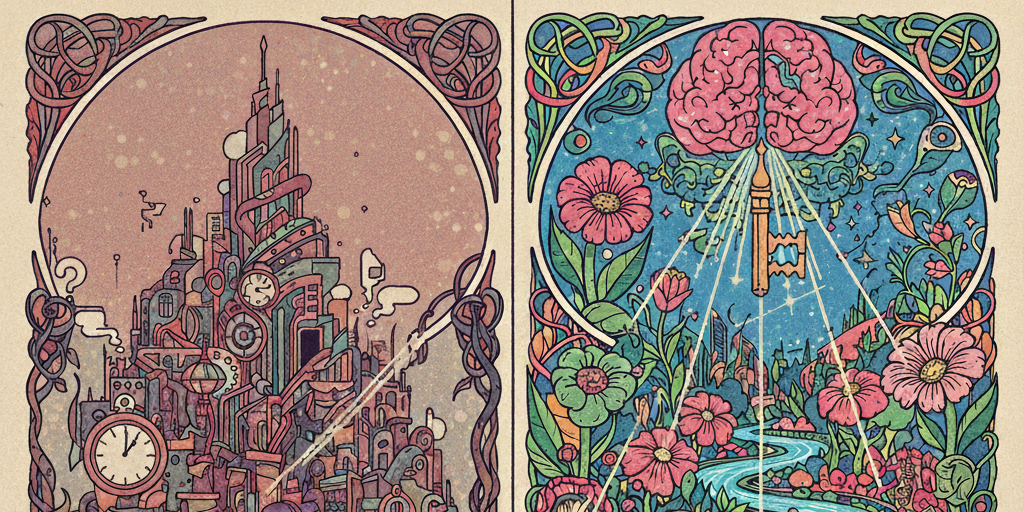
Teach curiosity as a repeatable skill and insist on question-level precision. Small, measurable shifts in how teams ask and answer will reduce rework, restore attention, and unlock latent capacity.
Is the loudest obstacle standing between you and your goals actually… you?
When was the last time you refused the single-word answer and demanded a real reason?
What if the world’s biggest obstacle isn’t outside you, but the way you’ve been taught to think?
External pursuits vs the inner game
We spend our days obsessing over the external game. We chase wealth, build reputations, and hunt for the next tangible milestone, believing that if we just clear enough hurdles in the physical world, we’ll find satisfaction. But this approach ignores a fundamental truth: almost every human activity involves an inner game as well.
While we fight external battles, our own minds are busy sabotaging the operation. We allow worry, regret, and mental clutter to "muddle the situation," creating needless difficulties where none existed. We drift through life accepting the status quo like students in a bad science class who memorise facts but never learn the mechanics.
We settle for single-word explanations like "because" or "magic," failing to treat curiosity as the vital skill it is. We are mentally distracted, disconnected from the why and the how of our own existence.
Institutional incentives that favour surface answers
We’ve built institutions, meetings, and routines that reward quick closure over real understanding. From kindergartens to boardrooms, “because” and “magic” are accepted as endpoints; curiosity is treated like a personality trait, not a teachable skill. Conversations collapse into vague assertions because nobody enforces precision. Questions are asked once and assumed understood, answers are assumed sufficient.
Meanwhile, each person carries an inner saboteur: a restless mind that worries, second-guesses, and dilutes intention. The result is a culture that mistakes momentum for progress and comfort for competence.
The comfort of certainty feels safe, yet it quietly cages curiosity. Beneath the polished surface of routine lies a relentless thief, our own unexamined habits. We answer emails with half‑remembered questions, we chase goals while our minds wander into regret and self‑doubt, and we let vague assumptions steer whole projects.
The result? Stagnant growth, missed opportunities, and a collective sense that something vital is slipping away.
How inner fog becomes social and organisational cost
This internal fog creates external chaos. When we aren't clear with ourselves, we cannot be clear with others. How often have you sent a vague email and been frustrated by a vague response?
That is a violation of the Social Golden Rule: you failed to put in the effort you hoped to receive. The cost of this lack of precision is confusion and stagnation. We hesitate, waiting for the "perfect time" to act, letting years slip by.
We endure the pain of being misunderstood and the frustration of stalled progress because we haven't disciplined our communication or our minds. The tragedy isn't just that we fail to reach our potential; it’s that we are actively getting in our own way, paying a tax of anxiety and inefficiency on everything we try to achieve.
This complacency is expensive. Decisions made from fuzzy questions cascade into wasted time, stalled projects, and eroded trust. People stop practicing the discipline of asking and answering clearly; teams misalign because language was imprecise at the outset.
Internally, talent drains into distraction and doubt. Potential remains unrealised because minds are busy tripping over their own habits. Every avoided “why” compounds into lost years of impact.
Every day that “because” goes unquestioned adds another layer of noise to our inner dialogue. Missed chances become habit; the anxiety of unfinished ideas festers into chronic stress. Teams waste hours clarifying what should have been obvious, and individuals watch their ambitions dissolve into the background of everyday distraction.
The hidden price is not just lost productivity, it’s the erosion of confidence, the quiet surrender of imagination, and the slow dimming of the spark that once made us eager to explore.
The pivot: insist on precision, teach curiosity, pair with inner practice
We must stop accepting surface-level answers. Instead, we need to relentlessly ask "why" and "how," replacing the lazy answer of "magic" with the rigorous pursuit of explanation. We must demand absolute precision in our interactions.
To avoid confusion, we must be willing to do the heavy lifting even if it’s as simple and tactical as cutting and pasting a specific question into a reply to ensure both sides are crystal clear on what is being asked.
This is about cultivating grit. It is about overcoming the instinct to distract ourselves and instead choosing to do the hard work of clarity. It involves putting in the precise level of effort we expect from the world around us.
Teach curiosity as a skill and insist on exactness. From the earliest lesson, train people to ask “why?” and to refuse “because.” When ambiguity appears, repeat the precise question until both parties are crystalline about intent.
Pair that rigour with inner work: notice the mind’s interruptions, separate worry from action, and return to the task at hand. Finally, make reciprocity operational. Give the effort you expect to receive. These are small, disciplined shifts that convert frustration into leverage.
Imagine a classroom that begins at kindergarten, not with equations, but with a dedicated practice of asking “why?” and crafting “how.” Picture a culture where every email repeats the exact question it seeks to answer, cutting ambiguity at its root. Envision a mindset that treats the inner game (our worries, regrets, and self‑imposed limits) as the real battlefield, choosing instead to trust the innate abilities we already possess.
When we pair relentless curiosity with razor‑sharp precision and the social golden rule (putting in the effort we wish to receive) we create a feedback loop that fuels both personal grit and collective impact.
Outcomes and concrete commitments
When you clear the internal obstacles, the external ones become manageable. By learning to trust your innate abilities rather than giving in to worry, the results can be genuinely surprising. You stop waiting for a better past; you realise that while the best time to plant a tree was 20 years ago, the next best time is right now.
Imagine the feeling of finally reaching people because you took the time to be precise. Imagine the impact of sharing your ideas, whether through a speech, a project, or a conversation, knowing you have done the work to be understood.
Imagine teams that habitually cut through noise because they learned to question, clarify, and answer with exactness; imagine individuals who master the inner conversations that used to stop them.
Today is the hinge: start by teaching one child, colleague, or yourself to reject a shallow answer and instead practice a precise question-and-repeat routine. Don't wait for the noise to settle. Control today. Ask the hard question. Be crystal clear. Plant your tree.
Commit to one daily minute of noticing inner distraction and one concrete act of effort you offer before asking for help. Do that now and you begin turning vague activity into intentional progress.
Step into a world where curiosity is a daily habit, not a rare spark; where conversations are crystal clear because the question is never lost in translation; where inner distractions are acknowledged, then set aside, allowing purpose to flow unhindered.
Imagine launching ideas that resonate because they were built on genuine inquiry and mutual effort, watching them take root like trees planted today not decades ago. The horizon brightens with possibilities you once dismissed as “too big” or “too risky.”
Challenge the next “because” you hear, rewrite that vague email with the exact question, and commit to a daily moment of mindful curiosity. Your future self will thank you for daring to slay the invisible dragon that has held you back for far too long.
The Essential Concepts
The Internal Saboteur: Why We Get in Our Own Way
We often fight external battles while our own minds are busy sabotaging the operation through a lack of clarity.
- The Inner Game: Almost every activity has a mental component. When we allow worry, regret, and "internal fog" to muddle our thinking, we create difficulties that don't exist in reality.
- The "Magic" Trap: We have been conditioned to accept single-word explanations like "because" or "magic." This is a failure of curiosity, turning us into students who memorise facts without understanding the underlying mechanics.
- Biological Mismatch: We navigate high-stakes digital environments with nervous systems that second-guess and dilute our intentions, leading to a culture that mistakes momentum for progress.
The Institutional Tax of Imprecision
Organisations and routines are often designed to reward quick closure over deep understanding, creating a "fog" that carries a heavy social and organisational cost.
- Surface-Level Incentives: From schools to boardrooms, we prioritise "finishing" over "understanding." This allows ambiguity to cascade into wasted hours and stalled projects.
- The Social Golden Rule Violation: Sending a vague email and expecting a clear answer is a breach of reciprocity. You are failing to put in the effort you hope to receive.
- The Cost of "Because": Every time a shallow answer goes unquestioned, it adds a layer of noise to the collective dialogue. This complacency results in eroded trust and the quiet surrender of imagination.
The Pivot: Engineering Precision and Curiosity
The breakthrough requires a relentless commitment to "how" and "why," replacing lazy answers with rigorous explanation and inner discipline.
- Curiosity as a Skill: Train yourself and your team to refuse "because." When ambiguity appears, repeat the precise question until both parties are crystalline about the intent.
- Reciprocity in Action: Practice the discipline of giving the exact level of effort you expect from others. If you want clarity, you must provide it first.
- Inner Practice: Notice when the mind is interrupted by worry or distraction. Separate the "noise" from the action and return to the task with grit.
- The Tool of Exactness: Use simple tactics, like copying and pasting a specific question into a reply, to ensure there is no translation loss between parties.
Concrete Commitments for Today
To turn vague activity into intentional progress and stop the "slow bleed" of your potential, take these three steps:
- Reject the Shallow: The next time you hear "because" or a vague explanation, ask one follow-up "how" or "why" to dig into the mechanics.
- Repeat the Question: In your next email or meeting, repeat the exact question you are answering to ensure absolute alignment.
- The One-Minute Audit: Spend one minute today noticing an inner distraction. Identify the worry, set it aside, and return to a single, precise task.
- Offer Effort First: Before asking for help on a project, perform one concrete act of effort (research, drafting, or clarifying) to honor the Social Golden Rule.
I am a Knowledge Worker...
What does it mean for me?
In the corporate world, you are likely paying an Institutional Tax of Imprecision.
Organisations often reward "quick closure" over deep understanding, leading to a culture where you accept single-word answers like "because" as endpoints.
This is the "Magic" Trap: you memorise the facts of a project without understanding the underlying mechanics, which creates an Internal Saboteur of doubt and confusion.
By sending vague emails and expecting clear results, you are committing a Social Golden Rule Violation, failing to provide the clarity you expect from your colleagues.
This Inner Game of "internal fog" doesn't just stall projects; it erodes your professional confidence and makes you feel like an observer of your own career rather than its architect.
To climb the corporate ladder, you must treat Curiosity as a Skill rather than a personality trait.
Your career growth depends on your ability to cut through the Surface-Level Incentives that prioritise "finishing" over "understanding."
If you continue to allow ambiguity to cascade through your meetings and task lists, you risk becoming a victim of a Biological Mismatch, where your nervous system treats digital uncertainty as a high-stakes threat, leading to burnout.
Precision is your primary tool for reclaiming agency; by mastering the Inner Practice of noticing distractions and insisting on exactness, you convert organisational friction into personal leverage.
How do I action this?
- Eliminate Translation Loss with Question-Repeat: In every email or Slack reply that involves a request, copy and paste the exact question you are answering at the top of your message. This Tool of Exactness ensures both parties are crystalline about intent and prevents the "vague-in, vague-out" loop that wastes hours of corporate time.
- Audit the "Because" in Meetings: The next time a colleague or manager gives a shallow explanation for a strategic shift or a missed deadline, refuse the "magic" answer. Ask one specific follow-up question: "How specifically does the current mechanic lead to that outcome?" By treating Curiosity as a Skill, you force the group to move from memorisation to understanding.
- Execute an "Effort-First" Reciprocity Check: Before you ping a team member for help or clarification, perform one concrete act of effort: draft a bulleted list of what you already know, where you looked, and why you are stuck. This honors the Social Golden Rule and ensures that when you do ask for help, the resulting answer is precise rather than a surface-level "fix."
- Run a One-Minute "Inner Fog" Audit: Set a mid-day timer to notice your Inner Game. Spend sixty seconds identifying one specific worry or distraction (e.g., regret over an earlier meeting) that is muddling your current task. Explicitly set that "noise" aside and return to a single, precise task with high-grit focus.
I am a Freelancer, Solopreneur, Entrepreneur, Independent Worker...
What does it mean for me?
As an independent professional, imprecision is a terminal business risk.
You are often fighting an Inner Game where worry and "internal fog" create difficulties that don't exist in reality.
Without a manager to enforce clarity, you are susceptible to the "Magic" Trap, assuming that business growth happens through vague "momentum" rather than a rigorous understanding of your own mechanics.
Every time you send a vague proposal or accept a fuzzy client brief, you are paying an Institutional Tax of wasted billable hours and eroded trust.
To achieve business sustainability, you must engineer Reciprocity in Action. You cannot expect clients to give you clear requirements if you have not provided the exact level of effort and precision first.
Your business is a reflection of your Inner Practice; if your mind is a "restless saboteur" that second-guesses every decision, your external results will remain brittle.
By turning Curiosity into a Repeatable Skill and refusing to accept "because" as a valid business reason, you move from the "slow bleed" of potential to a state of intentional progress where your work resonates because it was built on genuine, razor-sharp inquiry.
How do I action this?
- Institutionalise the "How" and "Why" in Client Onboarding: Replace your standard intake form with a "Precision Audit." For every goal a client states, ask two layers of "Why" to reach the underlying mechanics. This prevents Surface-Level Incentives (just getting the contract signed) from leading to project misalignment and scope creep later.
- Apply the Social Golden Rule to Sales Proposals: Before sending a pitch, review it through the lens of Reciprocity. Have you put in the specific level of effort (research, visualisation, diagnostic questions) that you hope the client will put into their evaluation? If the proposal feels "vague," you are inviting a vague rejection.
- Practice the "Reject the Shallow" Routine: Identify one assumption you have about your market (e.g., "People won't pay for X"). Challenge the "magic" of that thought by seeking one data point that disproves it. This breaks the Internal Saboteur's hold on your business strategy and replaces "noise" with evidence.
- Deploy the Copy-Paste Tactic for Project Clarity: In your project management tool, never start a task without repeating the Precise Question it is intended to solve. This ensures that even when the Biological Mismatch of stress kicks in, your Self 2 has a clear, crystalline target to execute against without distraction.