The Second-Attempt Dividend: Codifying Decisions, Rehearsing Values, and Building Resilience Beyond Performative Certainty.
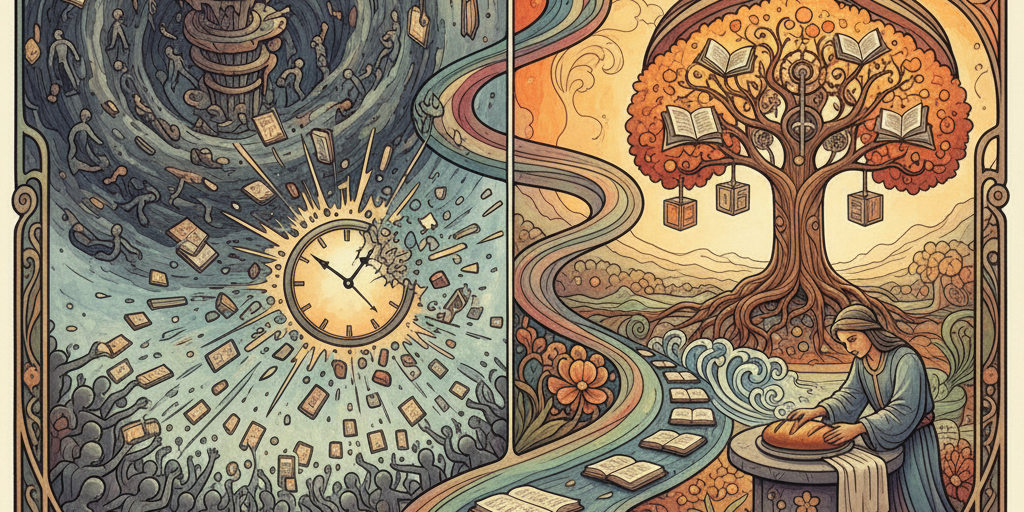
Turn confident statements into accountable processes. Document decisions, rehearse your values, and treat creativity as repeatable craft so your next attempt becomes the durable one.
Why are we drowning in confident conclusions, yet starving for sound reasoning?
When will you stop spending ten thousand hours discovering the same mistake twice and start treating your next attempt like the one that actually matters?
What if the opinions you're chasing today are just echoes of half-baked thoughts, steering you straight into regret?
Surface culture: status, hustle and hollow conclusions
We scroll through an endless feed of confidently expressed bad opinions. We live in a world where conversations are a battle of conclusions, not a mutual exploration of the reasoning that led to them.
We’ve built our identities around things that, under pressure, don't actually matter: the titles on our business cards, the cars we drive, the privileged neighbourhoods we live in. We are busy, yes, but we've been mistaking this noise for substance.
The real burden isn't the work; it's the gnawing, pervasive feeling that we're participating in a reality that is all surface, no foundation.
Most organisations and creators treat every major effort as if they’ve never been here before. The first try is slow, noisy and expensive: debates that spin in place, decisions that vanish, procedures that live in people’s heads. We applaud hustle while tolerating waste.
Meanwhile, confident assertions replace honest explanation. Conclusions get amplified without the reasoning that earned them. And when a real shock arrives, our stated values reveal themselves as decoration rather than ballast. We keep the rituals of busyness and lose the craft of repeatability.
Social feeds crammed with quick-fix advice on everything from building empires to hacking happiness. It feels efficient, this constant barrage of conclusions tossed around like confetti, but peel back the layer and it's hollow: no one bothers to unpack the messy path that got them there.
Meanwhile, we're all grinding through uncharted territory in our own lives, launching that side hustle, reshaping a career, or just surviving the daily chaos, pouring in sweat and second-guesses the first time around, only to watch others glide by on recycled shortcuts.
This shortcut culture breeds decisions built on sand, leaving us exposed when the storms hit, our true priorities buried under flashy distractions like status symbols that crumble under pressure.
When crisis exposes unpractised values: the cost of first-time thinking
When everything is easy, it’s simple to say we have life figured out. But what happens when a real crisis hits? When our community feels like it’s collapsing, our finances are threatened, or our health is on the line?
Suddenly, all those confidently-held "values" are put to the real test. We discover we’ve never actually had to practice what we thought we knew about coping. We’re left trying to move forward when we can barely crawl, holding onto ideals that have no worth because they don't help us when life is hard. We realise we’ve spent our lives consuming, not building.
This pattern is not merely inconvenient; it corrodes potential. Hours lost to reinvention become the quiet tax on innovation. Bad conclusions, loudly delivered, cascade into flawed strategies and avoidable crises.
Morale frays as people re-fight yesterday’s debates and watch the same errors return in new clothes. When pressure hits, teams discover they never practiced their priorities. The things they said they valued fail to guide them.
The emotional cost is real: exhaustion, cynicism, and the slow atrophy of agency. If nothing changes, you’ll keep sprinting in place while rivals who learn to do the second time better pull ahead.
Ignore it long enough, and the toll mounts like interest on bad debt: fractured focus from endless scrolling, relationships strained by unexamined choices, and that gnawing emptiness when crisis strikes, whether it's a market crash or a personal meltdown, and suddenly those superficial values evaporate.
You're left scrambling, energy drained on restarts and regrets, watching potential slip away as half-hearted habits fail to hold. The emotional weight? It's a quiet thief, robbing joy from simple moments, amplifying isolation, until you're not just surviving, but barely breathing, trapped in a cycle where every misstep echoes louder, costing not just time, but the fire that once drove you.
Craft as an antidote: practice, record, and repeat
The breakthrough is realising that a meaningful life is a craft. Like Julia Child, who famously "just ate" until she was 32, we can decide to start cooking. The shift is from passive consumption to active creation. It’s about finding the small, slow pursuits that reorient us.
Think of baking bread. It requires patience. It's physical. It’s an activity that gives a sense of pleasure and mastery, which research shows helps overcome negative emotions. We stop just re-typing someone else's novel, which takes a day, and start the hard, five-year work of the first time: the exploring, the re-working, the reasoning.
This is how we move past fear and panic. We find the activities that let us reconnect with what gives life meaning, one muffin at a time.
There is a predictable, practical way through: treat creativity as craft and decisions as repeatable artifacts. Capture how you decided, not just what you decided. Reduce the gap between trial and repeat by codifying the map you made while lost.
In crisis, test values by practicing them . Choose small, tangible disciplines that prove whose commitments hold under strain. And adopt a handful of high-leverage habits: consistent sleep, regular strength work, daily reading, a saving cadence, less phone during focus, and simple movement.
These four moves together transform noise into signal: the map, the reasoning record, the practiced values, and the habits that sustain execution.
Start scrutinising the trails behind those claims, not just the flags they plant at the end. Embrace the raw craft of forging your own path: the arguments, the dead ends, the breakthroughs that make the second lap feel like a sprint.
In the thick of upheaval, rediscover what fuels you intrinsically through grounded acts: kneading dough in a quiet kitchen to summon patience and creation, or committing to rituals that rebuild from within. It's about mastering the first forge, questioning the noise, and channeling stress into small, tactile wins that reveal your core and turning vulnerability into a sharpened edge.
A concrete future: what disciplined practice produces
Imagine a life where your values aren't just words, but a tested guide, a light showing you a path through the fear and uncertainty. This is a future built not on hollow conclusions, but on a foundation of solid, high-return practices: sleeping 8+ hours, moving your body, reading every day, and leaving your phone in another room to work.
In this reality, you've done the hard "first time" work of figuring out who you are. Now, you have the map. You are no longer just consuming; you are creating with the people you love. You are focused on the reasoning, not the noise.
Imagine a near future where launches take days instead of years because the playbook exists; where meetings center on reasons and evidence, not theater; where stress reveals character, not hypocrisy.
Imagine emerging sharper, where sleep restores your edge nightly, weights carve resilience three times a week, and daily walks clear the mental fog, all while stashing away a slice of your earnings and diving into pages that expand your world, phone silenced in another room, water flowing freely.
Life pulses with deeper connections, family and community at the heart, creativity flowing without the drag of doubt, and decisions rooted in solid ground that weather any gale. This isn't distant; it's yours to claim.
Minimal, stubborn practices: a 3-step starter
What one, slow, creative activity will you use this week to reconnect with what truly matters? Start tonight. pick one ritual (bake that loaf, question one assumption, hit the pavement) and watch the map unfold. What's stopping you?
(1) write one short note that explains why you made a recent decision and store it where others can find it.
(2) Pick one recurring task you re-do each month and document the fastest repeatable process for it.
(3) Commit to one high-return habit from the list and check it daily for 30 days.
These are small, stubborn practices that compound. If you treat the second attempt as the real work, and insist that reasoning travel with conclusions, you will stop reliving the same first-time failures.
Do the minimal, meaningful work now and your future efforts will do the heavy lifting for you. Stop debating conclusions. Start exploring your reasoning.
The Essential Concepts
Surface Culture & First-Time Thinking
The central issue is a Surface Culture obsessed with confident conclusions over sound reasoning, leading to a devastating cost: First-Time Thinking.
- First-Time Thinking (Diagnosis): Treating every major effort as if it's new, resulting in expensive waste, debates that spin, and procedures that live only in people's heads. This is the "ten thousand hours discovering the same mistake twice" and tolerating hustle while applauding waste.
- Hollow Conclusions: Conversations are a "battle of conclusions," amplified without the reasoning that earned them. This is part of mistaking noise for substance and building an identity around surface-level status symbols.
- Unpractised Values (Crisis Exposure): When a real crisis hits, stated values reveal themselves as mere decoration rather than ballast because they have never actually been practiced or tested under strain. We discover we've spent our lives consuming, not building.
Antidote: Craft, Practice, and Codified Decisions
The breakthrough is realising that a meaningful life is a craft, requiring a shift from passive consumption to active creation. This unlocks the Second-Attempt Dividend—the value gained from not repeating past mistakes.
- Decisions as Repeatable Artifacts (Framework): Treat major decisions and creative efforts as repeatable artifacts. This means capturing how you decided, not just what you decided, and codifying the map you made while lost.
- High-Return Habits (Resilience Foundation): The foundation of a solid future is built on a few simple, high-impact practices that are not performed but practiced until they become ballast: consistent sleep, regular strength work, daily reading, a saving cadence, less phone during focus, and simple movement.
- Values Rehearsal (Crisis Management): To move past panic, we must test values by practicing them through small, tangible disciplines that prove which commitments hold under strain.
Minimal, Stubborn Practices: 3-Step Starter
To stop reliving first-time failures and insist that reasoning travel with conclusions, commit to these three small, stubborn practices:
- Codify Reasoning: Write one short note that explains why you made a recent decision and store it where others can find it.
- Document Process: Pick one recurring task you re-do each month and document the fastest repeatable process for it.
- Sustain Execution: Commit to one high-return habit from the list (e.g., consistent sleep, regular strength work) and check it daily for 30 days.
I am a Knowledge Worker...
What does it mean for me?
You are operating under the costly burden of First-Time Thinking, where your team treats every major effort as a unique, slow, and expensive discovery, essentially "discovering the same mistake twice."
This results from a Surface Culture that prizes Hollow Conclusions (confident statements without reasoning) and tolerates waste while applauding hustle.
When a true crisis or pressure point hits, your team's Unpractised Values will reveal themselves as mere decoration, causing avoidable errors and damaging morale.
The critical opportunity is to secure the Second-Attempt Dividend by treating your career and team processes as a craft.
By utilising Decisions as Repeatable Artifacts and focusing on High-Return Habits, you establish ballast—a foundation of sound reasoning and reliable processes—that accelerates execution, reduces time lost to reinvention, and dramatically increases your credibility and influence.
How do I action this?
- Codify Reasoning (Decisions as Repeatable Artifacts): After the next high-stakes decision you are part of (e.g., project pivot, technology choice), write a short note explaining the why and the reasoning that led to the conclusion (the "map you made while lost"). Store this note in a centralised, accessible location (e.g., project documentation) so others can find it and you don't repeat the debate.
- Document Process (Second-Attempt Dividend): Pick one recurring task that you re-do at least monthly (e.g., monthly reporting, status update email, onboarding a new vendor). Document the fastest, most repeatable step-by-step process for it—even if it's currently only in your head. This process is the playbook for the second attempt.
- Sustain Execution (High-Return Habits): Commit to one high-return habit from the list (e.g., consistent 8-hour sleep, 30 minutes of simple movement, or leaving your phone outside your focus area). Check this habit daily for the next 30 days to build the personal ballast necessary to sustain long-term focus and agency.
- Values Rehearsal (Crisis Management): Identify one stated team value that is currently abstract (e.g., "We value transparency"). Choose a small, tangible discipline to practice this week that tests it (e.g., publicly sharing one small failure/learning you typically hide, or asking one tough, direct question in a meeting).
I am a Freelancer, Solopreneur, Entrepreneur, Independent Worker...
What does it mean for me?
Your independent business is highly susceptible to First-Time Thinking, causing you to spend "ten thousand hours discovering the same mistake twice" in sales, delivery, and marketing.
You live in a Surface Culture where you may be optimising your identity around hollow status symbols rather than substance.
This leads to Hollow Conclusions in your strategy that lack sound reasoning, leaving you exposed when a market crisis hits and your Unpractised Values (e.g., financial discipline, client boundaries) fail.
The breakthrough is embracing your work as a craft to earn the Second-Attempt Dividend.
By consciously defining Decisions as Repeatable Artifacts and building a foundation of High-Return Habits, you create the internal resilience and repeatable systems needed to scale and ensure your next effort is the durable one.
How do I action this?
- Codify Reasoning (Decisions as Repeatable Artifacts): After the next major business decision (e.g., a pricing change, a client rejection, a new niche selection), write a short note explaining why you decided that way—the evidence, assumptions, and counter-arguments considered. Store this note in a "Lessons Learned" document so your future self can access the reasoning.
- Document Process (Second-Attempt Dividend): Pick one recurring business task (e.g., drafting a service contract, sending a client proposal, generating a social media post). Document the fastest, most repeatable process for it (the playbook) to eliminate the need for First-Time Thinking and accelerate your time-to-delivery for the second attempt.
- Sustain Execution (High-Return Habits): Commit to one financial high-return habit (e.g., setting up an automatic savings cadence for 30 days) AND one physical high-return habit (e.g., one session of regular strength work per week). Check these daily to build the personal discipline that sustains business execution.
- Values Rehearsal (Crisis Management): Identify one stated business priority (e.g., "We are client-centric, not revenue-centric"). Design a small, tangible discipline this week to test it (e.g., turn down one low-fit, high-paying client lead, or allocate 30 minutes to personally thank an existing client, rather than seeking new ones).