The Slow Theft of Agency in the Age of Noise.
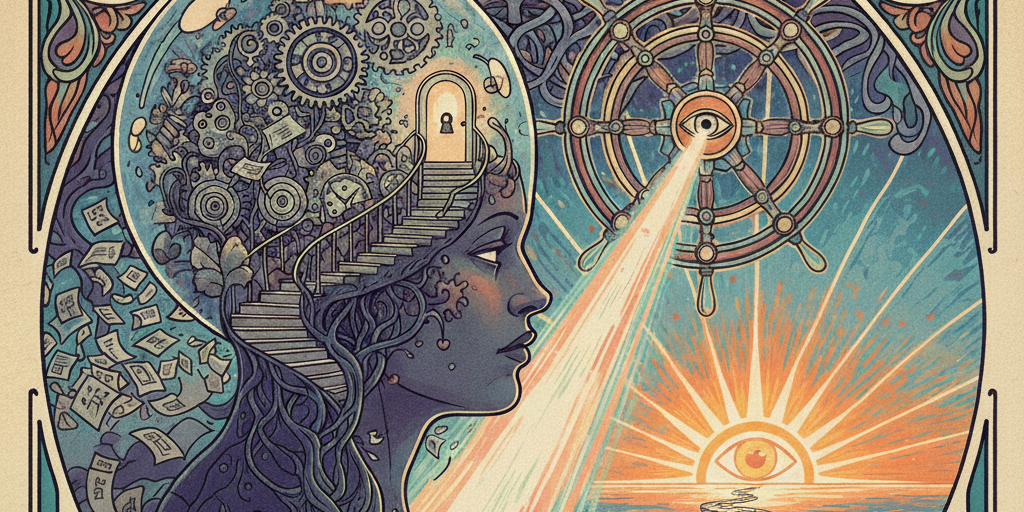
Your brain’s ability to predict disaster is keeping you trapped in a safe, silent failure. Here is how to stop simulating the crash and start steering the car. A guide to breaking the loop of "polite stagnation" before your hesitation becomes your legacy.
Why do we endure situations we don’t want when we have the power to change them?
What future are you quietly choosing for yourself because you rehearsed its failure one too many times?
What would happen if you kept waiting for the perfect moment, even as the world around you grew louder and more chaotic?
The Diagnosis of Imagination
We usually misinterpret Hamlet’s line, "Thus conscience does make cowards of us all," as a sneer at morality, as if ethics make us soft. But Shakespeare was diagnosing a flaw in our intelligence. By "conscience," he meant consciousness: our ability to simulate futures before they arrive.
We are so gifted at rehearsing embarrassment and rejection that our bodies respond as if those tragedies have already occurred. Our heart rates rise; we tighten up. We mistake "thinking it through" for safety, but we are actually letting our imagination defeat our courage.
The First Symptom
This manifests in the workplace as neat, polite stagnation. Meetings reward consensus; committees congratulate unanimity as if it were wisdom. Teams cling to personal loyalties while the shared purpose blurs. Every day, attention fragments across dashboards and shiny tools until nothing moves decisively. Intelligence (ours and the machine’s) has taught us to simulate every worst-case until action feels reckless.
The real threat isn’t a lack of effort; it’s the constant stream of signals and competing opinions that keep us stuck in the same loop. We linger in the wrong jobs and the wrong versions of ourselves not because we don't know better, but because the mind would rather endure a familiar misery than gamble on an unfamiliar freedom.
The Invisible Scar
The tragedy is that while we learn quickly from the mistakes we make, we almost never feel the weight of the mistakes we avoid. The humiliation of failure leaves a scar, but the decades-long erosion of silence leaves nothing you can point to until it’s too late.
The mind, wired to simulate worst-case futures, rehearses embarrassment and rejection until those imagined outcomes feel inevitable. As a result, we stay in jobs that don’t fulfill us and postpone the ideas that could reshape our careers.
The Second Symptom
In business, this hesitation manifests as "noise." We drown in unnecessary dashboards and fuzzy visions, masquerading busyness as progress. We prioritise loyalty to specific people rather than the common mission. We think we are being cautious, but in a world where AI and competitors move at lightning speed, caution is dangerous. If you feed AI noise, it creates louder chaos; the technology multiplies your mistakes and your hesitation alike.
This isn’t merely inefficiency. It’s a slow theft of agency. Talent burns out watching progress evaporate into debates. Resources flow into noise that looks like motion but compounds nothing. Promising ideas are smothered because they provoke argument instead of unanimous applause. People stay in roles that erode them, arguing that “stability” is protection. The longer you wait for perfect alignment, the more the world accelerates past you. Regret isn’t a sudden thing; it’s a thousand unmade bets adding up until the only thing left to manage is loss control.
The Pivot to Signal
The breakthrough requires a radical shift: you must value Signal over comfort. You have to accept that clarity often feels like conflict. As Seth Godin observes, if the investment committee is unanimous, the idea probably isn't brilliant. Great leaps arrive amidst skepticism and strong division.
You cannot wait for the path to be perfectly illuminated. Dorie Clark spent years reverse-engineering opaque processes to build authority. You have to audit your direction and define ownership. You must identify the specific metrics that actually change outcomes and kill everything else. This is how you strengthen your signal.
Treat dissent as an early-warning of originality, not as a defect to be smoothed. Make mission the arbiter of loyalty. If people aren’t aligned with the objective, their loyalty becomes friction. Name owners for metrics and shorten feedback loops so mistakes turn into data. Invest deliberately in your voice (publish and teach) to shortcut years of opaque trial-and-error. Finally, act before certainty arrives: courage here is a disciplined small-step system, not a heroic gamble.
The Compounding Returns
When your signal is strong, everything begins to compound in your favour. Your brand cuts through the static, lowering acquisition costs. Your feedback loops become tight, surfacing problems before they become disasters. AI becomes an amplifier because you are finally feeding it clarity.
Courage is moving while things are still unclear. Less reflection can mean more peace. Less certainty can mean more movement.
Audit your vision and take the step into the unrehearsed future.
- Audit one goal this week and write a single-line mission statement for it.
- Choose 3 vital metrics that predict progress and delete the rest. Assign one owner to each.
- Publish one original idea in public. Treat it as an experiment, not a performance.
The cost of inaction is measured in lost futures; the cost of a small, deliberate bet is measured in lessons. Choose the sooner risk.
The Essential Concepts
The Diagnosis of Imagination: Rehearsing the Crash
Shakespeare’s observation that "conscience [consciousness] does make cowards of us all" highlights a flaw in our intelligence: we are so gifted at simulating embarrassment and rejection that our bodies respond as if the tragedy has already occurred.
- The Simulation Trap: We mistake "thinking it through" for safety, but we are actually allowing our imagination to defeat our courage before we even begin.
- The Familiar Misery: The mind would rather endure a familiar, stagnant misery than gamble on an unfamiliar freedom. We stay in the "wrong jobs" because the risk of the unknown feels like a physical threat.
- The Weight of Omission: We feel the sting of mistakes we make, but we rarely feel the weight of the years-long erosion caused by the bets we didn't take.
The First Symptom: Polite Stagnation and Noise
In the workplace, this internal hesitation manifests as a cult of consensus. We prioritize the feelings of the committee over the clarity of the mission.
- The Consensus Mirage: We congratulate ourselves on unanimity, but if an investment committee is unanimous, the idea is likely mediocre. Brilliance usually lives amidst skepticism.
- Noise as Progress: We drown in dashboards and "fuzzy visions," using busyness to mask the fact that nothing is moving decisively.
- The AI Multiplier: If you feed AI your noise and hesitation, it simply multiplies the chaos. Technology cannot fix a lack of direction; it only accelerates your current trajectory.
The Pivot to Signal: Clarity Over Comfort
To break the loop, you must prioritize Signal over Comfort. This requires a radical acceptance that clarity often feels like conflict.
- Dissent as Originality: Treat disagreement as data. If a project provokes zero argument, it likely lacks the edge required to cut through the static of 2026.
- Mission-Based Loyalty: Make the mission the ultimate arbiter. If people are loyal to each other but not the objective, that loyalty becomes systemic friction.
- Ownership and Feedback: Shorten your feedback loops. Mistakes shouldn't be "managed"; they should be converted into data as quickly as possible.
The "Agency Recovery" Protocol
The cost of inaction is measured in lost futures. To transition from simulating the crash to steering the car, execute these three tactical shifts this week:
- The One-Line Mission: Audit one of your primary goals. Write a single-line mission statement for it. If it’s longer than one sentence, it’s still noise.
- The Vital Three: Identify only three metrics that actually predict progress toward that mission. Delete every other dashboard and assign a single human owner to each metric.
- The Public Experiment: Publish one original idea in a public forum. Do not treat it as a "performance" to be polished; treat it as an experiment to gather signal.
"Courage is moving while things are still unclear. Regret isn’t a sudden thing; it’s a thousand unmade bets adding up until the only thing left to manage is loss control."
I am a Knowledge Worker...
What does it mean for me?
In the corporate world, you are likely trapped in Polite Stagnation, a state where your intelligence is actually working against you.
Because you are highly conscious of the organisation's social hierarchy, your brain excels at the Diagnosis of Imagination—simulating the embarrassment of a failed proposal or a rejected promotion before you even open your mouth.
This leads to the Consensus Mirage, where you find yourself seeking unanimous approval in committees, mistaking safe, mediocre ideas for "strategic alignment."
You are currently enduring a Familiar Misery—the comfort of a predictable paycheck and a "green" dashboard—because your mind perceives the Unfamiliar Freedom of a bold career move as a physical threat.
The real danger is that you are accruing the Weight of Omission.
You feel the sting of a typo in an email, but you don't feel the years of silent erosion caused by the bets you didn't take.
You might be using Noise as Progress, filling your day with "urgent" meetings and complex spreadsheets to mask the fact that you aren't moving decisively toward a higher-impact role.
If you continue to feed this hesitation into your work—and eventually into the AI tools you use—you will simply create "louder chaos," accelerating your drift into irrelevance while the mission you were hired to serve becomes an afterthought.
How do I action this?
- Identify Your "Consensus Mirage" Meeting: Look at your calendar for the coming week. Pick one meeting where the goal is usually "alignment." Instead of seeking unanimity, prepare to share a "signal" idea—one that you know is right but expect will provoke healthy skepticism or dissent.
- Draft the One-Line Mission: Write down the core objective of your current role in a single sentence. If it requires commas or "and," it’s still noise. Use this line as the arbiter for every task you accept; if the task doesn't serve the mission, it is systemic friction.
- The Vital Three Audit: Audit your primary dashboard and select only three metrics that actually predict your promotion or the project’s success. Assign yourself or a specific teammate as the "Human Owner" of each, and stop reporting on the other "fuzzy" indicators that masquerade as busyness.
- Publish an Internal "Signal" Piece: Write a 300-word perspective on a process improvement or a market shift and share it on your company's internal platform (Slack, Intranet). Do not polish it for "consensus"; publish it as an experiment to gather data on who else in the organization is aligned with the mission.
I am a Freelancer, Solopreneur, Entrepreneur, Independent Worker...
What does it mean for me?
For those transitioning to independence, the Simulation Trap is the primary reason businesses fail before they launch.
You are likely "thinking it through" to the point of paralysis, rehearsing every possible market rejection until your body responds with a heart rate of disaster.
You are choosing a Familiar Misery—staying in a low-risk, low-reward freelance cycle—because your imagination is defeating your courage.
You are waiting for "perfect alignment" or a "perfect moment" that doesn't exist, while the Weight of Omission compounds into a legacy of "what-ifs."
In a 2026 market where AI moves at lightning speed, your "caution" is actually your greatest liability.
If you feed your business's Noise—fuzzy branding, unclear offers, and half-hearted marketing—into automation tools, you will only multiply your hesitation.
You need a Pivot to Signal, which means accepting that clarity will feel like conflict.
Your business won't cut through the static by being "polite"; it will cut through by being bold, distinct, and driven by a mission that is the ultimate arbiter of your time and your loyalty.
How do I action this?
- Execute the "Public Experiment": By the end of this week, post one raw, unpolished offer or a provocative industry take on your primary social channel. Treat it as a "signal check" to see who bites, rather than a polished performance. The data from a "failed" post is infinitely more valuable than a simulated success in your head.
- Kill the Vanity Dashboards: Solopreneurs often drown in "dashboard noise" (likes, follows, open rates). Identify the Vital Three metrics that actually put money in your bank account (e.g., booked calls, proposals sent, cash flow). Delete every other tracking app on your phone.
- Define Your "Ownership" Metrics: Since you are the only employee, you must assign "human ownership" to your business functions. Set a recurring 15-minute meeting with yourself every Monday to review your three vital metrics. If a metric is down, don't "manage" it—convert the failure into a specific "Signal" action for the week.
- Audit Your Direction: Use the One-Line Mission to evaluate your current client list. If a client provides "stability" but erodes your agency or mission, draft a plan to replace them. Remember: Regret isn't a sudden explosion; it's a thousand unmade bets.