The Triviality Tax: The Operational Cost of Choosing Comfort Over Consequence.
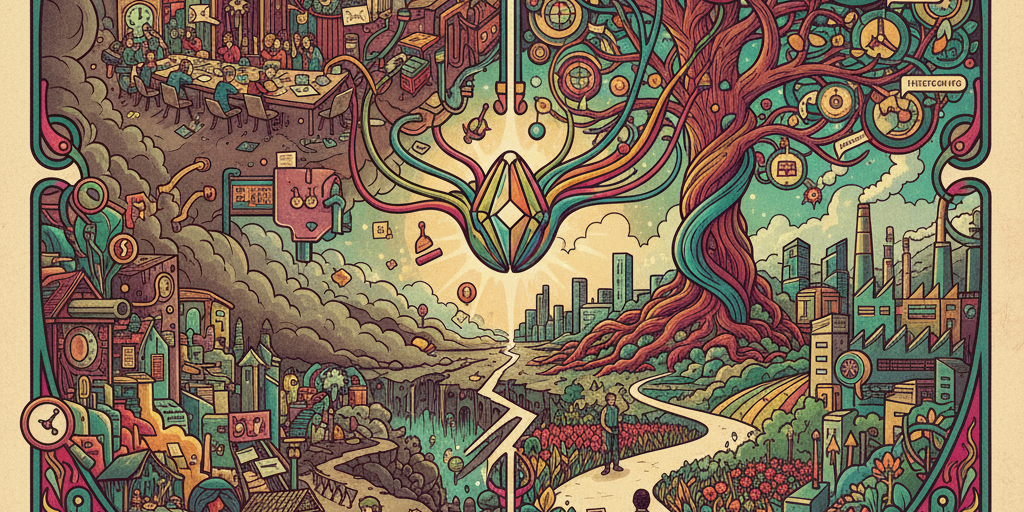
Most teams confuse motion with progress, polishing the trivial hides strategic decay. A compact method: replay the decisions that trapped you, prune what bloats, graft a single high-impact habit, and iterate.
When was the last time your "urgent" work actually mattered?
What are you polishing so hard that you never notice the house collapsing around you?
What if the tiny distractions stealing your days are actually devouring your dreams?
Cultural Diagnosis: The Economy of the Superficial and Why Teams Retreat to the Trivial
We are steeped in a culture obsessed with the superficial. We spend hours in meetings that drag on, arguing over the equivalent of a bike shed's color while the foundation cracks beneath us. We're buried in email chains that solve nothing. We mistake this flurry of activity for achievement.
The real threat? This comfort with the inconsequential. It's an addiction to the easy, a collective agreement to ignore what's truly at stake. Why? Because the important decisions, the ones that really move the needle, feel too big, too complex, too scary. So, we retreat to the trivial, where everyone has an opinion and nothing is at risk.
The Dug-in Habit and Signal/Noise mismatch: What Gets Built vs What Gets Polished (Meetings, Alignment Theatre and Misallocated Attention)
We celebrate neat margins, tidy agendas, and the illusion of progress while the decisions that actually move us forward sit on hold. Teams spend weeks arguing font choices, rearranging meeting chairs, or extending one more draft and call that “alignment.”
Meanwhile revenue signals, product feedback, or the automation that would stop the same mistake repeating remain unbuilt. That mismatch is not coincidence; it’s a pattern that steals time, momentum and courage.
You're knee-deep in endless meetings debating logo colors, email threads spiraling over minor tweaks, or scrolling feeds that promise quick wins but deliver nothing. It feels productive, this buzz of activity, like you're moving forward.
But lurking beneath is a sly thief: our habit of obsessing over the superficial, like arguing about a bike shed's paint while the nuclear plant blueprint gathers dust. This pull toward the trivial isn't laziness; it's a wired-in dodge, letting us avoid the gut-wrenching choices that truly matter, sapping energy from what could redefine your path.
Compounding Harm: Slow-motion Burnout and Opportunity Loss
This isn't just wasted time; it's a slow-motion burnout. It’s the hollow feeling at 5 PM when your day was full, but your purpose is empty. This obsession with the trivial becomes a dense fog, obscuring our potential and our goals.
Every hour we spend "polishing the knobs" on a project that doesn't matter is an hour stolen from the one that does. We aren't just stalling; we are actively suffocating our most significant contributions. We're busy, but we're stagnant.
The cost compounds silently. Projects miss market windows. People burn out chasing perfection in corners. Opportunities fade because attention is fragmented and deferred. Each trivial debate consumes cognitive capital that could have compounded into real advantage. Over months, small delays turn into lost customers, stalled promotions, and a creeping sense that you’re busy rather than effective.
Ignore it, and watch the toll mount. Opportunities slip away as hours vanish into pointless debates, leaving you exhausted yet stagnant, frustration boiling into quiet resentment. Relationships fray from neglected depth, careers plateau in mediocrity, and that spark of ambition dims under the weight of unaddressed regrets.
The real sting? It's insidious, eroding your potential drop by drop, until you're trapped in a loop where today's small wins mask tomorrow's massive losses, breeding a hollow ache that whispers you've settled for less than you're capable of.
Escape Hatch: Replaying the Story and Choosing with Intent
The escape hatch isn't a new productivity app. It’s a radical shift in perspective. It starts by having the courage to stop and look backward. We must replay the story of how we got trapped in this cycle of triviality. What past decisions led us here? Only by understanding the path in can we clearly visualise the path out.
Once we see that narrative, our actions change. We stop reacting and start architecting. We no longer just "work"; we choose our tool with piercing intent. Are we pruning this dead-end process? Welding two vital ideas? Grinding out a new standard? Burning down the old rulebook? The specific action matters less than the deliberate intention behind it.
Start by replaying the recent story: map three decisions that led you here, then decide which to undo before you plan ahead. Choose interventions with intent: prune what bloats, graft a new habit where it matters, sand the rough edges of process, irrigate focus with fewer meetings.
Pause and rewind. Trace the steps that landed you here: the choices, the sidetracks. Then, map out deliberate moves ahead, envisioning actions that propel you and your circle toward real aims. It's about wielding change with purpose: trim the excess, nurture growth, refine edges, fuse new ideas, or even ignite controlled burns to clear the old.
Stop wild argument by predefining success criteria and shortening the time you spend on everything that isn’t directly on trajectory. The work is surgical and iterative: cut, cultivate, polish, not indiscriminate perfectionism.
This isn't random; it's intentional reshaping. And remember, the thrill lies not in static wealth or status, but in that daily nudge upward, growing a bit sharper, bolder each sunrise.
Vision and Practical Method: Map Decisions, Prune, Graft, Iterate
Imagine a day, a week, a career focused on consequence, not just activity. This is a future defined by momentum. This is the profound satisfaction of becoming better, not just being busy. It’s the difference between a static position and the genuine thrill of growing richer in purpose, day by day.
We trade the exhaustion of the superficial for the raw energy of traction. The bike shed is finally done. It's time to build the reactor.
Imagine waking to a week where the most important decision is already advanced, where small daily progress compounds into measurable advantage, and meetings are checkpoints not sinkholes. You’ll trade frantic busywork for deliberate, directional momentum: a little richer in capability each day rather than stranded at a prettier version of the same problem.
Imagine emerging into a life where focus fuels breakthroughs,deeper connections forged, bold projects launched, a sense of momentum that electrifies every step, turning yesterday's frustrations into tomorrow's triumphs.
Stop celebrating the trivial. For the next 48 hours, question every meeting and every email. Ask: "Is this the bike shed, or is this the foundation?" Decide your one intentional act and do it. You'll savour the rush of progress, richer in purpose and possibility, unburdened by the trivial's grip.
Start now, grab a notebook, replay the last three projects, pick one thing to cut, one to graft, and one process to prune this week. Commit to that triad, measure the result, and repeat.
The Essential Concepts
Core Problem: The Triviality Tax & Strategic Decay
The core issue is The Triviality Tax: the Operational Cost of Choosing Comfort Over Consequence. This arises from an addiction to the easy and a collective agreement to retreat to the trivial because important decisions feel too big or scary.
- Economy of the Superficial: A culture obsessed with activity (e.g., endless meetings, email chains) which is mistaken for achievement and progress.
- Signal/Noise Mismatch: The pattern where attention is misallocated to what gets "polished" (e.g., font choices, meeting chairs, "Alignment Theatre") while the actual signal (revenue signals, product feedback, necessary automation) remains unbuilt.
- Compounding Harm: This is a slow-motion burnout where every hour spent "polishing the knobs" is an hour stolen from the critical work. This results in stagnation, opportunity loss, and strategic decay.
The Escape Hatch: Intentional Architecture Framework
The solution is a radical shift in perspective from reaction to intentional architecture. It requires the courage to stop, look backward, and focus on consequence, not just activity.
- Replaying the Story: The first step to escape the cycle of triviality is to look backward and replay the story of how you got trapped, mapping the past decisions that led you to the current cycle.
- Intentional Intervention: Once the story is mapped, every action must be chosen with piercing intent rather than reaction. The ultimate goal is to trade the exhaustion of the superficial for the raw energy of traction.
Practical Method: The Triviality Tax Abatement Triad
The method for achieving intentional architecture is a surgical and iterative approach focused on momentum:
- Map Decisions: Replay the last three projects/decisions that trapped you in the trivial.
- Prune What Bloats: Choose one element (process, project, meeting) to cut or prune that is consuming disproportionate cognitive capital.
- Graft a Habit: Choose one single high-impact habit or high-consequence action to graft onto your routine immediately.
- Iterate: Commit to the triad, measure the result, and repeat, building a life that is richer in purpose day by day.
Practical Start Steps
To trade spectacle for steadiness and escape the Triviality Tax, start now:
- Stop celebrating the trivial: For the next 48 hours, question every meeting and every email with the query: "Is this the bike shed, or is this the foundation?"
- Commit to the Triad: Grab a notebook and immediately pick one thing to cut, one thing to graft (a high-impact habit), and one process to prune this week.
I am a Knowledge Worker...
What does it mean for me?
You are likely paying the Triviality Tax, where your organisation's Economy of the Superficial (flurry of busywork) is masking strategic decay.
The "bike shed" meetings and endless email chains feel safe because they allow you to avoid the scary, high-consequence decisions that truly drive your career or team forward.
This comfort creates a Signal/Noise Mismatch: attention is misallocated to "Alignment Theatre" (polishing slides, debating fonts) while the real signal (critical feedback, automation opportunities) remains unbuilt.
This Compounding Harm results in slow-motion burnout and stagnation. The Escape Hatch is to commit to Intentional Architecture.
By having the courage to stop and Replay the Story of how you got trapped in the cycle of triviality, you can trade the exhaustion of the superficial for the raw energy of traction that fuels genuine career growth.
How do I action this?
- Prune What Bloats (Target "Alignment Theatre"): Identify one meeting or recurring report where "polishing the knobs" (e.g., debating format, minor wording) is common. Prune this element by enforcing a hard 5-minute time box for all design/format discussions, or by canceling the report outright if its original purpose is unclear.
- Graft a Habit (High-Consequence Action): Choose one single high-impact habit—a high-consequence action—to graft onto your routine immediately (e.g., blocking 30 minutes daily to work only on the highest-leverage task, or submitting a proposal for team automation). Do this before you plan any further trivial activities.
- Map Decisions (Replay the Story): Replay the story of your last stalled project or goal. Map three past decisions (not external factors) that led you into the current cycle of triviality or delay (e.g., "Decision 1: Agreed to include unnecessary stakeholder in every review"). Use this map to identify one of these past decisions to actively undo this week.
- Question the Trajectory (Foundation vs. Bike Shed): For the next 48 hours, question every task or invitation with the query: "Is this the bike shed, or is this the foundation?" If it's the bike shed, either delete the task, immediately delegate it, or reduce the time investment by 80%.
I am a Freelancer, Solopreneur, Entrepreneur, Independent Worker...
What does it means for me?
Your independent practice is uniquely vulnerable to the Triviality Tax, where the solo Economy of the Superficial leads to strategic decay.
The fear of confronting a difficult pricing decision or a necessary service pivot makes you retreat to the easy work—"polishing the knobs" on your website, tweaking logos, or organising your desk.
This Signal/Noise Mismatch means your attention is misallocated to minor aesthetic details while critical signal (client feedback, automation of sales) remains unbuilt.
The resulting Compounding Harm ensures you are busy but stagnant. The Escape Hatch is to adopt the Intentional Architecture Framework.
By ruthlessly Replaying the Story of how you got stuck and applying the Triviality Tax Abatement Triad, you prioritise consequence over comfort, gaining the raw energy of traction necessary for business sustainability.
How do I action this?
- Prune What Bloats (Target Low-Impact Polish): Identify one routine perfectionist activity (e.g., tweaking your website's landing page wording for the 10th time, over-formatting a low-value invoice, or researching a competitor detail you won't act on). Prune this activity by setting a one-hour time limit for it this week, then mark it as finished regardless of completion.
- Graft a Habit (High-Consequence Action): Choose one single high-impact habit—a high-consequence action—to graft onto your week immediately (e.g., cold outreach to three high-value prospects, automating one step in your client intake flow, or writing the new, higher pricing on your services page).
- Map Decisions (Replay the Story): Replay the story of the last time you put a major business decision on hold (e.g., raising prices, defining a niche). Map three past decisions that directly led to the current paralysis. Use this map to choose one of these past decisions to actively reverse (e.g., "I will immediately send the price increase email") this week.
- Question the Trajectory (Foundation vs. Bike Shed): For the next 48 hours, question every task on your to-do list with the query: "Is this the bike shed, or is this the foundation?" If the task is a "bike shed" (superficial polish), commit to spending no more than 10 minutes on it, or delete it entirely to clear cognitive capital for the foundation.