The Two-Tap Trap: How Legacy Communication Architectures Preserve Dysfunction.
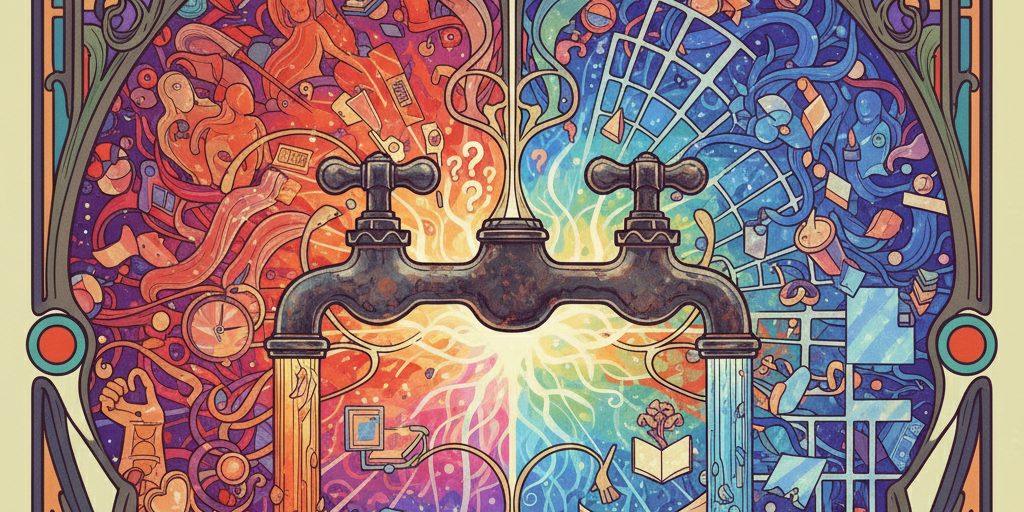
Organisations preserve old practices because they were never interrogated. Learn how to treat fear as diagnostic data, enforce norms for candour, and convert polite inertia into decision velocity. Politeness and jargon aren’t just social inconveniences; they’re design flaws. This piece diagnoses how obsolete communication practices create organisational debt and offers three small experiments to start dismantling them.
Why are we drowning in spin? What if that polite, "professional" culture we’ve built is actually the most dangerous thing holding us back?
What part of your system still exists only because nobody ever asked, “what was that for?”
What if the very habits keeping you safe are the ones slowly poisoning your potential?
Obsolete Systems and Broken Communication
We operate in systems that feel familiar, but they're fundamentally broken. Think of an old sink with two separate taps, one scalding hot, one ice cold. You can't get a useful mix. That design isn't just "bad"; it's obsolete. It was built for a world that no longer exists, yet we keep installing it everywhere.
Our communication is the same. We’ve normalised an obsolete design. We sit in meetings where everyone nods, but nothing is decided. We give feedback that’s so vague, it’s useless. We’ve all become masters of the "iron man argument," using jargon and imprecise language to make our positions sound good while saying nothing at all. It's like trying to box with a wisp of steam. You can't land a punch, and the real, menacing problems remain untouched, shrouded in fog.
We live inside practices and products that make sense only to history. Think of plumbing with two taps that force you to scald or freeze because somebody once feared mixing waters; that artifact survives long after its justification has vanished.
In organisations this looks like processes nobody can fully explain, secrecy treated as protection, and language so vague it shields poor choices. The result is comfortable dysfunction: decisions made on fog, rewards aligned with form not function, and energy devoted to preserving appearances rather than producing value.
Worse, there is an active force exploiting that inertia, a slow corruption of clarity and courage. When leaders hide uncertainty, teams invent narratives to fill the vacuum. When arguments are crafted so vaguely they cannot be pierced, critique is neutralised. When fear is dismissed rather than read, it hides the limiting beliefs that quietly steer choices. These dynamics combine to keep systems locked into obsolete patterns.
Comfortable Dysfunction: How Politeness Preserves Failure
You're navigating life with tools that once made sense but now just complicate everything, like fumbling with separate hot and cold faucets in a world where clean, mixed water is a given.
We've inherited these outdated setups in how we think and talk, crafting arguments so foggy and loaded with disclaimers that they're impossible to pin down, all to shield ourselves from the sting of being wrong. It's not laziness; it's a relic from times when exposing flaws felt like inviting disaster.
Yet here we are, dodging real conversations, hiding mistakes behind jargon and half-truths, while abstract fears, about losing face or sparking conflict, whisper warnings that we're clinging to illusions of who we are. This menace isn't loud; it's the quiet erosion of trust, turning teams and relationships into echo chambers where nothing truly improves.
Emotional and Organisational Cost
This isn't just an annoyance; it's a rot. This relentless "niceness" means the most important issues are never surfaced. We are, in effect, treating each other like children, letting our teams believe in Santa Claus because we think concealing the truth "protects" them.
This "protection" is a lie, and it breeds deep mistrust. You know you’re not getting the full story, and you know others aren't getting it from you. Potential stagnates. Bad ideas are propped up by politeness.
We are sacrificing our authenticity at the altar of conflict avoidance, and the hidden emotional toll is crushing. We feel disconnected, replaceable, and perpetually stuck, all while smiling in the team meeting.
This isn’t an aesthetic quibble. It eats learning, trust and speed. Obsolete choices create technical debt, bureaucratic drag and a culture that penalises candour. Mistakes are repeated because nobody is brave enough to surface them; talent drains away because bright people cannot tolerate the cognitive tax of constant ambiguity.
Opportunity slips past unnoticed while organisations argue about the right shade of jargon. The emotional toll is real: anxiety, moral friction, and the slow atrophy of agency. Left unchecked, this becomes the new normal and ambitions die under its weight.
Ignore it, and the rot spreads deeper: missed breakthroughs because no one dares call out the flaws, relationships frayed by unspoken resentments, and a gnawing inner hollow where authenticity should thrive.
That fear you feel, the knot in your gut over a missed message or a bold opinion, it's not just discomfort; it's your body screaming about the false selves you're defending, like being a perpetual "people pleaser" who swallows words to avoid waves.
Over time, this buries your edge, stifles innovation, and leaves you exhausted, watching opportunities slip away as others forge ahead unburdened. The toll? A life half-lived, where potential curdles into regret, and the system you thought protected you becomes your cage.
Reframing Fear: From Weakness to Signal
Here’s the turning point: What if that knot in your stomach, that abstract fear of speaking up, of losing social standing, of not being liked, isn't a weakness? What if it's a goldmine of intelligence?
That fear is a signal. It's not visceral, like the fear of falling off a cliff. It's the body's way of communicating that you're protecting a false identity, the "I'm a people pleaser" or "I'm the one who doesn't like conflict" identity.
The breakthrough is realising the only way out is through. It's the decision to embrace radical truth, to be transparent even when it’s hard, messy, and you don’t have all the answers. It’s hard. Adapting can take months, as your "lower-level" self fights to stay safe. But it's the only path to building something real. It’s the only way to create an environment where the best ideas win, not just the safest ones.
There is a compact, hard strategy that changes the game:
- Start by interrogating purpose. Ask “what was that for?” and be ruthless about answers. If the original reason no longer exists, the feature is not clever; it is corruption by habit.
- Pair that with brutal openness: share what you don’t know, early and plainly. When leadership publicly lays uncertainty on the table, rumours shrivel and collective intelligence can be applied. A candid town-hall that admits unanswered questions creates a feedback loop that speeds learning.
- Replace evasive rhetorical armour with testable positions. Don’t fortify claims by being imprecise; instead make them crisp and invite rigorous challenge. That resistance is diagnostic. It shows where the logic holds and where it breaks.
- Read fear as information. The anxieties that surface around a change point not to weakness but to the beliefs people are defending. Treat those fears as pointers to limiting identities, then design experiments that let people step through them safely and learn.
These moves are small in description and painful to execute. They demand discipline: norms for truth-telling, forums for transparent discussion, and a culture that values being corrected more than being comforted.
A Compact Strategy for Radical Truth
What if that same fear isn't an enemy to crush, but a raw signal lighting up your blind spots, urging you to dismantle those shaky identities? Embrace the unfiltered exchange laying bare the good, the messy, the outright failures, and suddenly, vagueness crumbles.
We've tested this in the trenches for decades: sharing uncertainties early, like floating a wild restructure idea to the team before it's polished, not after. It sparks sharper thinking, builds unbreakable trust, and turns potential chaos into collective strength. No more hiding behind steam-like statements; instead, face the annihilation of old shields, and watch indestructible clarity emerge.
Vision: A World Without Spin
Imagine a place with no spin. Imagine knowing exactly where you stand. Imagine a team that can handle a massive, uncertain change with trust instead of rumours, because leadership was honest from day one, even when they didn't know the final outcome.
Imagine waking to a world unshackled: decisions flow from unspun truths, collaborations hum with electric aliveness, and you move with the freedom of someone who's shed the dead weight of pretense.
When important issues are apparent instead of hidden, you get a true idea meritocracy. This is more than effective; it’s liberating. As Pema Chodron said, "Only to the extent that we expose ourselves over and over to annihilation can that which is indestructible in us be found." When you stop protecting your fragile, false identity and move through the fear, you find the part of you that is indestructible. You build trust so deep it's unbreakable.
Imagine decisions made on clear evidence, mistakes amplified into shared learning, and staff who trust leadership because leaders say what they mean and mean what they say. Systems shed their historic ballast.
Teams that once hid behind jargon now compete to be the most intellectually honest. Fear still appears, but it becomes the map, not the jailer. Time-to-decide shrinks, innovation accelerates, and the organisation’s energy shifts from preservation to purposeful creation.
Fears transform into fuel, relationships deepen into genuine bonds, and your path clears for bold strides: empowered, flowing, utterly alive. Start today: pick one conversation where you've been vague or silent, spill the unvarnished reality, and feel the shift begin.
Challenge and Tactical Experiment
So here is the challenge: Stop protecting that identity. The next time you feel that abstract fear rising, don't retreat into the vague language of the iron man.Lean into it. Be the one person who stops boxing with steam. Ask the hard question. Give the honest feedback. And start building the future you actually want to work in.
If you want to start, do this three-step experiment this week:
- Pick one process, metric or feature and answer, in one sentence, “what was that for?” If you can’t, mark it for removal.
- Hold one meeting where leadership lists what they don’t know about a pending change. State the unknowns, solicit concrete questions, and record the contradictions.
- Publish one controversial proposal and ask three people to demolish it. Accept their critique, refine, repeat.
Do these once and you’ll see friction. Do them repeatedly and you’ll change what counts. The question isn’t whether discomfort will come, it will. The question is whether you will read it, learn from it, and use it to design systems that deserve to last.
The Essential Concepts
Obsolete Systems and Comfortable Dysfunction: Organisations often operate with obsolete communication design—the "two-tap trap"—where practices and processes persist long after their original justification has vanished. This is not just "bad design," it's a design flaw that creates organisational debt.
- The Iron Man Argument: This dysfunction is preserved by a culture of politeness and jargon, where people use vague, imprecise language—the "iron man argument"—to shield poor choices and make their positions sound good while saying nothing. This neutralises critique and keeps real, menacing problems untouched, shrouding them in fog.
- Emotional and Organisational Cost: This relentless "niceness" is a rot that sacrifices authenticity at the altar of conflict avoidance. The cost is high: deep mistrust because the full story is concealed, potential stagnates, bad ideas are propped up by politeness, and bright people leave because they cannot tolerate the cognitive tax of constant ambiguity.
Reframing Fear and The Compact Strategy for Radical Truth
Reframing Fear - From Weakness to Signal: The abstract fear of speaking up or losing social standing is not a weakness; it's a goldmine of intelligence. This fear is a signal from the body that you are protecting a false identity (e.g., "I'm a people pleaser"). The breakthrough is realising that the only way to build something real is to embrace radical truth and move through the fear.
A Compact Strategy for Decision Velocity: The antidote to comfortable dysfunction is a hard strategy that converts polite inertia into decision velocity by building systems that value being corrected more than being comforted:
- Interrogate Purpose: Ask “what was that for?” about any existing process, metric, or feature. If the original reason no longer exists, the feature is not clever; it is corruption by habit and should be marked for removal.
- Brutal Openness and Candour: Leaders must publicly lay uncertainty on the table by sharing what they don't know, early and plainly. This candidly admits unanswered questions, shrivels rumours, and allows collective intelligence to be applied.
- Enforce Testable Positions: Replace evasive rhetorical armor (jargon and vague claims) with crisp, testable positions. Invite rigorous challenge because resistance is diagnostic—it shows where the logic holds and where it breaks.
- Read Fear as Information: Treat the anxieties that surface around a change not as weakness, but as pointers to limiting identities. Design safe experiments that let people step through them and learn, using fear as the map, not the jailer.
Challenge and Tactical Experiment
The challenge is to stop protecting your fragile, false identity and lean into the discomfort by being the one person who stops boxing with steam.
To begin dismantling the "two-tap trap," implement this three-step experiment this week:
- Question the Obsolete: Pick one process, metric, or feature and answer, in one sentence, “what was that for?” If you can’t, mark it for removal.
- Publicly Admit Uncertainty: Hold one meeting where leadership (or you, if you are the leader of a project) lists what they don’t know about a pending change. State the unknowns, solicit concrete questions, and record the contradictions.
- Demand Demolition: Publish one controversial proposal or plan and ask three people to demolish it. Accept their critique, refine the proposal, and repeat the process.
Do these repeatedly, and you’ll change what counts, shifting the organisation's energy from preservation to purposeful creation.
I am a Knowledge Worker...
What does it mean for me?
You are likely navigating Obsolete Systems and Comfortable Dysfunction—the "two-tap trap"—where old, purposeless processes persist, draining energy and creating organisational debt.
This dysfunction is preserved by a culture of politeness and jargon where people use the Iron Man Argument (vague language) to shield poor choices, ensuring the most important issues are never surfaced.
This relentless "niceness" results in a high emotional cost: deep mistrust and the sense that bad ideas are propped up by conflict avoidance.
The breakthrough requires Reframing Fear: From Weakness to Signal. That knot in your stomach is intelligence telling you you're protecting a false identity (e.g., the "people pleaser").
By adopting the Compact Strategy for Decision Velocity, you can use Brutal Openness and Candour to accelerate learning, increase your agency, and build the indestructible trust that drives career growth.
How do I action this?
- Interrogate Purpose (Question the Obsolete): Pick one recurring process, metric, or report you currently own or contribute to. Answer, in one sentence, "What was that for?" If the original justification no longer exists, mark it for removal or drastic simplification, actively fighting the corruption by habit.
- Enforce Testable Positions (Stop Boxing with Steam): The next time a colleague or leader uses a vague, jargon-filled claim (Iron Man Argument), gently interrupt and ask them to state their position crisply enough to be challenged (e.g., "Can you rephrase that using only plain nouns and verbs?"). This forces them to replace evasive rhetorical armour with a testable position.
- Publicly Admit Uncertainty (Brutal Openness): In your next project update meeting, be the one person to practice Brutal Openness. List one thing you genuinely do not know or are uncertain about regarding the project's outcome or timeline. State the unknown plainly and solicit concrete questions from the group to apply collective intelligence.
- Read Fear as Information (Step Through the Identity): Identify one upcoming conversation or feedback moment you are dreading (abstract fear). Acknowledge that this fear is protecting a false identity. Design a safe experiment to move through it: commit to sharing one piece of unvarnished, honest truth in that conversation, regardless of discomfort.
I am a Freelancer, Solopreneur, Entrepreneur, Independent Worker...
What does it mean for me?
Your business faces Obsolete Systems and Comfortable Dysfunction—the "two-tap trap"—in your own workflows, where processes persist only because you've never interrogated them.
This is preserved by using the Iron Man Argument in your marketing or client communication—vague, jargon-filled language that shields your uncertainties and neutralises critique.
This has a high emotional cost: Psychological paralysis around key decisions (e.g., pricing, pivoting) and the sacrifice of authenticity to avoid conflict with clients.
The breakthrough requires Reframing Fear: From Weakness to Signal. Your fear of losing a client is intelligence, telling you you're protecting a false identity (e.g., "I'm the expert who never admits doubt").
The Compact Strategy for Decision Velocity is essential for business sustainability, demanding Brutal Openness and Interrogating Purpose to build trust so deep it's unbreakable.
How do I action this?
- Interrogate Purpose (Question the Obsolete): Pick one recurring client report, service feature, or internal business process you currently perform. Answer, in one sentence, "What was that for?" If the original reason no longer exists, mark it for immediate removal or automation, recognising it as corruption by habit.
- Enforce Testable Positions (Demolish the Plan): Publish one controversial proposal for your business (e.g., a new pricing structure, a service pivot) to three trusted peers or clients. Ask them explicitly to demolish it (find its fatal flaw). Accept their critique, refine the proposal, and repeat the process to build a testable position that resistance strengthens.
- Publicly Admit Uncertainty (Brutal Openness): In your next interaction with a client, partner, or trusted vendor, practice Brutal Openness. State one thing you genuinely do not know or are highly uncertain about (e.g., "I don't know the exact timeline for that feature yet, but here's what I'm doing to find out"). This shrivels rumors and allows them to apply collective intelligence to your problem.
- Read Fear as Information (Step Through the Identity): Identify one abstract fear currently stalling a decision (e.g., fear of raising your prices). Design a safe experiment to move through it: commit to asking one current client a low-risk, unvarnished question about the value you provide, or write the price increase and send it to a friend (not the client) to feel the discomfort without the real cost, reading the fear as a pointer to a limiting identity.