Three-Brain Engineering: From Hunch to Hypothesis-Led Intuition.
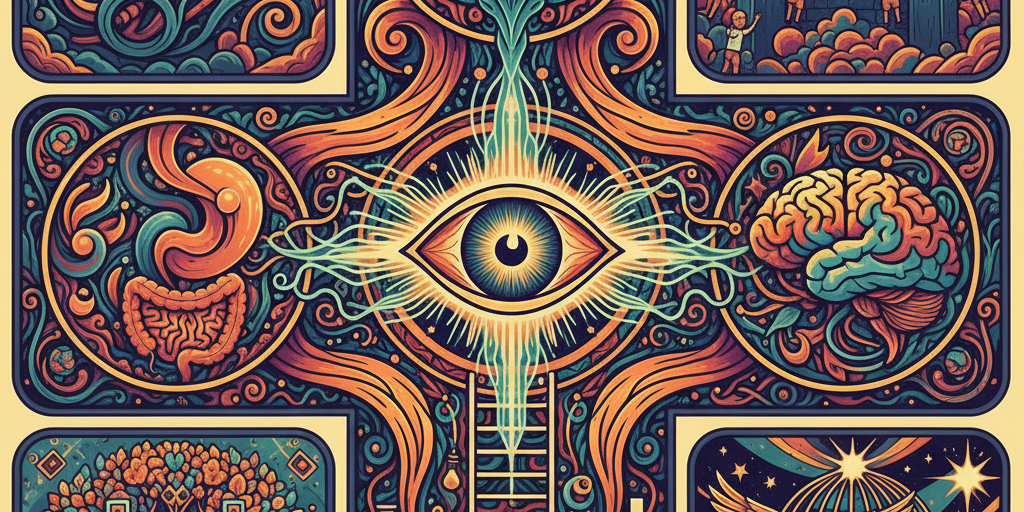
Replace instinct-only choices with short, metric-driven probes that align thought, feeling and somatic feedback. Convert intuition into testable hypotheses and focused practice to produce measurable competence.
What if your most trusted instincts are the very things keeping you trapped?
Are you still letting instinct alone decide the next five years of your career?
What if your trusted gut feeling is just a clever mask for fear, keeping you trapped in the same loops year after year?
Paradox: When Awareness Isn’t Enough
You’ve done the work. You’ve had the therapy sessions, gaining sharp self-awareness about your patterns. You’ve put in the hours meditating, finding moments of peace. You operate from the gut, trusting that brave, personal, vulnerable feeling to guide you. And yet, the core struggles remain. The same anxieties resurface, the same self-sabotaging habits refuse to die, the same ceilings on your performance feel frustratingly solid.
This is the great paradox of modern self-improvement: we possess an incredible awareness of our own minds and emotions, yet remain powerless to command them. We’re stuck in a loop, mistaking the comfort of "my way" for genuine progress, while a deeper, more formidable opponent, our own unexamined process, ensures we never truly break free.
Why Instincts Mislead: Evolution vs. Modern Complexity
We navigate with two instruments: a comfortable routine and a louder, persuasive gut. The routine soothes; the gut feels honest. But instincts evolved to keep us alive, not to help us scale complex systems or build new skills quickly. When we lean on hunches without doing the reading, testing, or hard practice, we confuse motion for progress.
That quiet resistance, fear dressed as “my way”, protects an impostor within and keeps small, repeatable errors hidden. The result: repeated choices that look brave but are actually avoidance in disguise.
You're cruising on instinct, that rush of personal daring that feels so alive until it doesn't. It's easy to lean on hunches when deeper insights feel out of reach, but this hides a sharper truth: without probing the unknowns or testing alternatives, you're navigating blind.
Picture the musician who plays by ear alone, the doctor relying on old habits, or the leader ignoring data for "intuition." Meanwhile, viruses outsmart our brightest minds through sheer, brainless evolution, reminding us that raw adaptation often trumps overthought plans.
And even after hours of therapy or meditation, those stubborn patterns linger because we're only scratching one layer while the nervous system's instincts pull strings unseen.
The Cost: Slow Erosion of Potential
This isn't just stagnation; it's a slow erosion of potential. Relying on a hunch when you haven’t done the reading is a form of hiding, a subtle resistance engineered by the part of you that fears true success.
Every time you default to "what feels right" and fail to get where you want to go, you reinforce the belief that you’ve hit your natural limit. It’s a quiet betrayal. You start to believe the story that you can only hold seven random digits in your mind, that your talent is innate and fixed.
The real cost is the vast, unexplored territory of your own capability that you’ve written off as inaccessible, not realising the map you're using is leading you in circles. Your potential isn't just being unmet; it's being actively suffocated by the very methods you trust to unlock it.
This isn’t merely inefficiency. It compounds. Bad habits calcify into false competence. Opportunities shrink because you trust signals that aren’t predictive. Emotionally, you oscillate between guilt and grandiosity: burned by small failures, then consoling yourself with rationale.
Professionally, you waste time on marginal gains while the real frontier advances through fast experiments and relentless refinement, think organisms that evolve by trying many variations, not by quiet reasoning. Left unchecked, you end up expert at yesterday’s problem, anxious about tomorrow’s unknowns.
This half-hearted drift erodes more than you realise: opportunities slip away as skills plateau, relationships fray from unaddressed impulses, and that quiet imposter voice grows louder, whispering you're not enough. Imagine pouring years into self-awareness only to watch anxiety claw back stronger, or chasing expertise through rote repetition while rivals surge ahead via smarter experiments.
Frustration boils into regret, potential withers like untended fire, and soon, what started as a comfortable rut becomes a cage, devouring your drive and leaving you exhausted, questioning if real change is even possible.
The Alternative: Deliberate, Integrated Practice
The escape isn't found in a new thought or another fleeting feeling. The breakthrough comes from understanding that lasting transformation cannot be achieved through a single channel. It requires a holistic rewiring of our entire operating system: the head (our thoughts), the heart (our emotions), and the gut (our instinctual nervous system).
We must move beyond simply thinking our way to a solution. Like a virus that evolves without a brain, true progress comes from rapid, adaptive trial-and-error not just conscious memory-based learning. This is the power of methodical, hyper-conscious effort.
This isn’t about innate genius; it’s about a fundamentally different way of practicing. It's about choosing the highway of a proven system over the familiar, winding path of your flawed instincts. It's about engaging all three of your "brains" in a deliberate, integrated process of developing potential, not just reaching for it.
Shift from belief-driven action to hypothesis-driven iteration. Run fast, cheap experiments to see what actually moves outcomes. Combine that with focused, feedback-rich practice: break a skill into the smallest component, practice it deliberately with immediate correction, then repeat.
Don’t treat learning as a one-brain project. Align thought, feeling, and body. Let reason frame the hypothesis, let emotional feedback test motivation, and let somatic signals inform readiness and resilience. Use simulations and small-scale trials to accelerate natural selection of better strategies, and force your instincts to earn their place by producing measurable results.
Embrace the work of targeted trials, where every error sharpens your edge, outpacing mere memory or subconscious habits. Think of it as outmaneuvering those viral chess masters not with brute force, but through simulated battles that reveal what truly works.
Layer in deliberate honing, like those memory champs who shattered limits with focused drills, proving talent blooms from method, not magic. And to crack the code fully, sync your core trio: the sharp logic of your mind, the raw pull of your feelings, and the gut's primal signals. This holistic strike dismantles old barriers, turning vulnerability into velocity.
Concrete Vision
Imagine a reality where your potential is not a fixed destination but an ever-expanding horizon. This is a future where the standards of performance are constantly redefined, where today’s high-school athletes achieve what was once Olympic-level and children master music once considered world-class.
This is possible not because humanity changed, but because our methods for training our abilities improved. When you align your thoughts, emotions, and nervous system through methodical practice, you don't just break out of old patterns, you build new capabilities that make the old ones obsolete. You achieve a state of holistic, lasting change where depression and anxiety lose their grip because your entire being has been fortified against them.
The path is clear. Stop asking your gut for directions when it has proven it only knows the way back to where you started. It's time to begin the real work. Commit to a process of deliberate, integrated practice. Start rewiring your head, your heart, and your gut to work in concert, and discover how far beyond your perceived limits you can truly go.
Imagine making decisions that compress years of trial into weeks: clearer priorities, fewer wasted projects, mastery that actually scales. Your work becomes a series of well-designed probes, followed by exacting practice, then refinement informed by how you feel and how the system responds.
Envision emerging unbreakable. Skills honed to razor precision, emotions aligned with instincts, propelling you to heights once deemed impossible, like everyday creators matching masters. You'll move with unshakeable confidence, forging bonds deeper, decisions swifter, life richer without the drag of doubt. No more hiding behind hunches; instead, a liberated surge where progress feels inevitable.
Pick one stuck area. One stubborn belief you’ve defended as “intuition.” run an experiment blending thought, feeling, and impulse. Design a three-week experiment (hypothesis, metric, simple test), pair it with 20 minutes daily of targeted practice on the component skill, and log both your outcomes and how your body reacts. Track what shifts, adjust fiercely, and watch your world expand.
If nothing else, you’ll stop mistaking courage for complacency and that single change separates those who talk about transformation from those who systematically produce it.
The Essential Concepts
The Paradox of Awareness and Misleading Instincts: This is the critical risk of mistaking awareness for competence, especially the Paradox: When Awareness Isn't Enough. Professionals possess sharp self-awareness but remain stuck in the same self-sabotaging loops because their instincts, which evolved for survival, mislead them in modern complexity.
- Cost of Slow Erosion: Relying on instinct alone—the comfort of "my way"—is a form of hiding and a slow erosion of potential. This reinforces the belief that one's capability is innate and fixed, actively suffocating vast, unexplored potential.
- Avoidance Disguised as Courage: Hunch-driven choices are often avoidance in disguise, preventing necessary reading, testing, or hard practice, leading to repeated choices that look brave but are actually avoidance in disguise.
The Three-Brain Engineering Breakthrough: Lasting transformation requires a holistic rewiring beyond a single channel. The breakthrough comes from understanding that true progress is a rapid, adaptive trial-and-error process (like a virus evolving) that must engage the entire operating system: the head (thoughts), heart (emotions), and gut (somatic/nervous system).
The Protocol for Integrated Practice: The escape from instinct-only decisions is a shift from belief-driven action to hypothesis-driven iteration, producing measurable competence by aligning all three "brains."
- Shift to Hypothesis-Led Intuition: Convert trusted instincts into testable hypotheses. Run fast, cheap, metric-driven probes to see what actually moves outcomes, rather than relying on hunches.
- Deliberate, Integrated Practice: Replace general hustle with focused, feedback-rich practice. Break a skill into its smallest components, practice it with immediate correction, and use simulations/small-scale trials to accelerate the natural selection of better strategies.
- Holistic Alignment: Use reason (head) to frame the hypothesis, emotional feedback (heart) to test motivation, and somatic signals (gut) to inform readiness and resilience, forcing instincts to earn their place by producing measurable results.
I am a Knowledge Worker...
What does it mean for me?
You may be stuck in the Paradox of Awareness, recognising your career's self-sabotaging habits while feeling powerless to change them.
The critical risk is that your trusted instinct—"my way"—is an avoidance disguised as courage, preventing the necessary testing and hard practice needed for genuine growth.
Relying on hunches without data is causing the cost of slow erosion of your potential, reinforcing the belief that your competence is fixed, not recognising that instincts evolved for survival, not complex corporate growth.
The Three-Brain Engineering Breakthrough demands a holistic alignment of your operating system.
You must stop letting your gut dictate strategy; instead, learn to use your gut's somatic signals as data points, forcing your instincts to Shift to Hypothesis-Led Intuition and earn their place by producing measurable competence.
How do I action this?
- Shift to Hypothesis-Led Intuition (Convert Hunch to Test): Identify one stubborn belief or hunch you hold about a project or career decision (e.g., "This feature will fail"). Convert it into a testable hypothesis (e.g., "A/B test Group B will underperform Group A by 10%"). Design and run a fast, cheap, metric-driven probe to prove or falsify it within 72 hours, using reason (head) to frame the test.
- Integrate Practice with Somatic Signals (Gut Check Metric): Before starting a challenging task (e.g., giving tough feedback), log your current somatic signal (gut) on a scale of 1-10 for 'readiness' or 'anxiety.' After the task, log the outcome and your somatic response again. This holistic alignment forces your body's signals to become data, not just default decision drivers.
- Deliberate, Integrated Practice (Micro-Skill Simulation): Break a high-leverage skill (e.g., articulating a strategic narrative) into its smallest component (e.g., writing a clear 3-sentence summary). Schedule a 20-minute daily simulation where you practice only that component, seeking immediate correction from a trusted peer to accelerate the natural selection of better strategies.
- Test Emotional Motivation (Heart Check): For a current work goal, assess your emotional feedback (heart) by defining two alternative paths to the goal: the "Instinctual Way" and the "Data-Driven Way." Log which path elicits a more sustained feeling of motivation versus short-term relief, and use this to inform your commitment, not just your direction.
I am a Freelancer, Solopreneur, Entrepreneur, Independent Worker...
What does it mean for me?
You may be stuck in the Paradox of Awareness, recognising your business's habitual struggles (e.g., inconsistent launches, poor pricing) while feeling powerless to change them.
The critical risk is that relying on your gut—"my way"—is an avoidance disguised as courage, preventing the necessary market testing and hard practice needed for sustainable growth.
Hunch-driven business choices are causing the cost of slow erosion of your potential, reinforcing the belief that your market is fixed, not realising that instincts evolved for survival, not complex market scaling.
The Three-Brain Engineering Breakthrough demands a holistic alignment of your operating system.
You must stop letting your gut dictate market strategy; instead, learn to use your somatic signals as data, forcing your instincts to Shift to Hypothesis-Led Intuition and earn their place by producing measurable competence.
How do I action this?
- Shift to Hypothesis-Led Intuition (Convert Hunch to Test): Identify one stubborn belief or hunch you hold about your target customer or product (e.g., "They will never pay that much"). Convert it into a testable hypothesis (e.g., "Traffic converting on the $X landing page will be 20% lower than the $Y page"). Design and run a fast, cheap, metric-driven probe (e.g., a $50 ad test) to prove or falsify it, using reason (head) to frame the test.
- Integrate Practice with Somatic Signals (Gut Check Metric): Before engaging in a high-stakes activity (e.g., a sales call, launching a new feature), log your current somatic signal (gut) on a scale of 1-10 for 'readiness' or 'anxiety.' After the event, log the actual outcome and your somatic response again. This holistic alignment forces your body's signals to become data, not just default decision drivers.
- Deliberate, Integrated Practice (Micro-Skill Simulation): Break a high-leverage skill (e.g., writing persuasive marketing copy) into its smallest component (e.g., drafting a headline with one powerful verb). Schedule a 20-minute daily simulation where you practice only that component, seeking immediate correction (e.g., A/B test feedback) to accelerate the natural selection of better strategies.
- Test Emotional Motivation (Heart Check): For a current product or service, assess your emotional feedback (heart) by defining two alternative pivots: the "Instinctual Pivot" and the "Data-Driven Pivot." Log which pivot elicits a more sustained feeling of motivation versus short-term fear, and use this to inform your commitment to the market direction.