Why the "gut feeling" you rely on is actually just a blind guess competing with everyone else's noise.
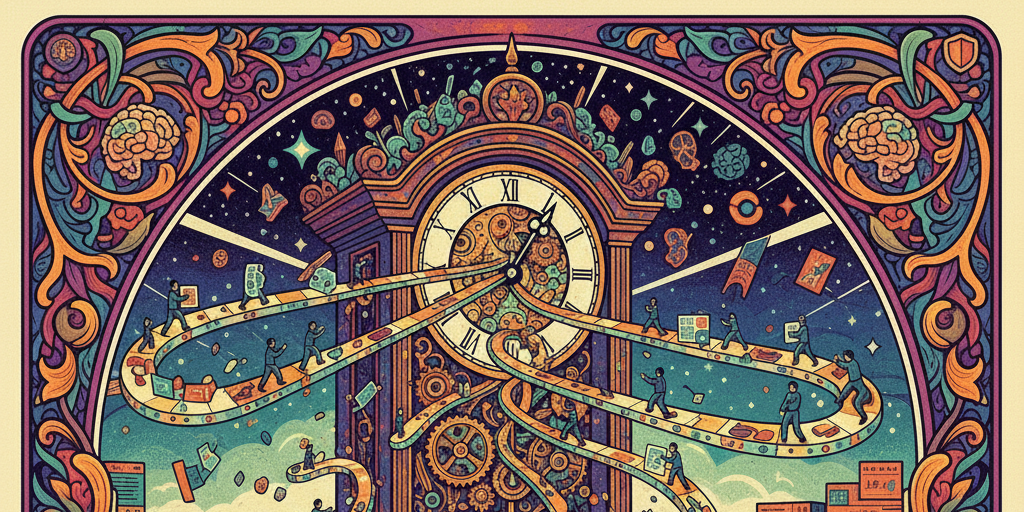
Why your obsession with velocity is simply accelerating your structural failure and why the unsexy work of documentation is the only way to actually move fast.
Are you effectively accelerating your growth, or are you just automating your own demise?
What if the systems you rely on to save time are actually squandering your future?
The Fragility of Intuition and the Velocity Trap
Most of us glide through days wrapped in familiar routines. On the surface everything works; underneath, however, the system lacks structural integrity.
We operate in an ecosystem obsessed with velocity and intuition. We pride ourselves on moving fast and trusting our gut. But there is a dangerous seduction in relying solely on instinct. Without data or useful experience, a "gut feeling" is often just a blind guess competing with everyone else's equally valid guesses. We lean on this fragility, masking a lack of discipline with busyness, assuming that if we just run faster, the underlying instability won't matter.
You’ve been sold speed: tools and dashboards that promise to slay backlog and scale growth. In practice, you graft software onto habits that were never stable to begin with. Workarounds become the default. Automation amplifies ambiguity, not clarity. People act on competing instincts and assume generosity will substitute for clear rules. When those instincts collide, resentment and entitlement quietly corrode trust.
Meanwhile, the window of real opportunity shows up in the worst possible moments, for example when a key vendor fails or when a runway tightens. Yet you’re least ready to act because you’re mired in brittle processes and polite confusion. Decisions are made on gut feelings alone, and the line between generosity and entitlement blurs until fairness becomes a myth.
The Internal Rot of Entitlement and Chaos
This frantic pace extracts a heavy psychological and operational toll. The internal narrative turns dark: you look at your output and think, "I suck." We often misinterpret the gap between rising standards and current skills as failure. People feel ashamed and tell themselves they simply “aren’t there yet,” which deepens imposter pressure.
This internal instability mirrors the operational reality. Ambiguous workflows mean duplicated effort and missed deadlines. Small errors compound: a sloppy handoff that used to cost one hour now costs weeks of rework once automation propagates it. Consequently, that invisible friction compounds. When processes are half‑baked, any new tool doesn’t solve anything. It amplifies the chaos. Hours disappear and the organisation drifts from its original purpose.
A culture of entitlement begins to rot the team dynamic. When we fail to distinguish between fairness and generosity, we start treating gifts like rights. A specific act of kindness for one person gets twisted into a demand for equal compensation for everyone else. This poisons relationships, replacing personal responsibility with score-keeping. We end up with a team focused on what they are "owed," while the business rests on an unstable system.
Each ignored discrepancy raises the stakes: lost deals and missed product-market fit. The hidden price isn’t just lost revenue; it’s the erosion of trust and the mounting anxiety that tomorrow’s challenges will be even harder to tame.
The Architecture of Readiness
The shift happens when we stop trying to outrun our problems and start engineering the solution. Real opportunity rarely knocks when it’s convenient; it arrives when systems break down, like a barber closing on a holiday weekend. You have to be ready to work when you'd rather be comfortable. This readiness requires a fundamental change in mechanics. AI and speed are multipliers; if you plug automation into a messy workflow, you get chaos at light speed.
Prioritise the unsexy work: building a clear operating architecture and documenting processes before reaching for the accelerator. Map the operating backbone (clear roles and crisp process maps) and define who’s accountable. Install measurable signals that tell you whether the system is healthy. Consequently, validate instincts with small experiments and direct evidence before scaling.
Moments of inconvenience provide opportunity; when a system breaks, it surfaces what was invisible. Feeling inadequate is progress; as your standards rise, discomfort is the sign of growth. Only after these layers are solid does automation become a multiplier rather than an accelerant. It’s the moment you recognise that preparation creates the space where opportunity appears, even when it shows up at the most inconvenient hour.
The Quiet Discipline of Permanence
Once you place systems before speed and reality before instinct, the noise quiets. You stop building a fragile structure and start establishing permanence. You cultivate a community where generosity is appreciated, and where temporary incompetence is accepted as a precursor to skill.
Audit your instincts against data. Build the system first, so that when you finally apply technology, you aren't just moving faster; you are moving forward. In a productive environment, onboarding takes predictable steps every time, and a single metric flags deviation before customers notice. Acts of generosity are deliberate rather than chaotic, rewarded because they are clearly earned.
People stop apologising for small mistakes and start iterating on measurable improvements. Tools stop creating noise and begin increasing capability. This is reachable with a disciplined plan:
- Audit your top recurring workflows this quarter; identify the single highest-friction handoff in each.
- Write the operating rule for that handoff, assign a single owner, and define one metric that signals success.
- Only when each metric is stable for one sprint, introduce automation to remove manual steps.
This is not glamour work. It is the slow, stubborn craft of making systems bear load. Pick one workflow, map it in 60 minutes, and publish the owner and metric. Audit your core processes, define clear metrics, and only then invite the tools that will amplify your impact.
The Essential Concepts
The Velocity Trap: Accelerating Your Own Demise
We often pride ourselves on moving fast and "breaking things," but without a documented architecture, you are simply accelerating toward a crash.
- The Gut Feeling Mirage: Without data, your intuition is just noise competing with everyone else's noise. It masks a lack of discipline with performative busyness.
- Automation as a Multiplier: Tools and AI are multipliers, not fixes. If you graft high-speed software onto half-baked habits, you scale friction rather than value.
- The Seduction of Workarounds: When "fixing it on the fly" becomes the default, you lose the ability to act when real opportunity arrives—usually at the most inconvenient moment.
The Internal Rot: Shifting Standards and Entitlement
The operational instability of a "gut-led" business eventually manifests as psychological and cultural decay.
- The "I Suck" Fallacy: We often mistake the gap between our rising standards and our current skills as personal failure. This discomfort isn't a sign to stop; it’s a sign that your eye for quality has outpaced your hands' ability to deliver.
- Generosity vs. Fairness: When rules aren't clear, acts of kindness are misinterpreted as rights. This creates a culture of "score-keeping" and entitlement, where the team focuses on what they are owed rather than what they are building.
- The Compound Interest of Error: A sloppy handoff that costs an hour today costs weeks of rework tomorrow once it is propagated through a scaled system.
The Architecture of Readiness: Engineering the Fix
Real opportunity rarely knocks when you are comfortable. It arrives when systems break. Readiness is the ability to work while others are resting, supported by a system that doesn't rely on your mood.
The Mechanics of Stability
- Operating Backbone: Before reaching for the accelerator, map the clear roles and process maps. Define exactly who is accountable for what.
- Measurable Signals: Install "smoke detectors"—metrics that flag a deviation before the customer ever notices.
- Small Experiments: Validate your instincts with low-cost evidence before you bet the company on a "hunch."
The "Quiet Discipline" Protocol
To stop building a fragile "Glass City" and start establishing permanence, execute these three steps this week:
- The 60-Minute Map: Pick your highest-friction workflow. Spend one hour mapping it out. Don't worry about being perfect; worry about being explicit.
- Identify the Owner: Assign a single human to that workflow. If two people are responsible, no one is.
- The Success Metric: Define one metric that signals the system is healthy. Monitor it for one full sprint (or one week) before you even think about adding a new tool or automation to it.
"Preparation creates the space where opportunity appears, even when it shows up at the most inconvenient hour."
I am a Knowledge Worker...
What does it mean for me?
In a corporate environment, you are likely caught in the Velocity Trap, where "moving fast and breaking things" is celebrated, but without a documented Operating Backbone, you are simply accelerating toward a burnout-inducing crash.
You may be relying on the Gut Feeling Mirage, making decisions based on office politics or "vibes", which is just a blind guess competing with everyone else's noise.
This lack of discipline creates Internal Rot: when you manage through "generosity" (special favors) rather than "fairness" (clear rules), you inadvertently foster a culture of entitlement and score-keeping among your peers or direct reports.
The danger for your career is the "I Suck" Fallacy. As you ascend, your standards for excellence naturally rise faster than your hands can keep up, leading to "imposter pressure."
If you don't anchor your growth in Measurable Signals, you will mistake this necessary discomfort for personal failure.
Without a Quiet Discipline for documentation, you remain a "Human Firewall," patching sloppy handoffs that will eventually cost the organisation weeks of rework once automation is applied.
You aren't climbing the ladder; you’re just running faster on a treadmill that’s about to break.
How do I action this?
- Execute a "60-Minute Map" of Your Toughest Project: Identify the single highest-friction handoff in your current workflow (where balls get dropped most often). Map the steps explicitly on one page—focus on who does what, not how you "feel" it should go.
- Install a "Smoke Detector" Metric: Define one Measurable Signal for that workflow that flags a deviation before your boss or the customer notices (e.g., "If X isn't updated by 4 PM Tuesday, the system is unhealthy").
- Audit Your "Management-by-Favour": Identify one "act of generosity" you’ve been doing for a colleague that has been misinterpreted as a right. Clarify the Operating Rule for this task in writing to distinguish between a gift and a standard procedure, ending the "score-keeping" loop.
- Conduct a "Small Experiment" Before a Pivot: The next time you have a "hunch" about a new project direction, spend zero dollars and no more than two hours gathering direct evidence (a quick survey, a data pull, or a three-person pilot) to validate the instinct before betting your quarterly KRs on it.
I am a Freelancer, Solopreneur, Entrepreneur, Independent Worker...
What does it mean for me?
As an independent, you are the most vulnerable to the Seduction of Workarounds.
Because you can fix everything on the fly, you do—which means you are effectively building your business on shifting sand.
If you graft high-speed AI or automation tools onto these half-baked habits, you aren't scaling your value; you are scaling your friction (Automation as a Multiplier).
This leads to a business that feels like a cage; you can never step away because the system relies entirely on your current mood and "gut feelings."
Real opportunity for an independent professional usually arrives at the most "inconvenient" hour—when a major client has a crisis or a competitor fails.
If you are mired in "polite confusion" and undocumented tribal knowledge, you won't have the Architecture of Readiness to seize that moment.
You must realise that "Feeling inadequate" is actually a sign of progress; your eye for quality has outpaced your current infrastructure.
To achieve Permanence, you must stop being the engine and start being the architect who designs the Operating Backbone that functions even when you’re resting.
How do I action this?
- Identify the "Single Owner" for Core Tasks: Even if you are a solo operator, assign "Roles" to your calendar slots. If "Marketing You" and "Operations You" are both responsible for a task, it won't get done. Assign a specific "human role" to your highest-friction workflow to stop the internal score-keeping.
- Implement a "Tool Fast": Before buying a new SaaS tool or adding an automation, monitor your manual success metric for one full "sprint" (one week). If the manual process isn't stable, the tool will only multiply the chaos.
- Map Your Client Onboarding in 60 Minutes: Don't worry about it being a "Glass City" (perfect and pretty); worry about it being explicit. Document the exact moment a prospect becomes a client and what specific data must be captured to prevent the Compound Interest of Error.
- Run a "Hunch-to-Evidence" Sprint: Pick one "gut feeling" you have about a new service offering. Before building a landing page or a course, get three people to commit to a 15-minute feedback call or a pre-order. Validate the reality before you reach for the accelerator.